The Iris B - Top and Dress with Pockets / Construction
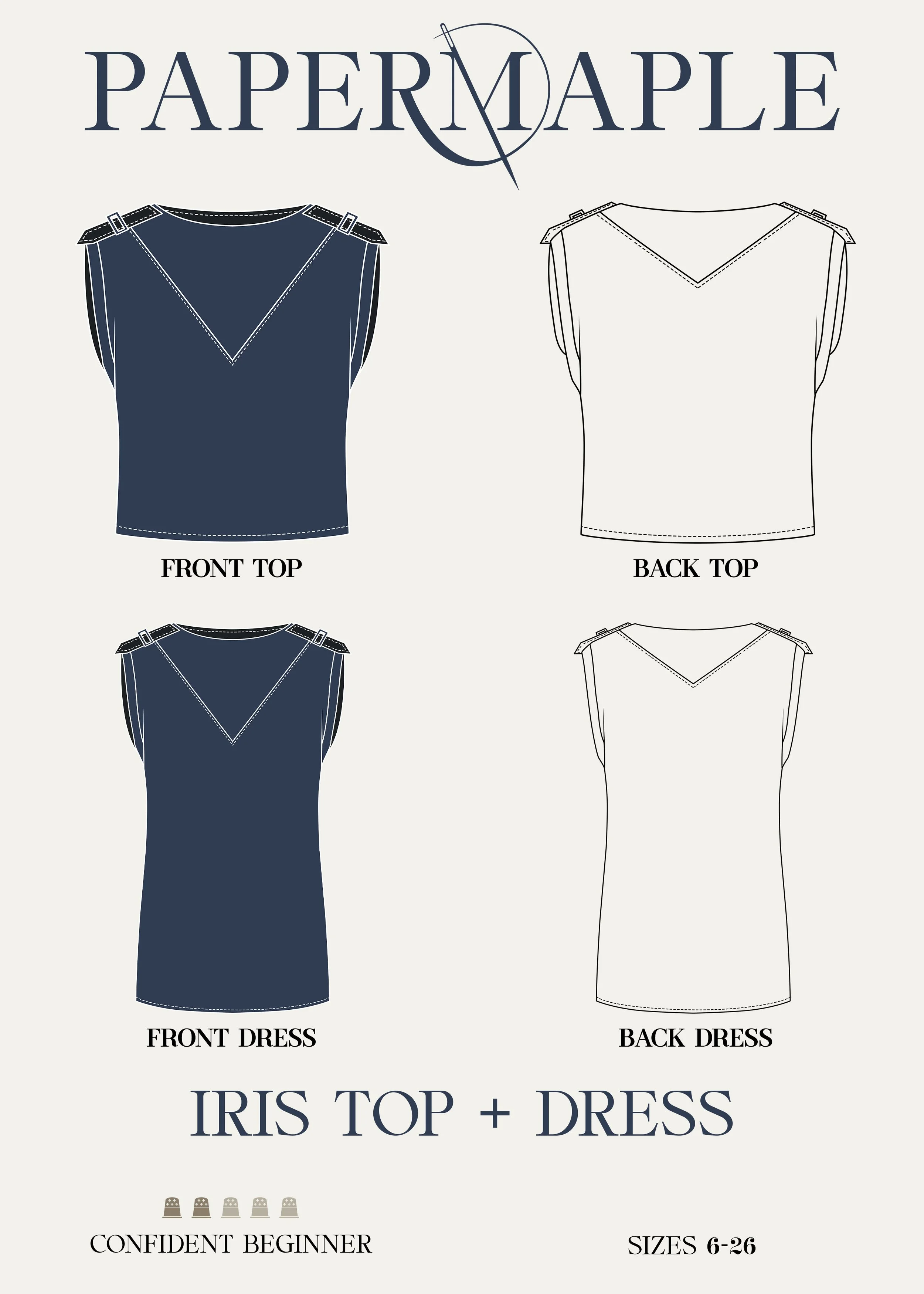
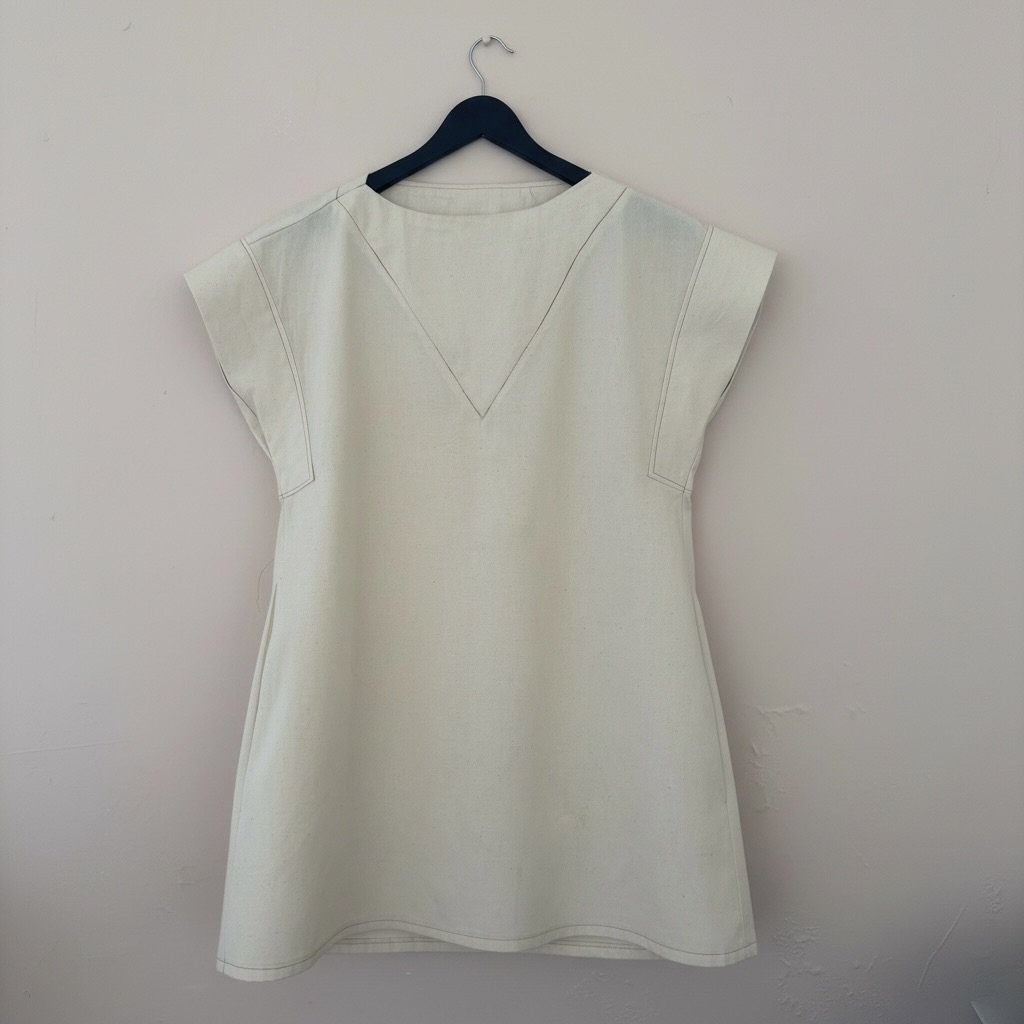
The Iris Top and Dress has some lovely skill building techniques, which include pockets, inset sleeves and a front and back yoke with an corner inset V seam.
I’m demonstrating on a starched medium weight muslin. I would suggest a light to medium weight fabric for a beginner, as the area where the sleeves intercept with the side seams can be thick and become a little more difficult to sew.
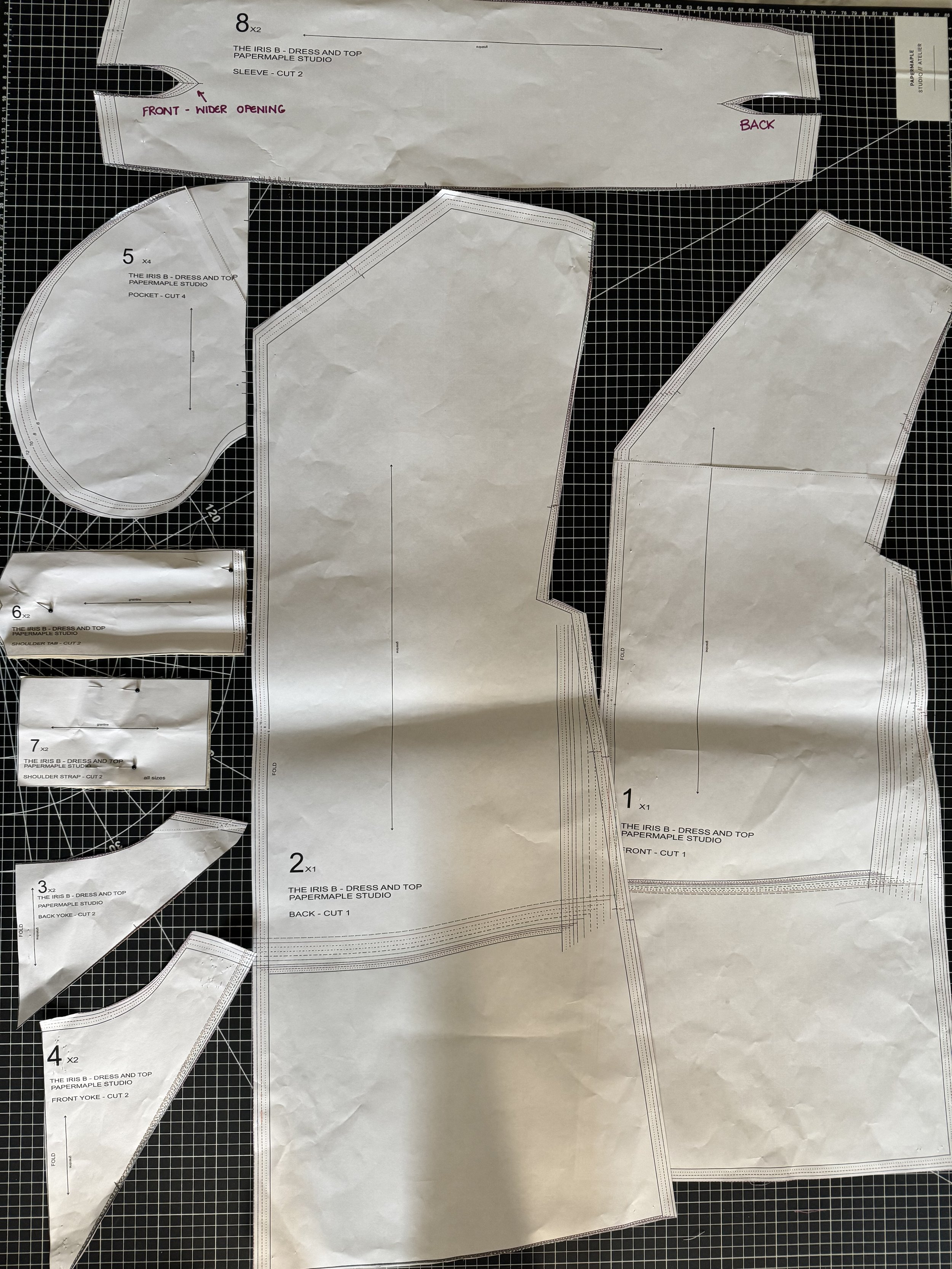
Piece One - Front / Cut 1 on FOLD
Piece Two - Back/ Cut 1 on FOLD
Piece Three - Back Yoke / Cut one on FOLD - Finish edges
Piece Four - Front Yoke / Cut one on FOLD - Finish edges
Piece Five - Pocket / Cut Four - Finish edges
Piece Six - Shoulder Strap / Cut Two OPTIONAL
Piece Seven - Shoulder Loop / Cut Two OPTIONAL
ORDER OF CONSTRUCTION:
Front Yoke
Front facing
Understitch
Back Yoke
Back Facing
Understitch
Pockets
Shoulders
Sleeves
Side Seams
Hem
Optional: Shoulder straps and tabs
I’m demonstrating on a starched medium weight muslin. I would suggest a light to medium weight fabric if you are a beginner, as the area where the sleeves intercept with the side seams can be thick and become a little more difficult to sew.
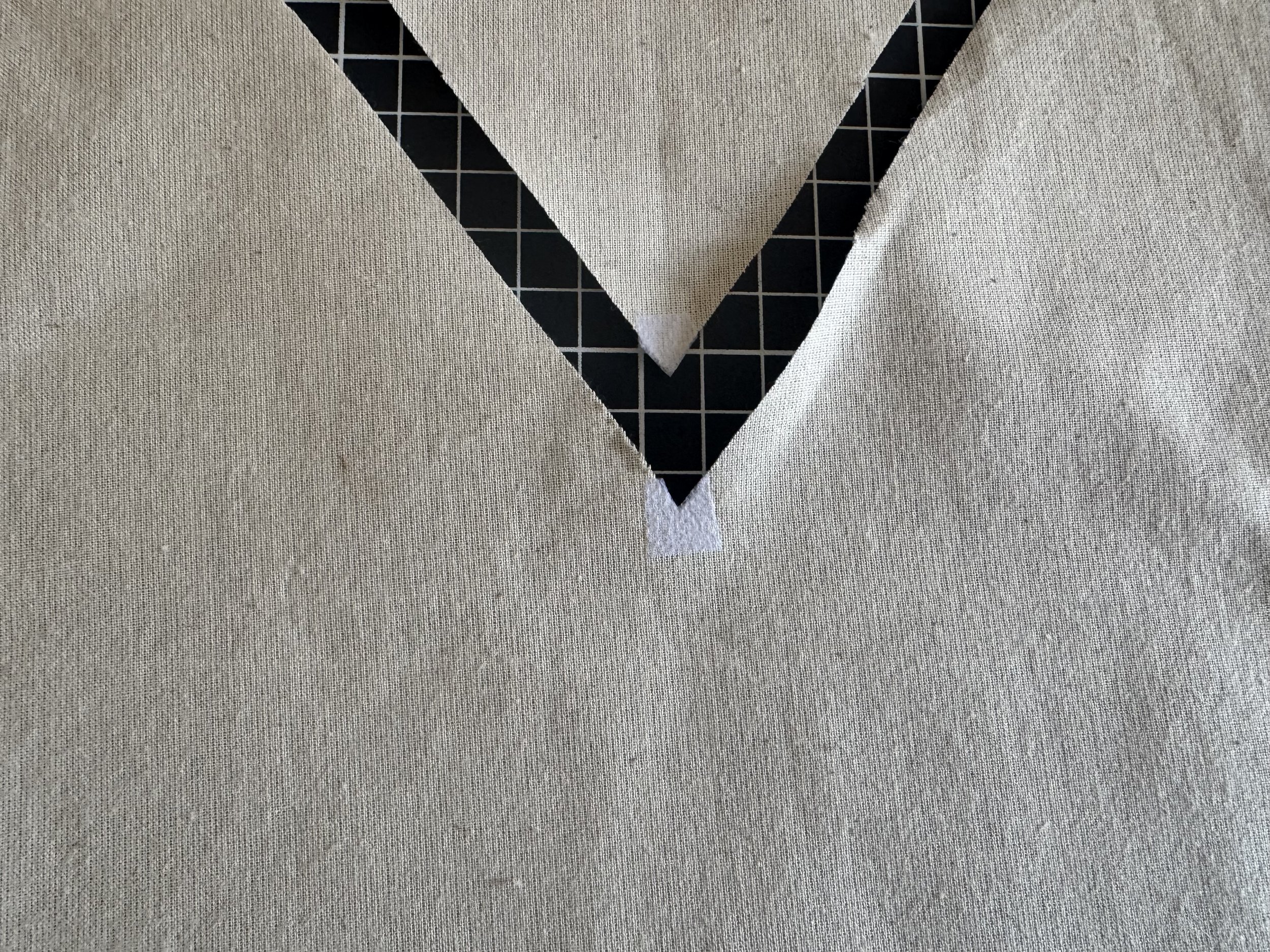
Begin by adding a tiny piece of interfacing to the point on the front and front yoke wrong side, keeping it within the seam line.
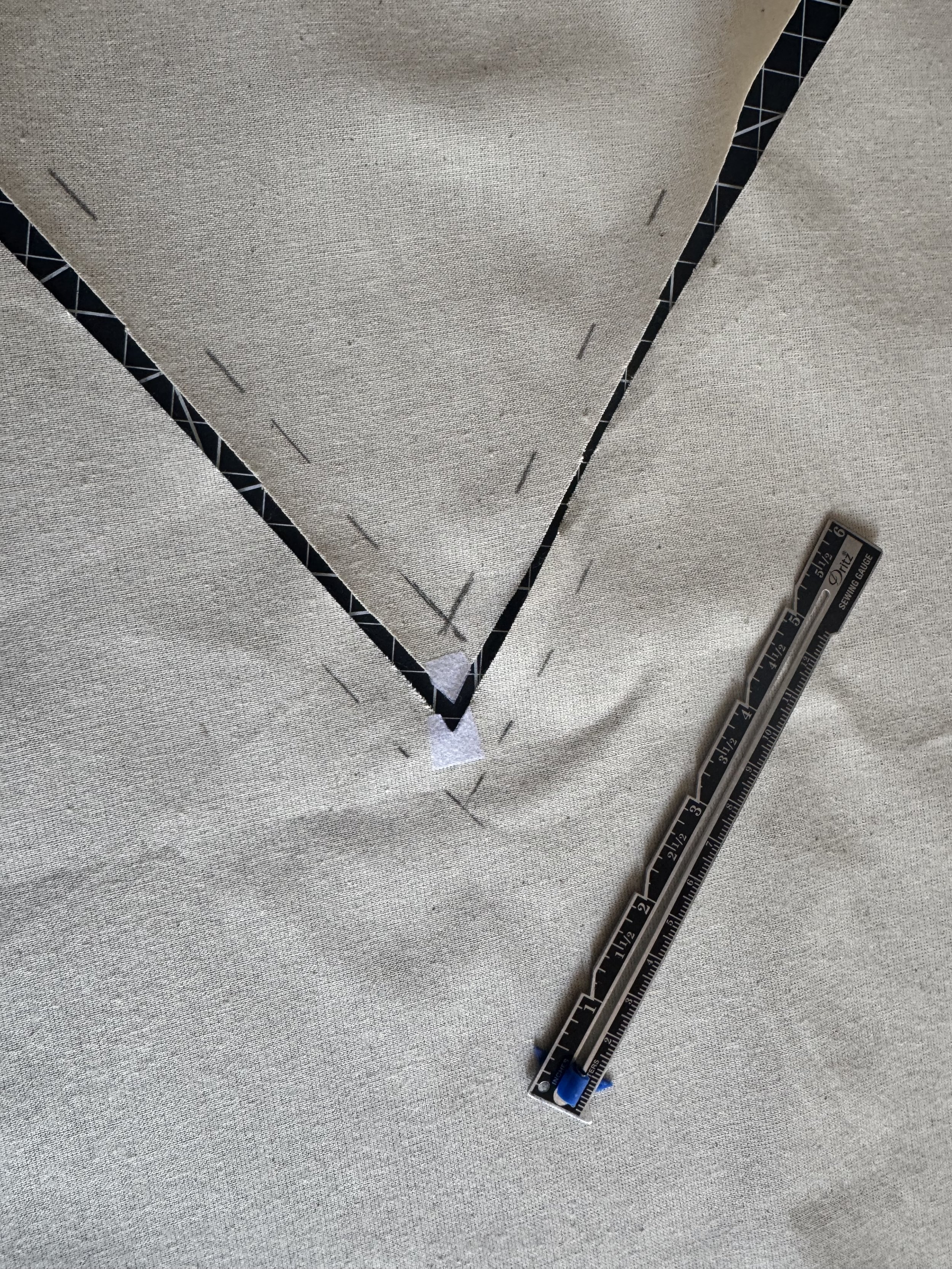
Mark your seam line at 1/2” to find the point on both the front and the front yoke.
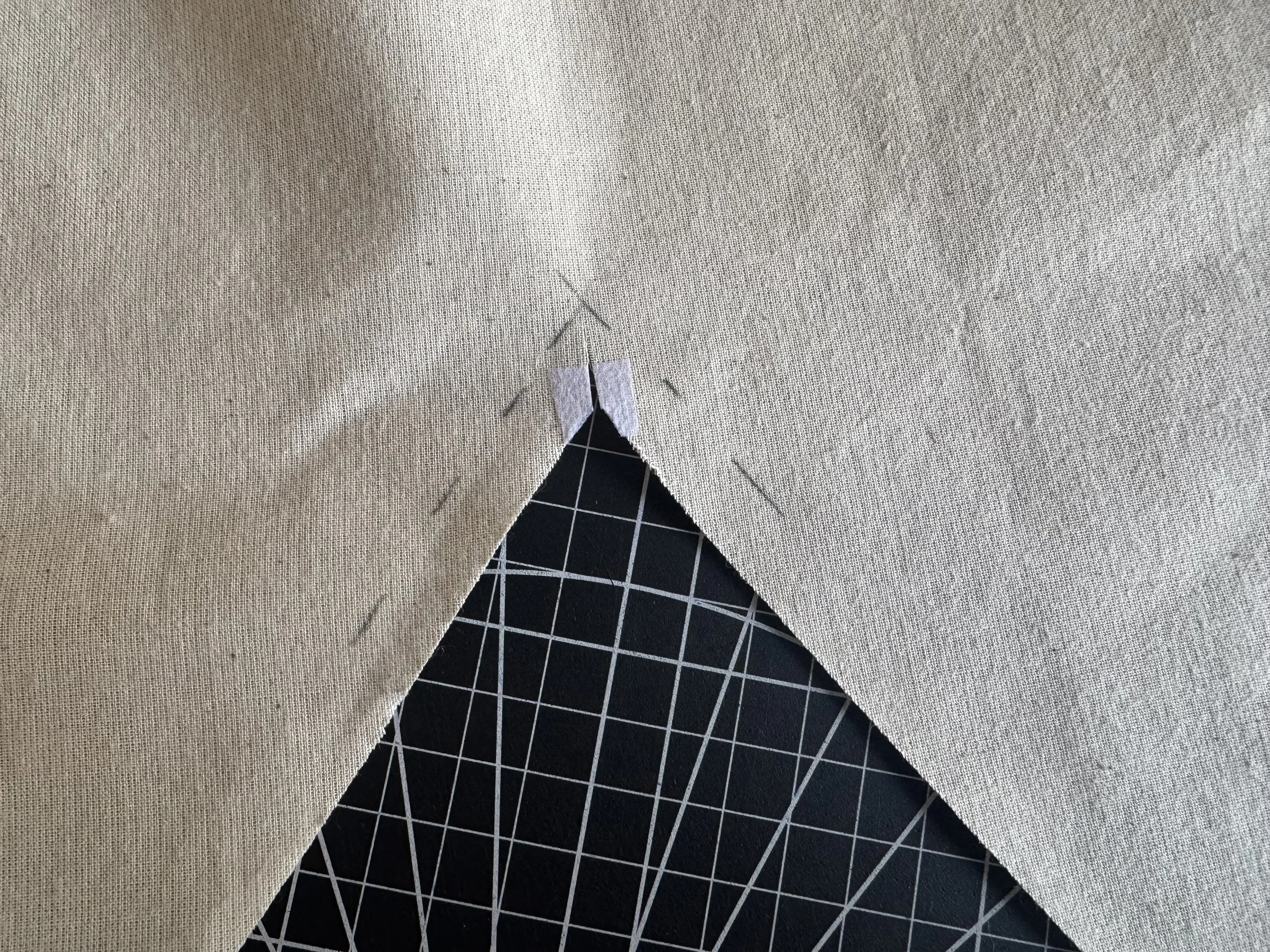
Snip into the front of the bodice, stopping just before your marked point.
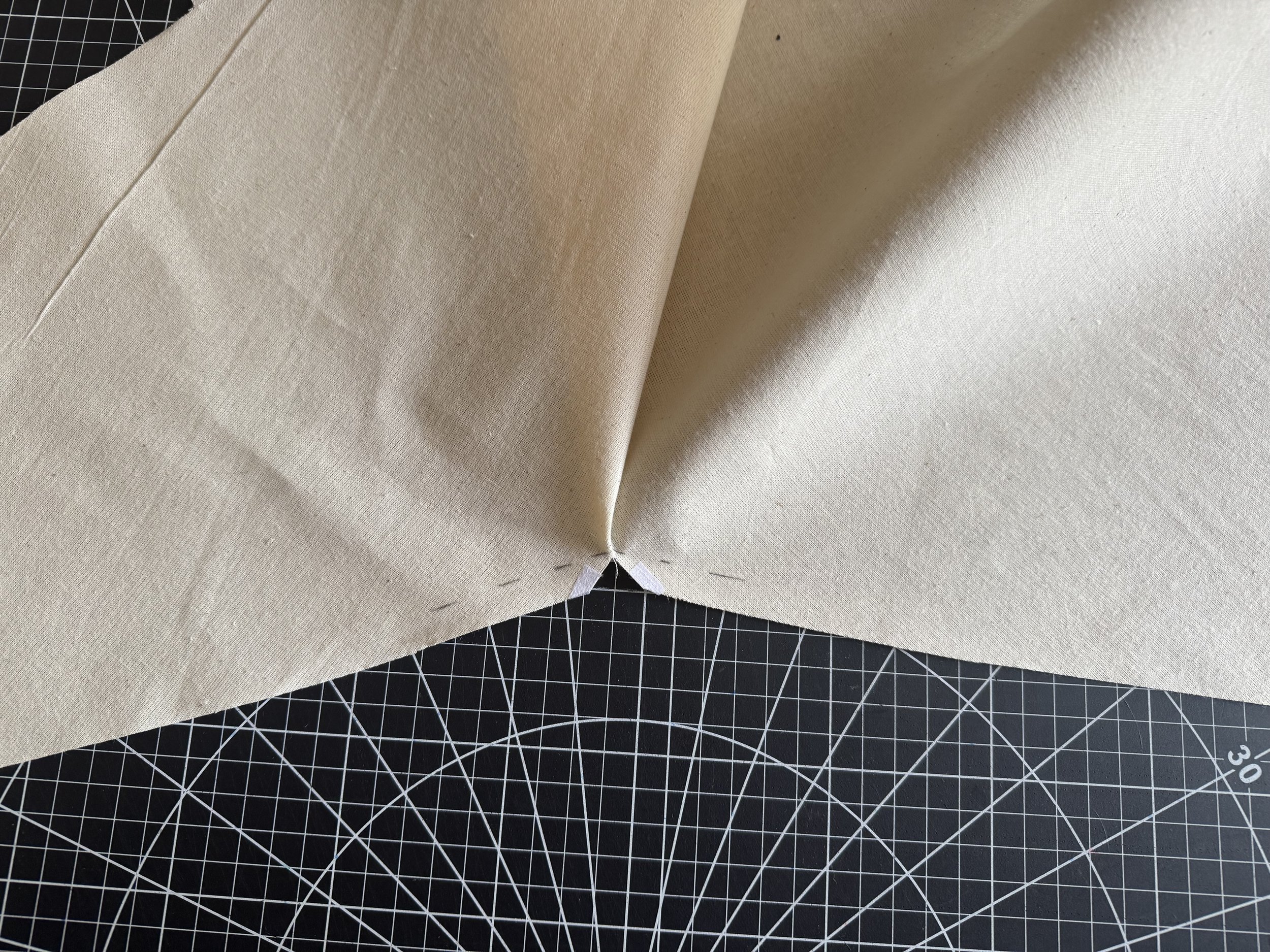
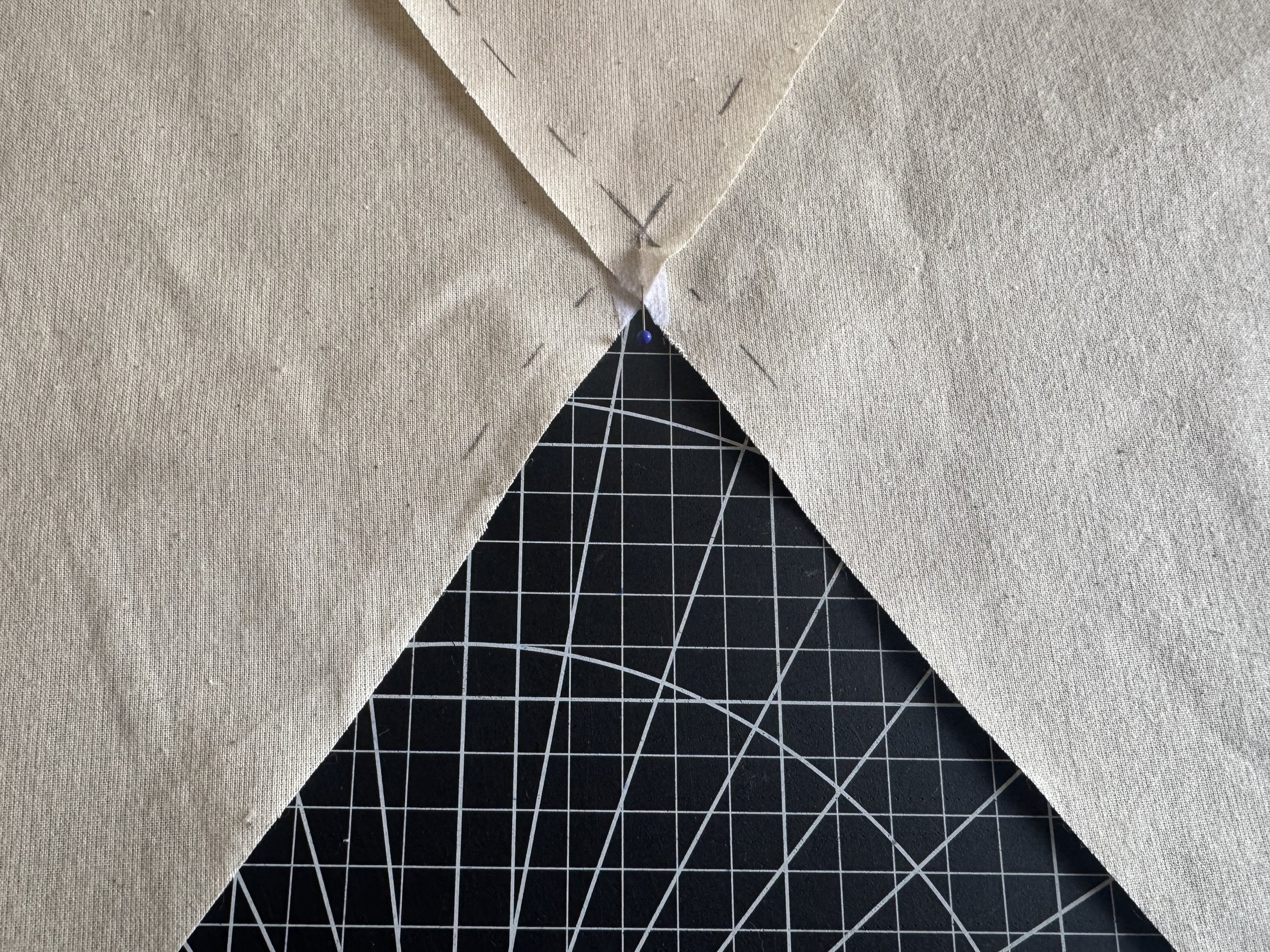
Match the top of the point on both the yoke and bodice as shown right side to right side.
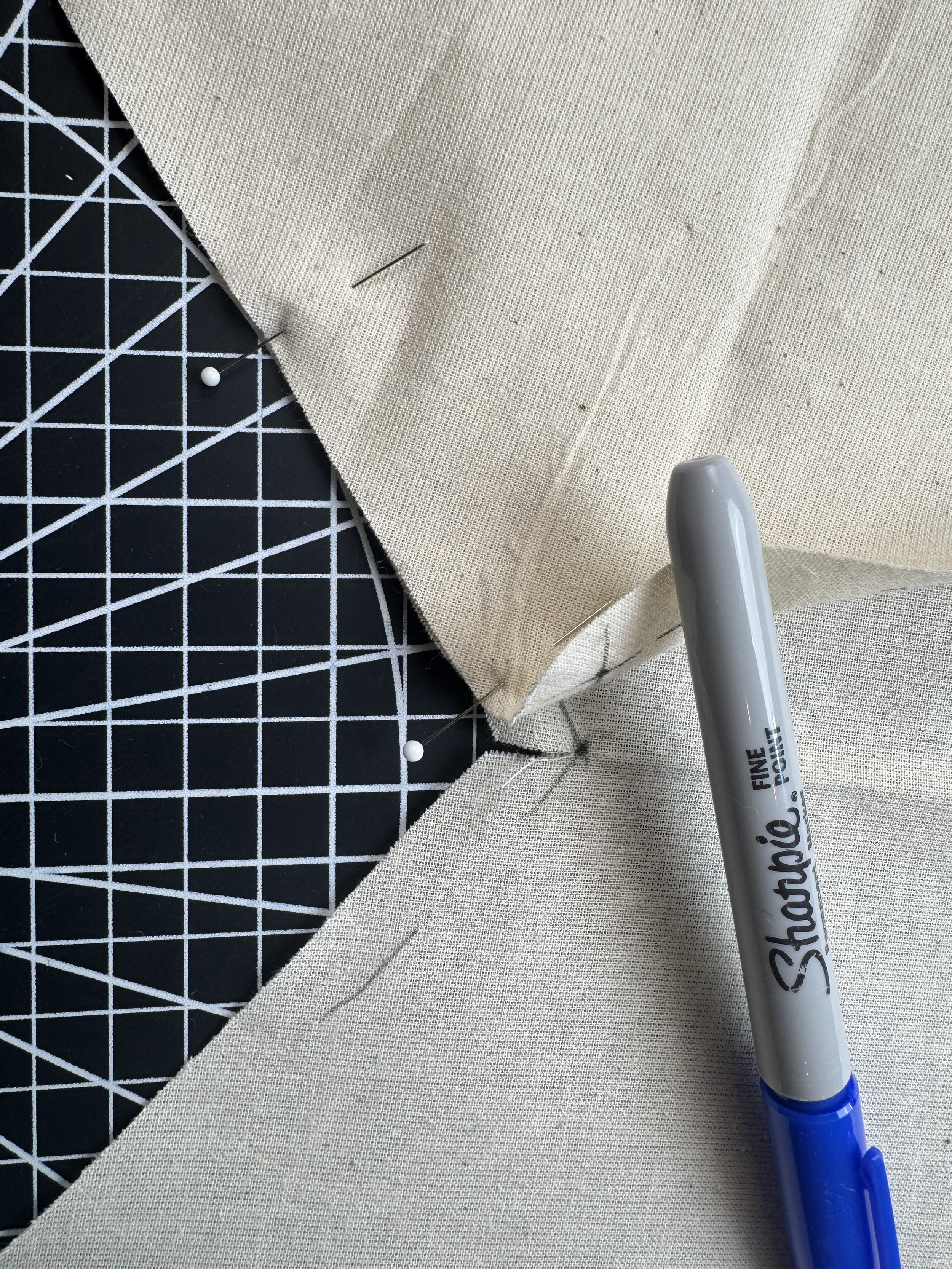
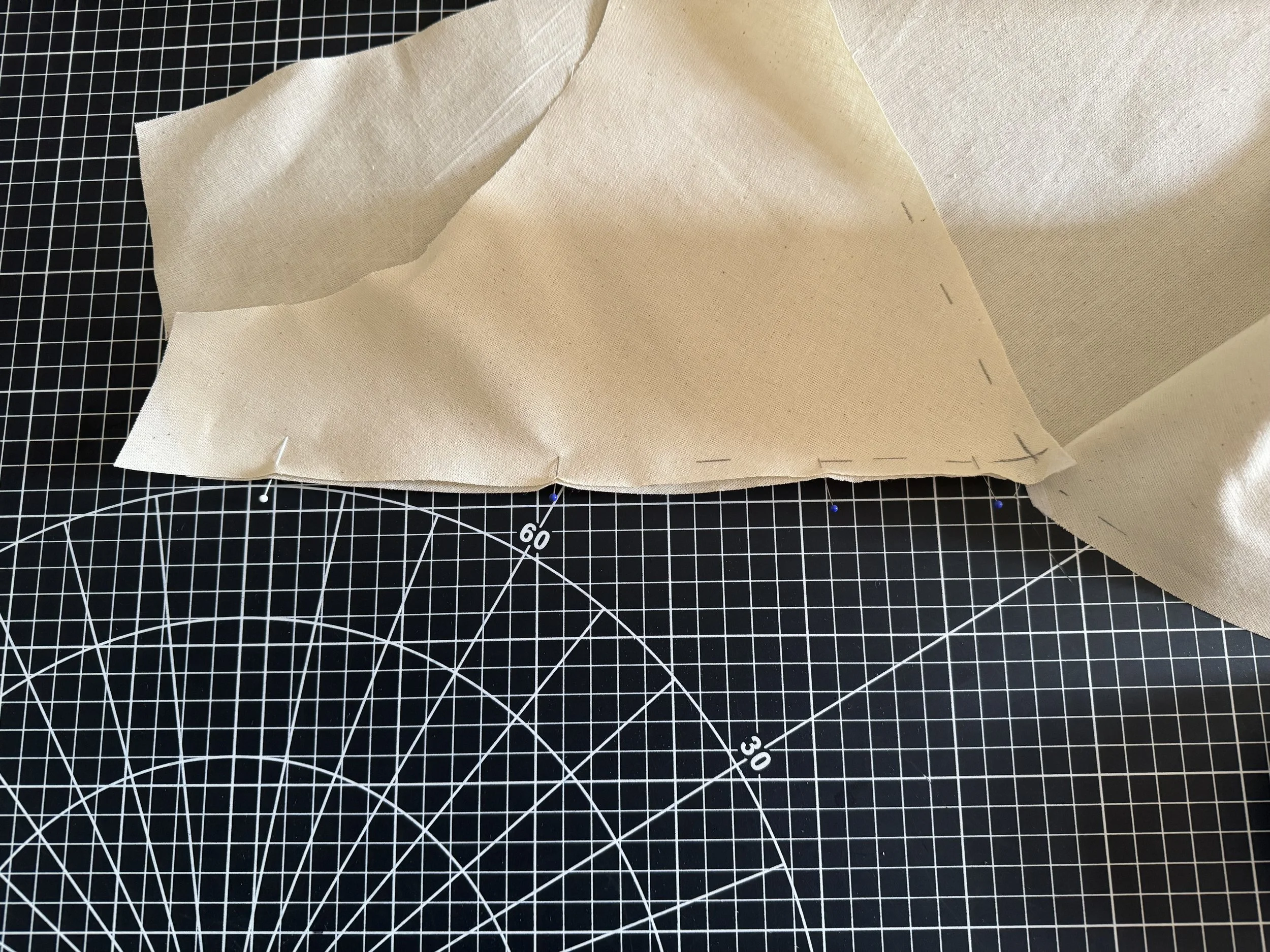
Move your front yoke from the middle to the left of your bodice, pinning along the seam before removing the center point pin.
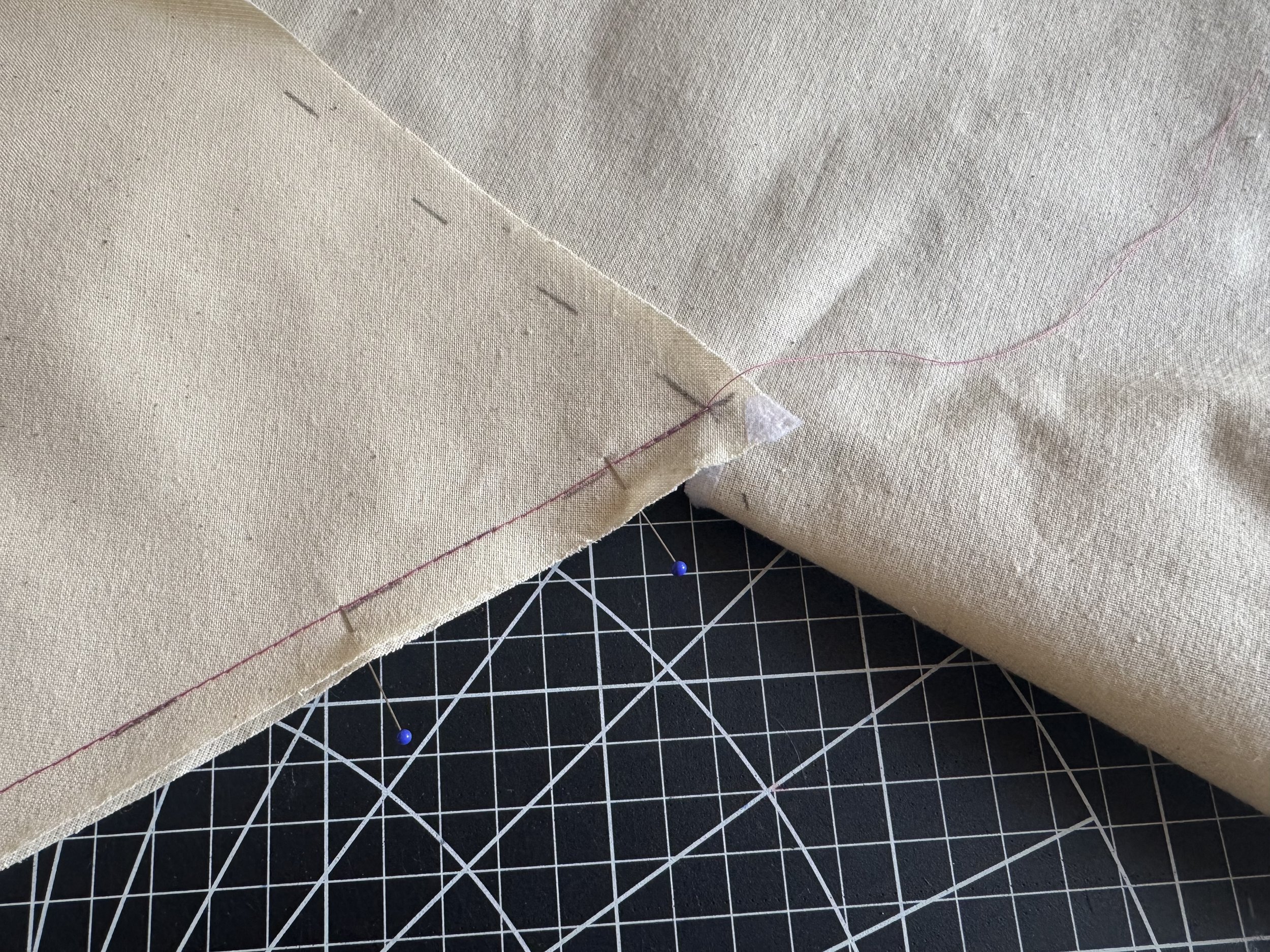
Place your needle directly into the point at the center, leaving long thread tails before sewing. Do NOT back tack….
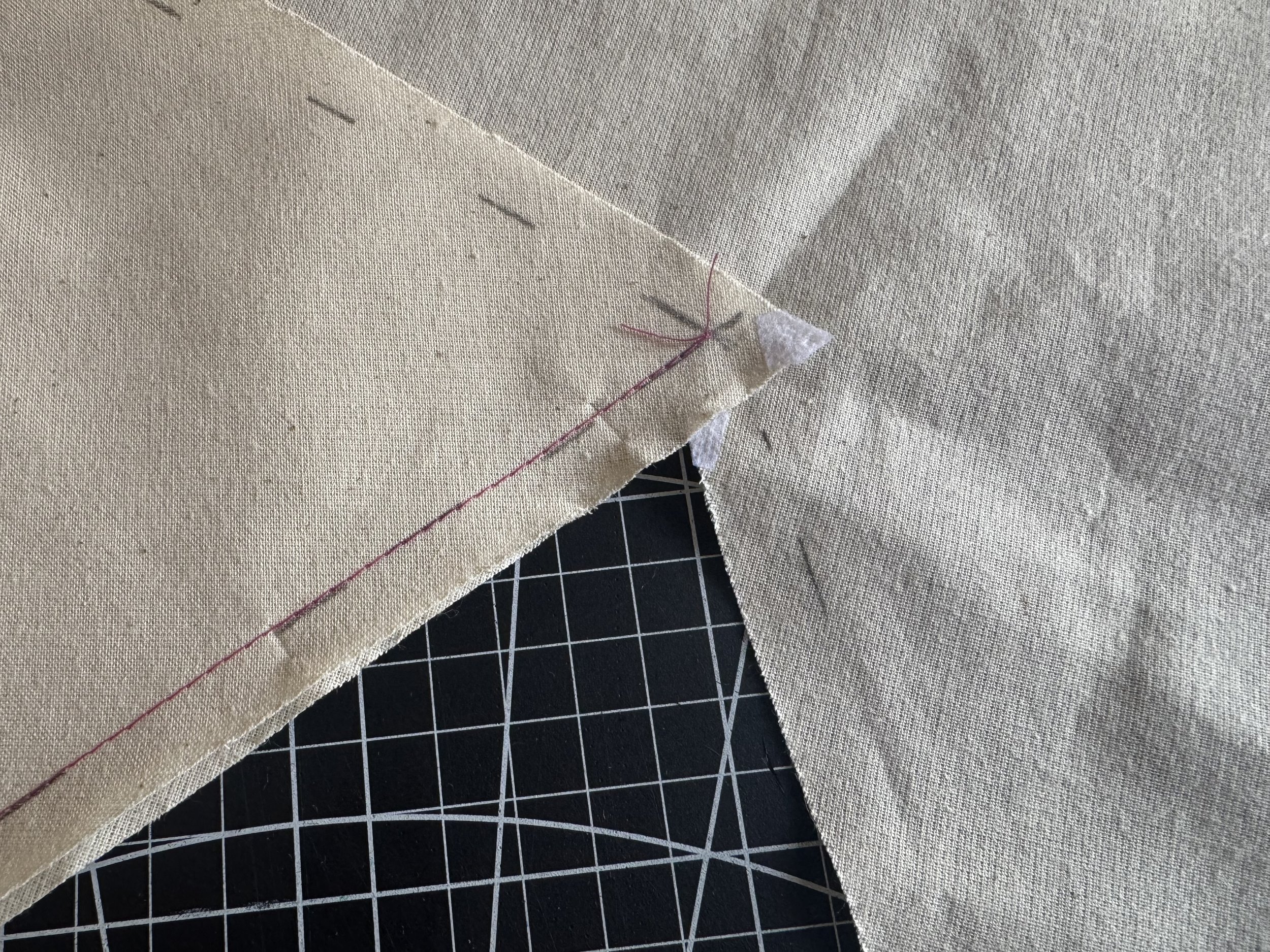
Make three knots to tie off the thread and snip.
This method is a little different than usual, and took me some trial and error but I find that it keeps the point neat and pucker free.
Sewing the whole seam in one continuous line, usually creates a small crease at the center which is what we want to avoid.
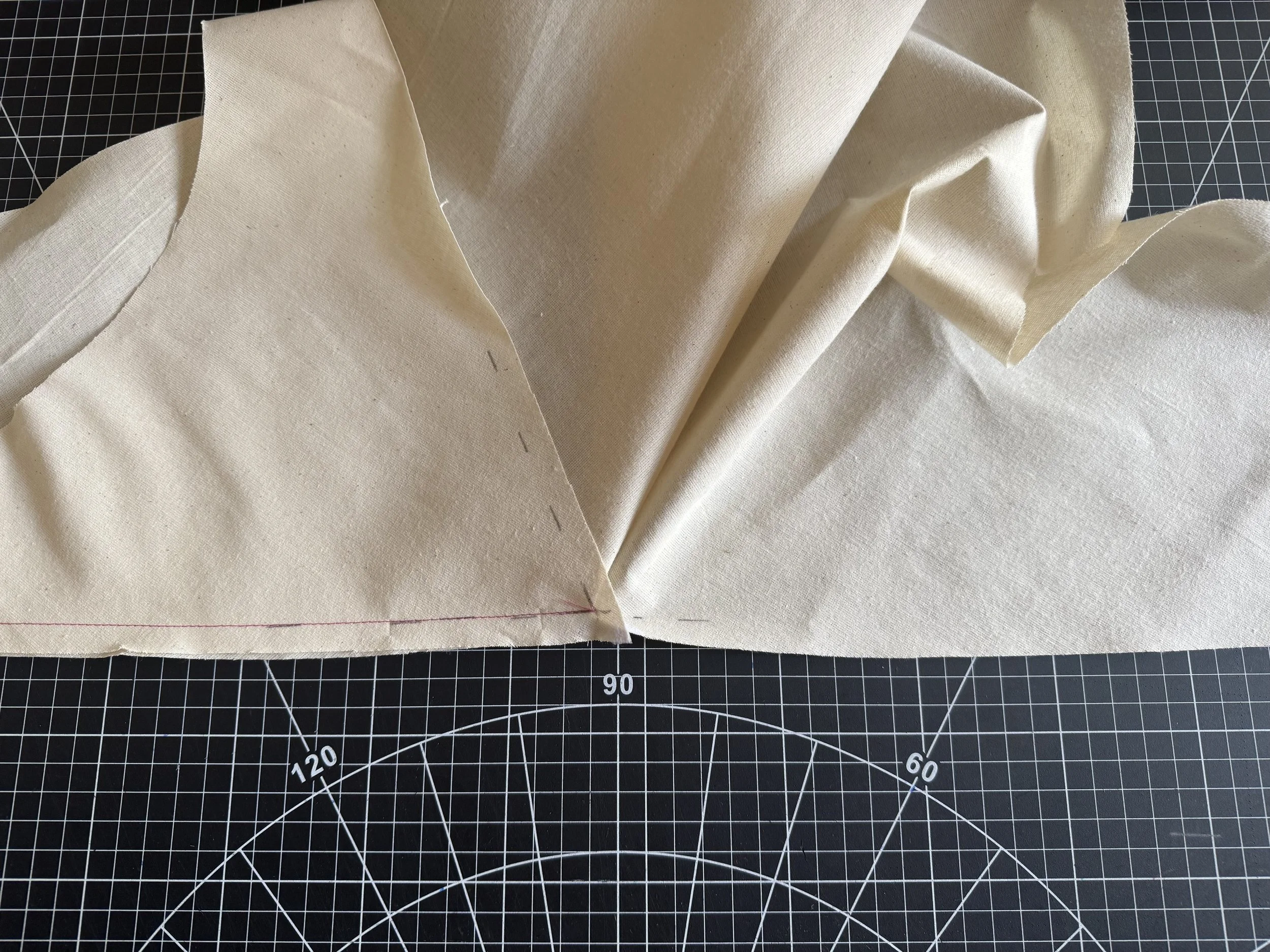
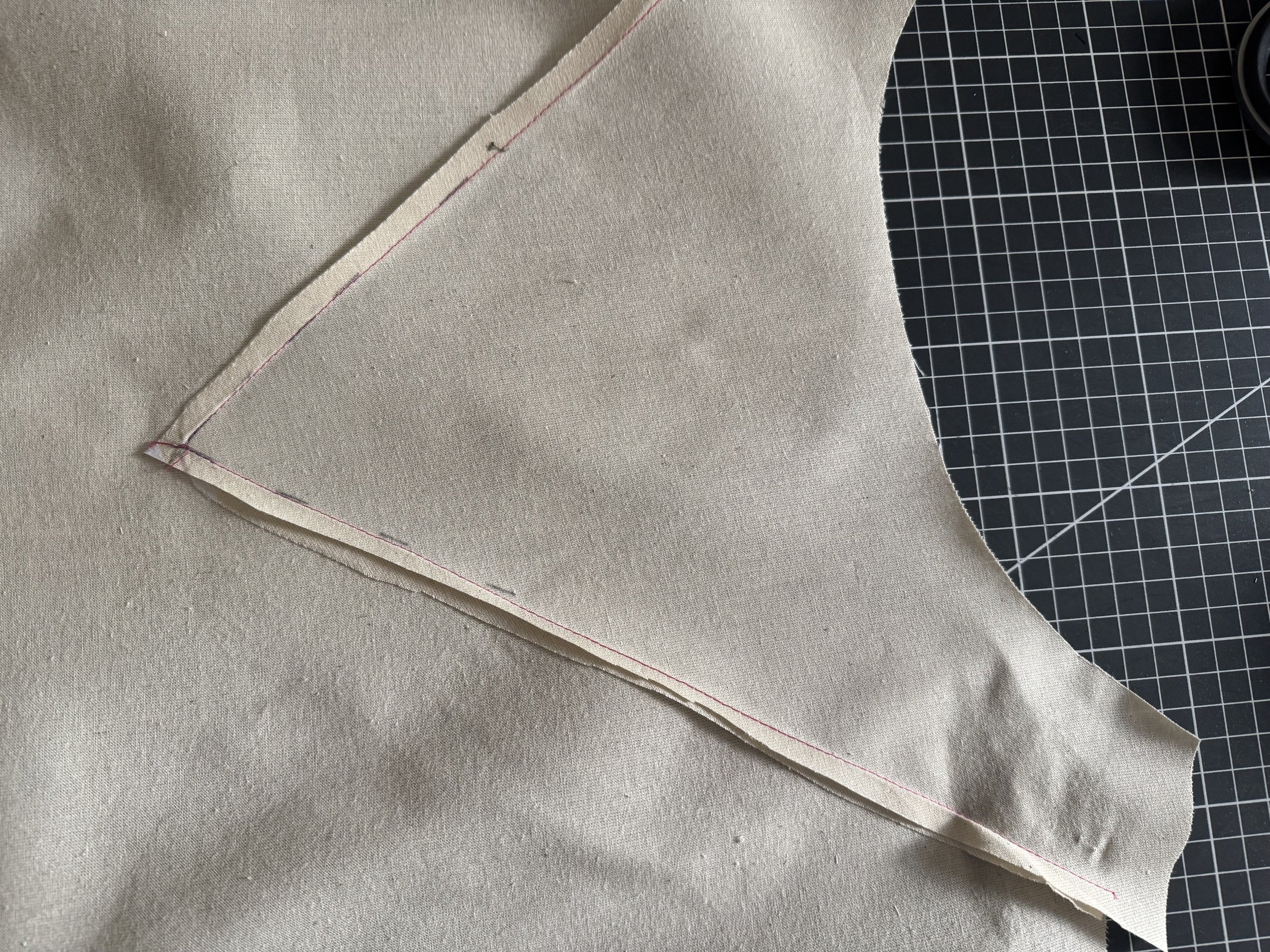
Your bodice and yoke should now look like this.
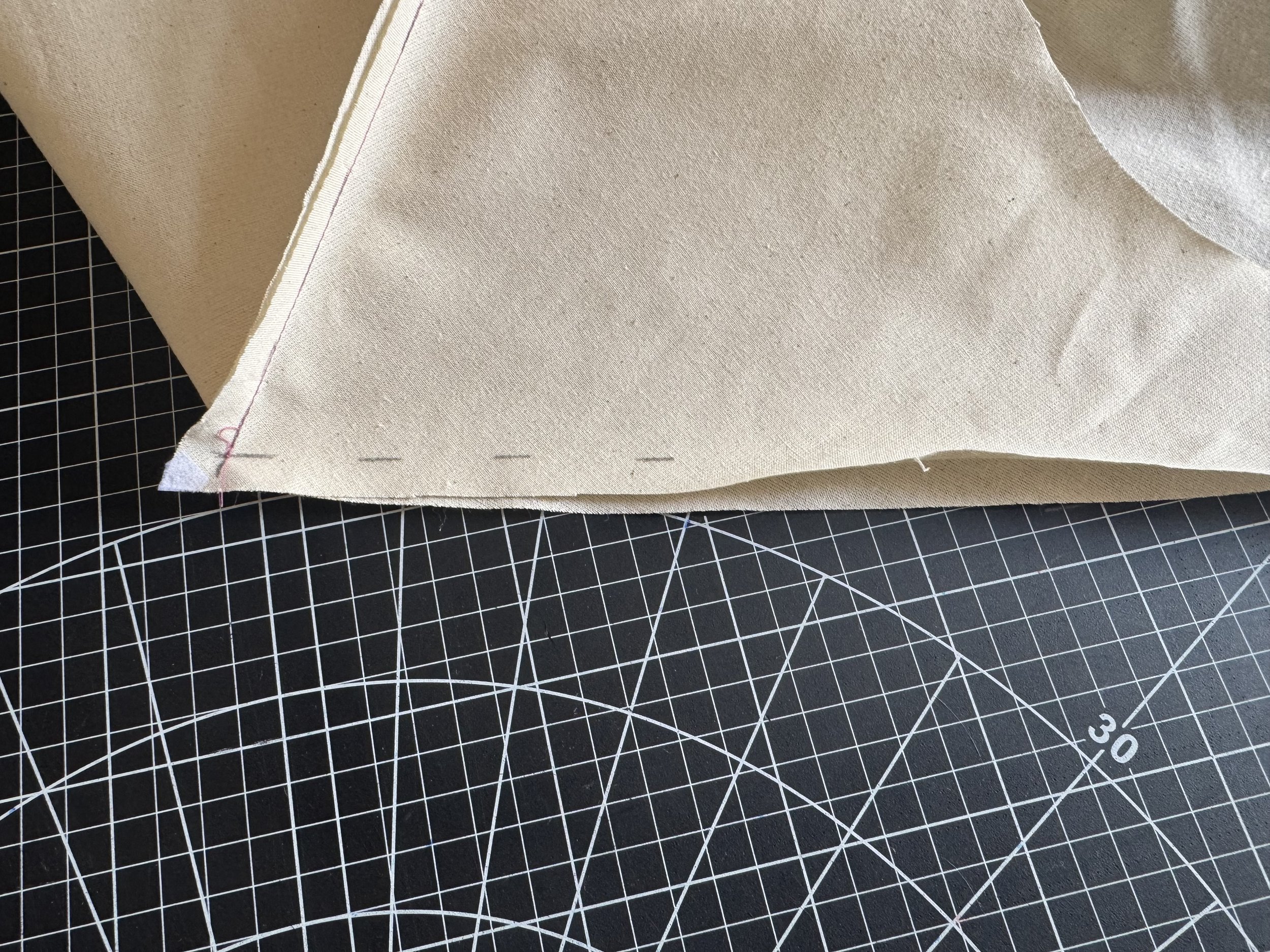
Twist and line up the unfinished side, check that the bodice point is not creating a gather under the yoke.
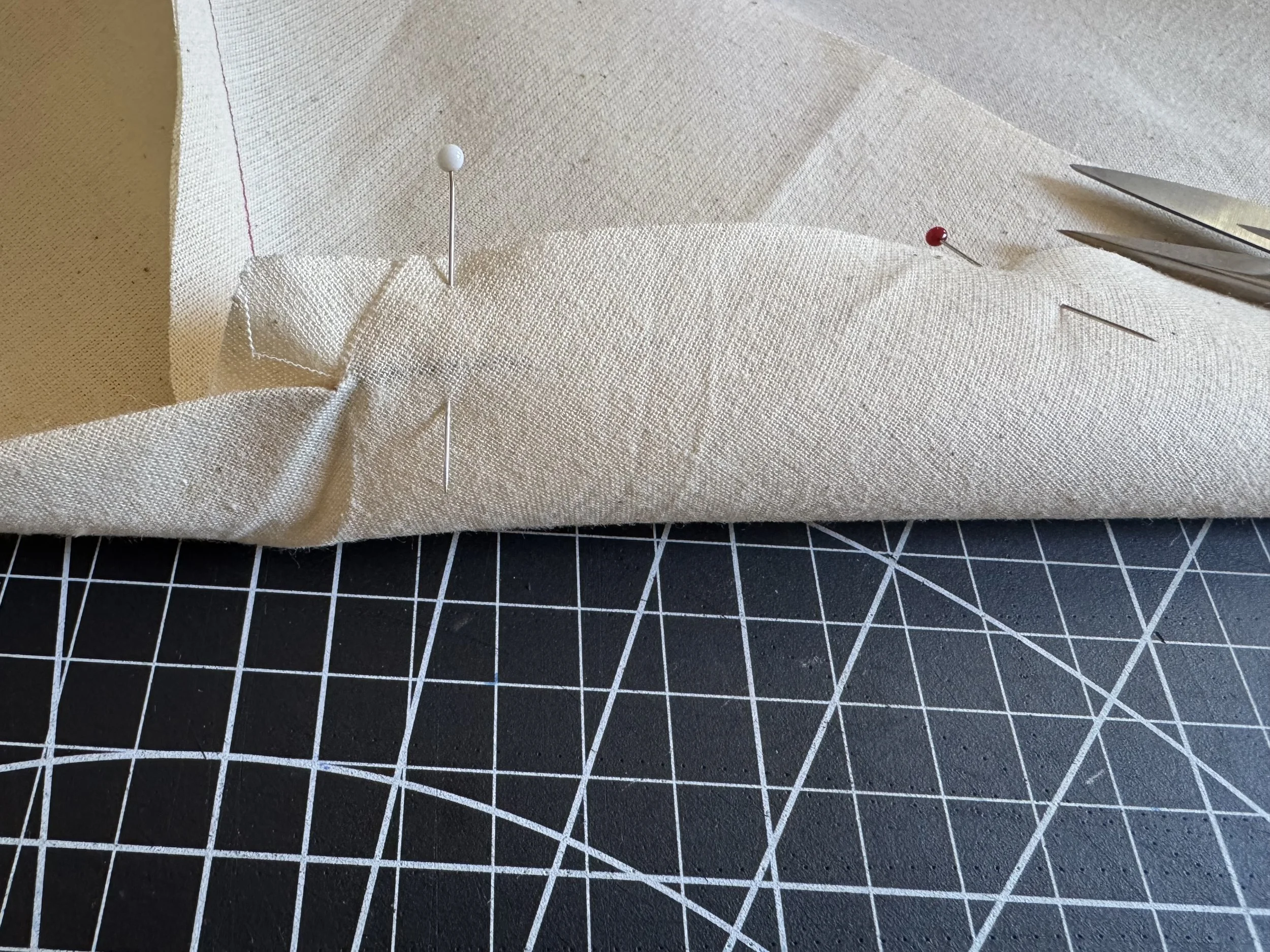
Drop your needle at the center point in the middle again, leaving long tails. Begin your stitch next to the stitch that was tied off. sewing from the middle point to the end.
Tie off the threads in the middle again.
(This side is a little more difficult to sew as you will have the bulk of the garment on the right side, feeding through the machine.)
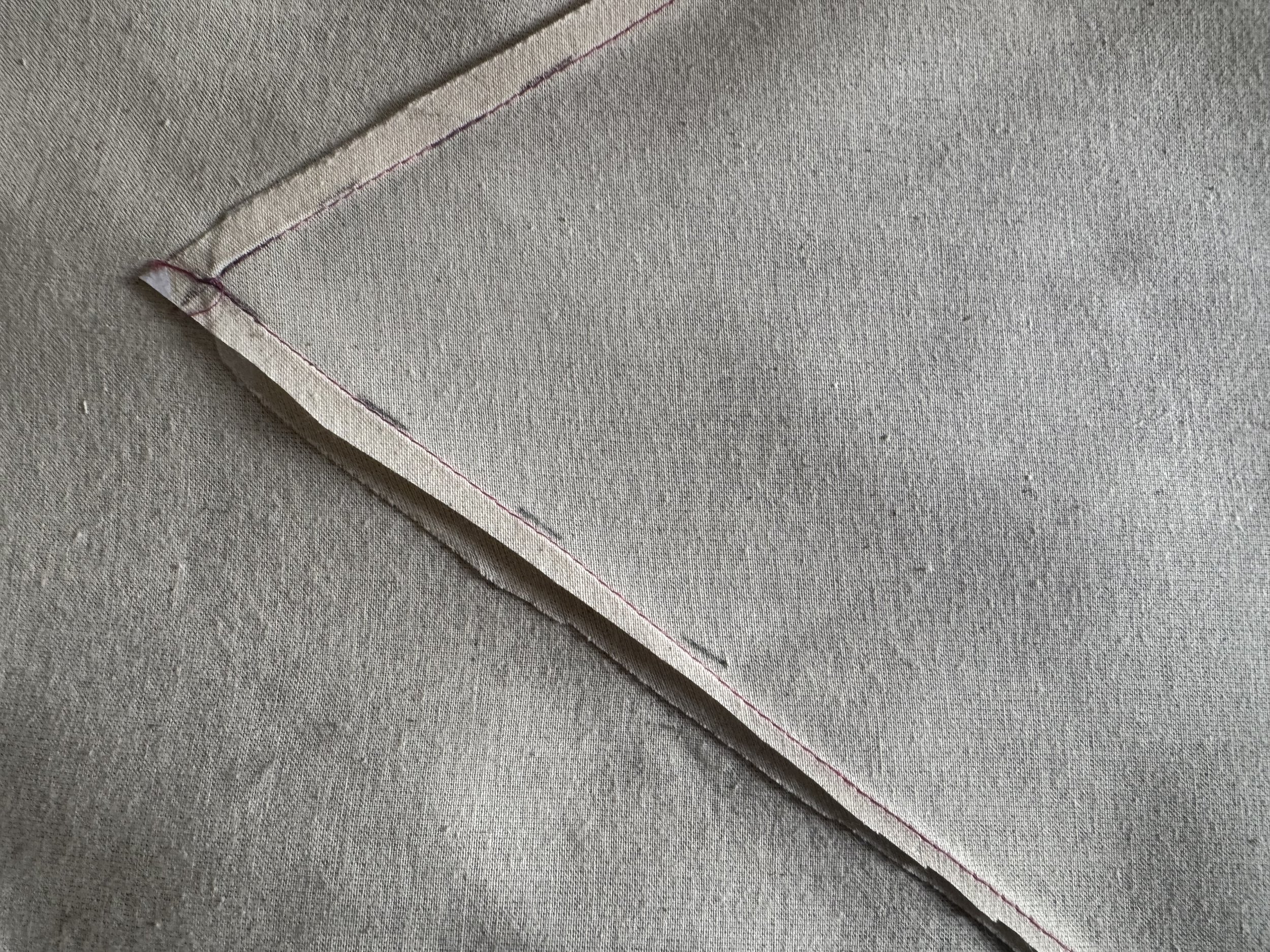
Trim your seam allowance if your fabric is thick or heavy. Leave as is if lighter. Grade if necessary.
Press well.
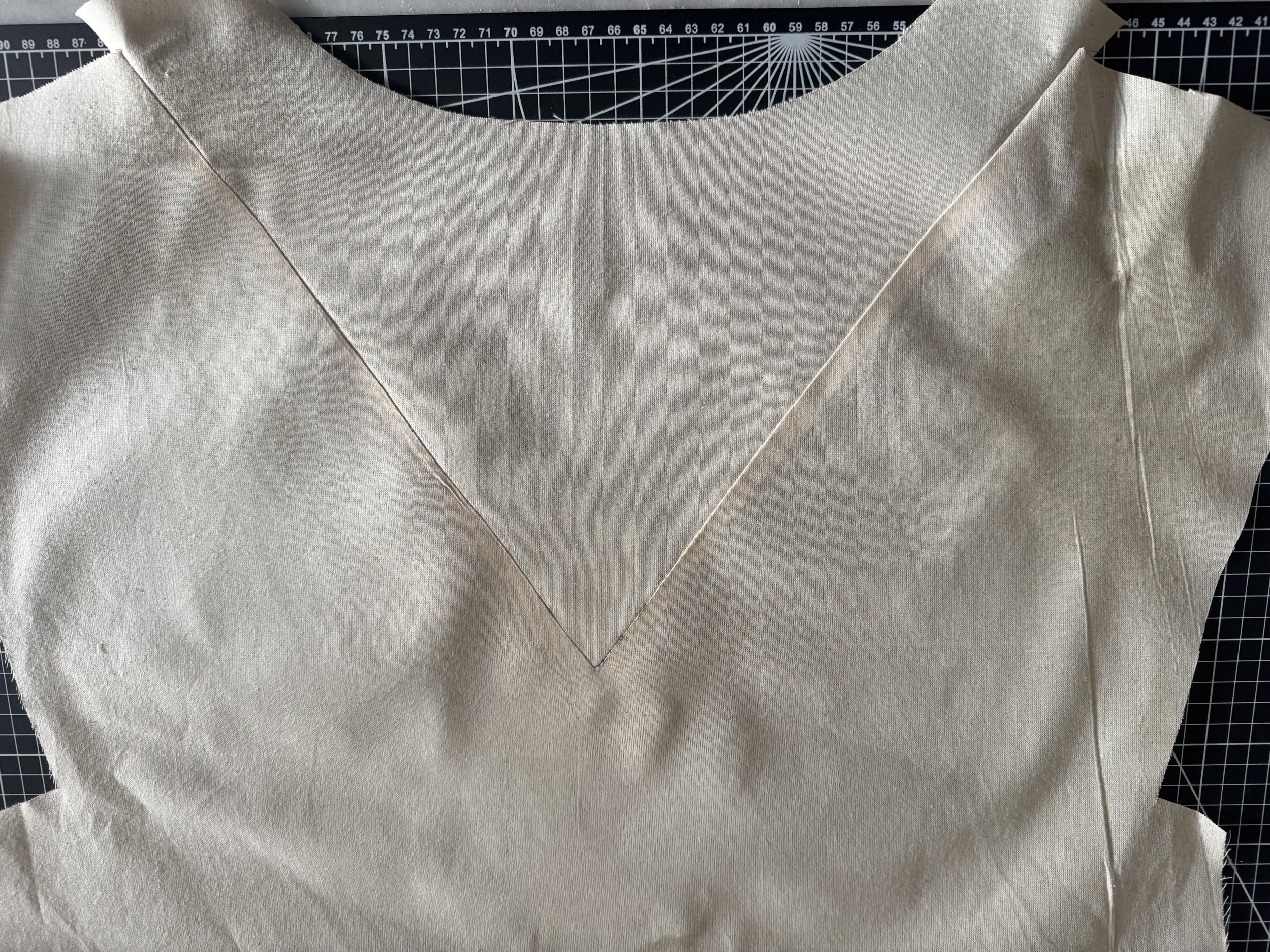
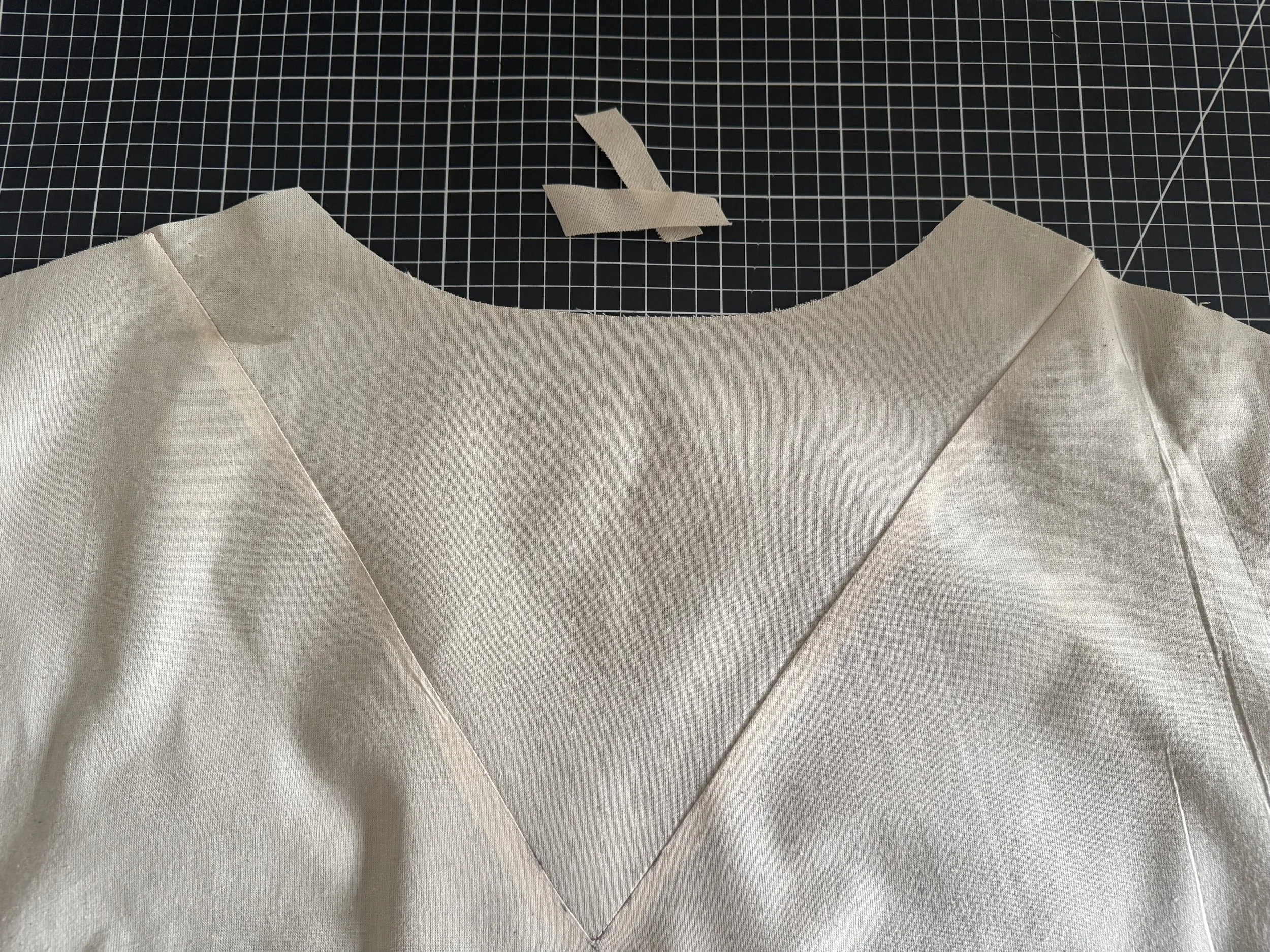
Trim the excess at the shoulder line.
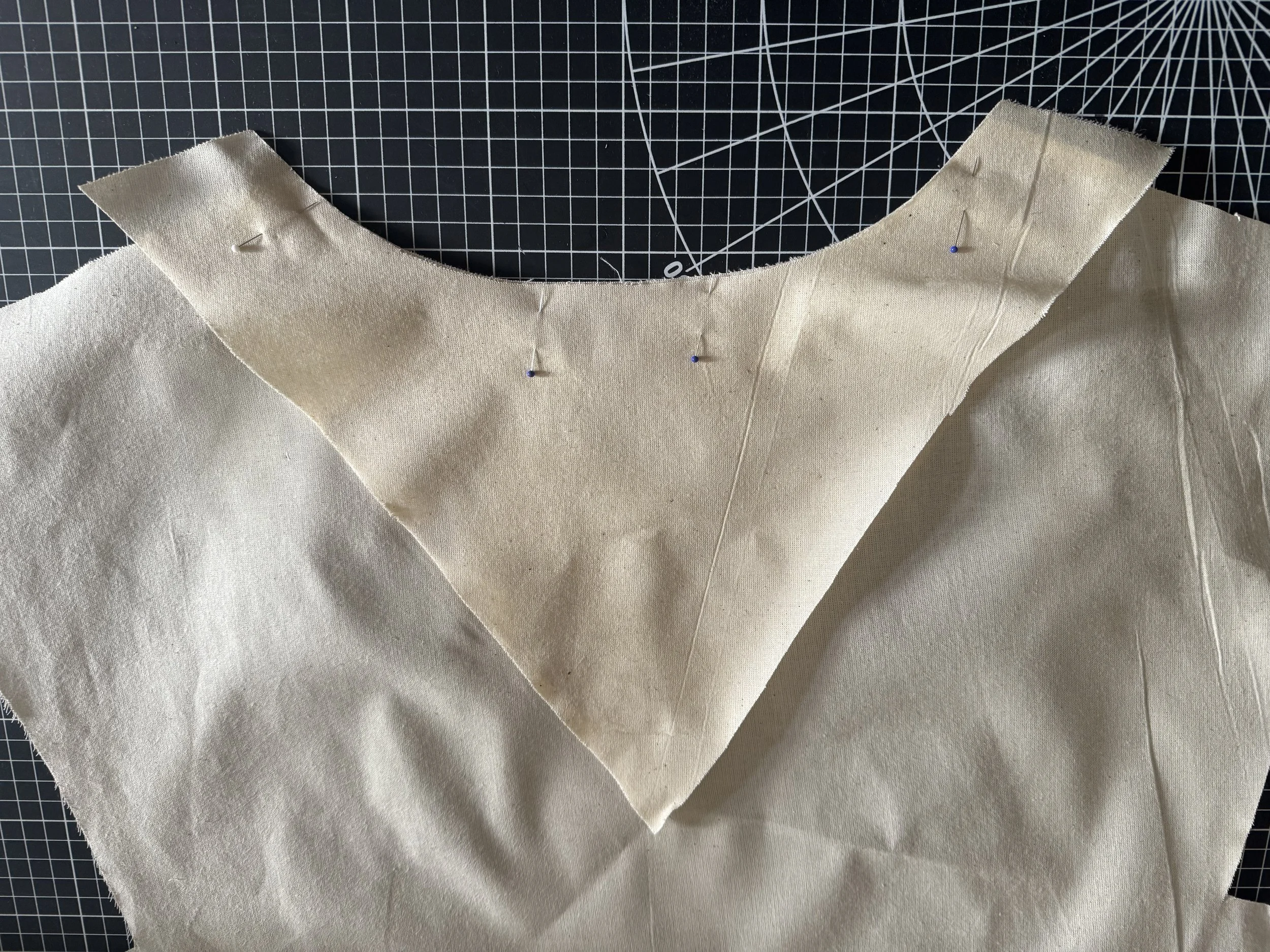
Place your front yoke facing right side to right side, pinning at the neckline.
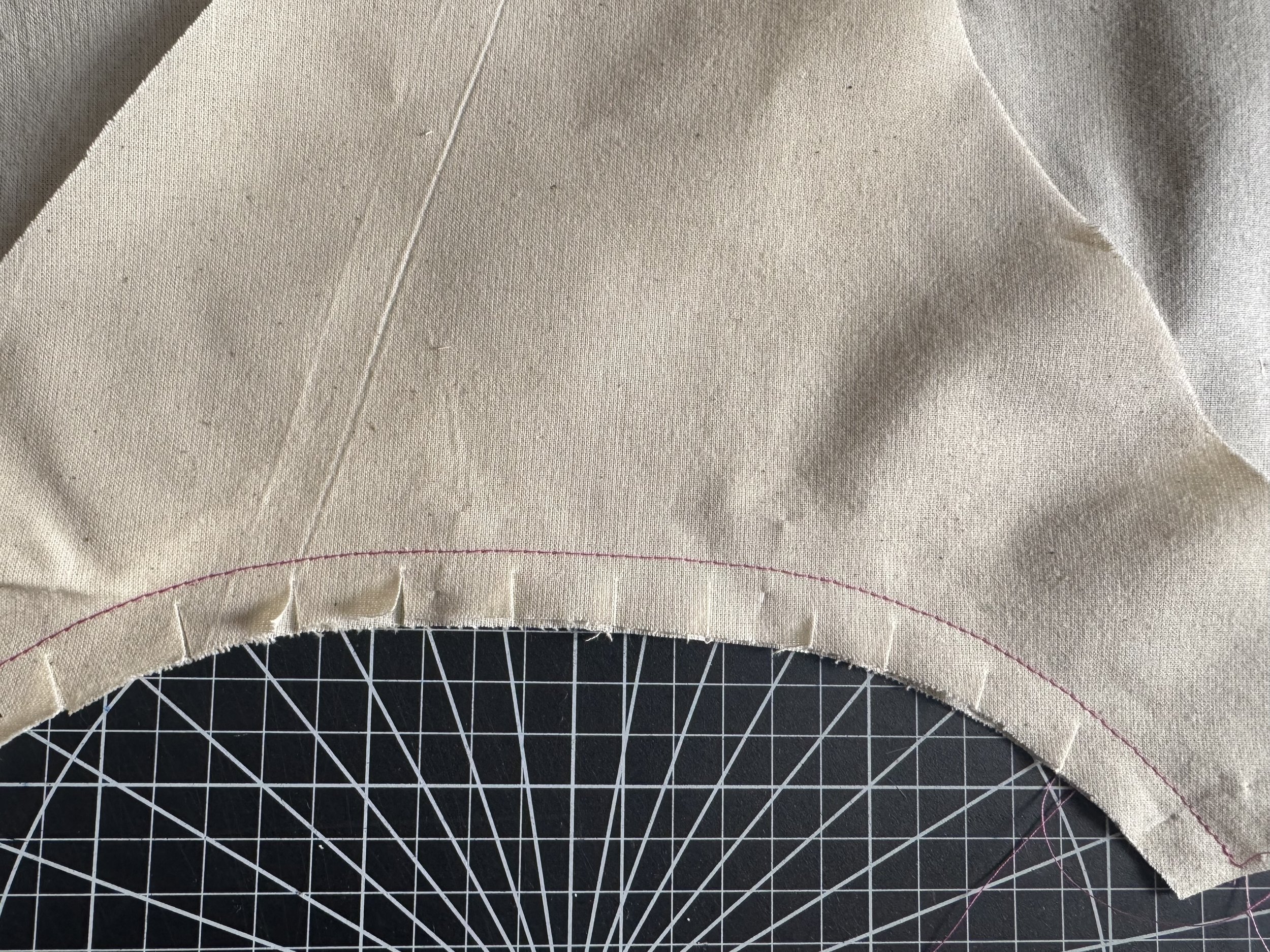
Sew at a 5/8” seam allowance, snip into the seam releasing the curve.
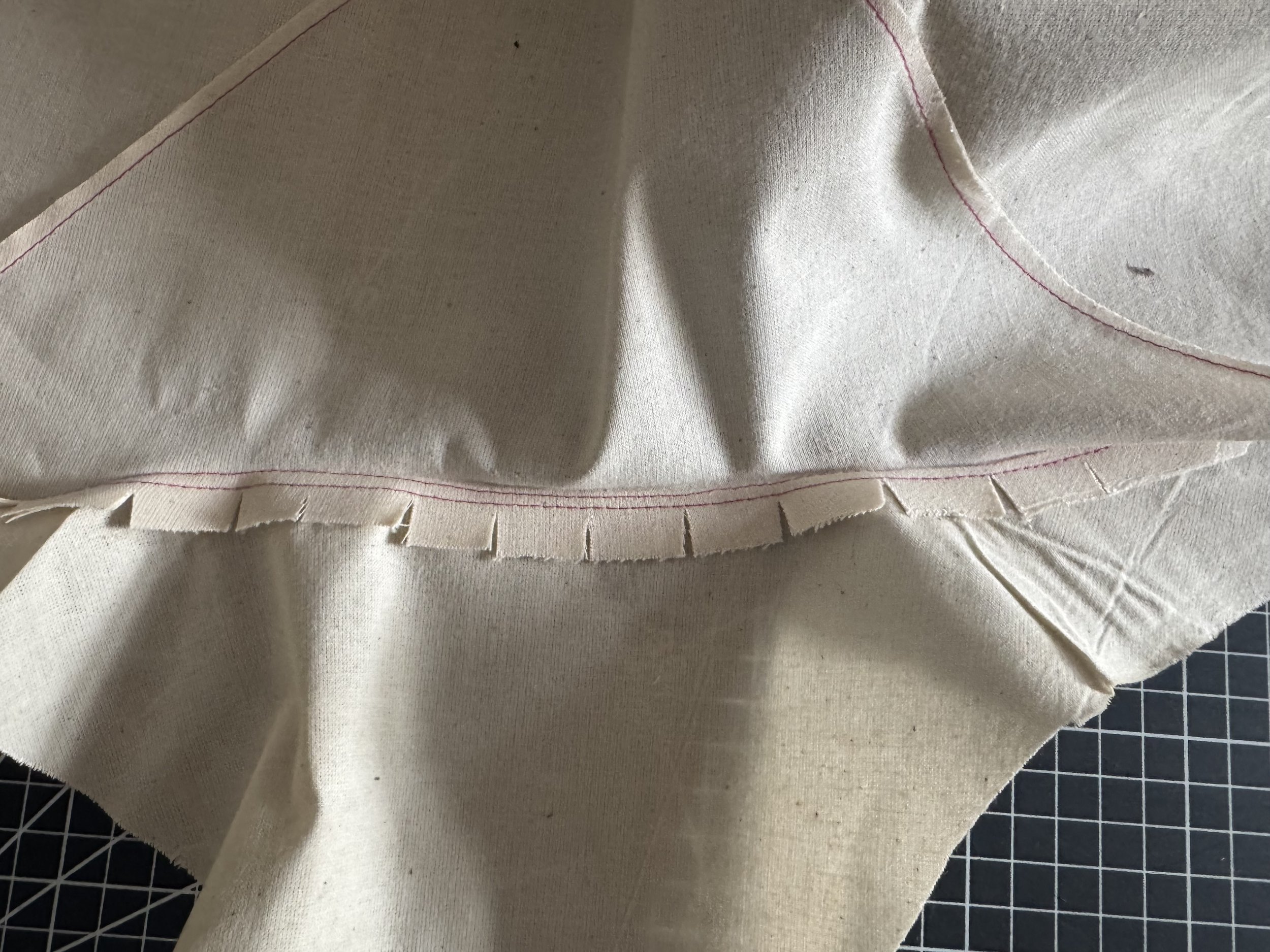
Fold both your seams to the facing side and understitch your facing to the seam as shown above, keeping your stitch just above the snips.
This stitch will be seen on the right side of the facing, on the inside of your bodice.
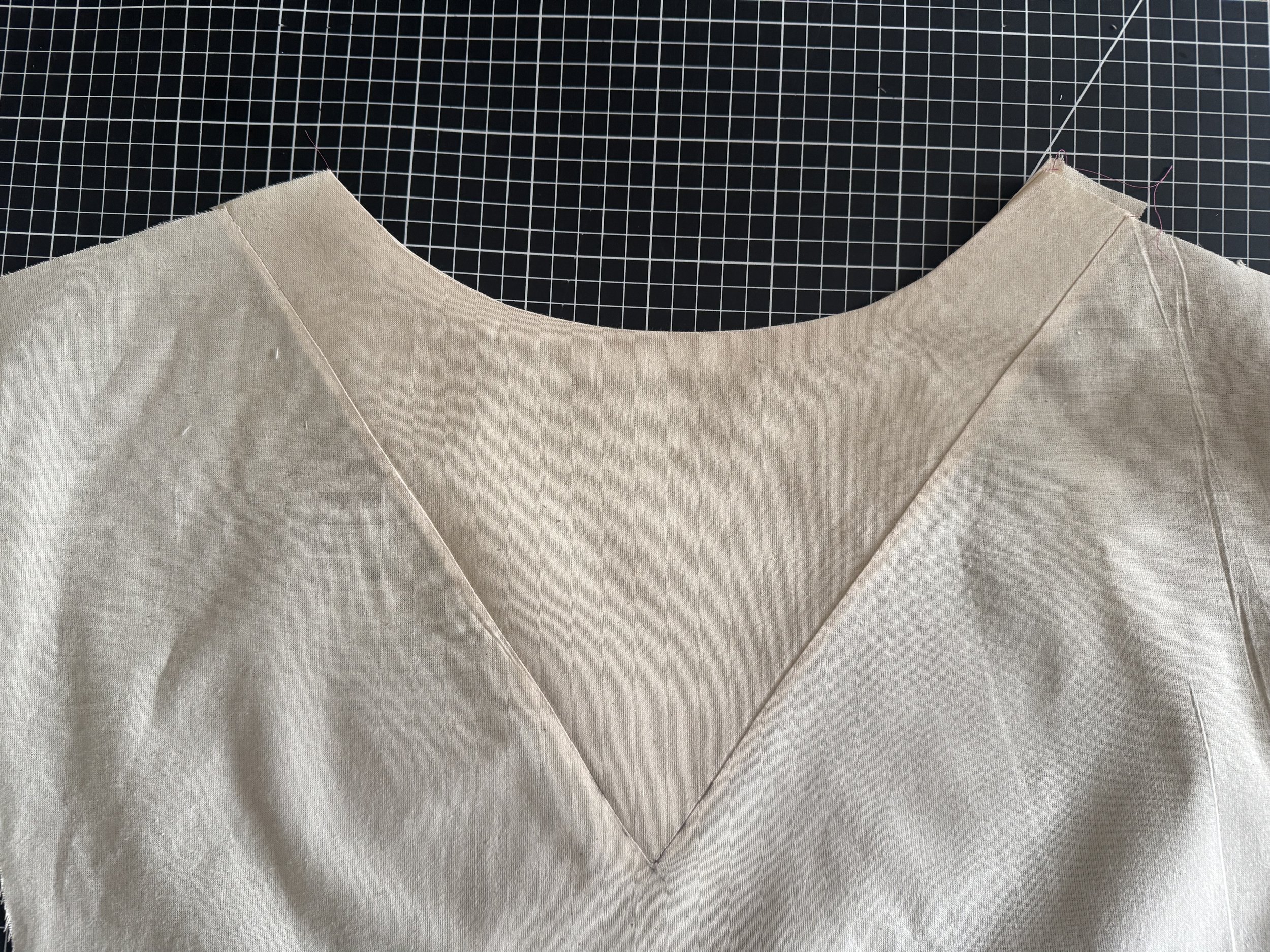
Flip your fabric to the wrong side, and press the neckline.
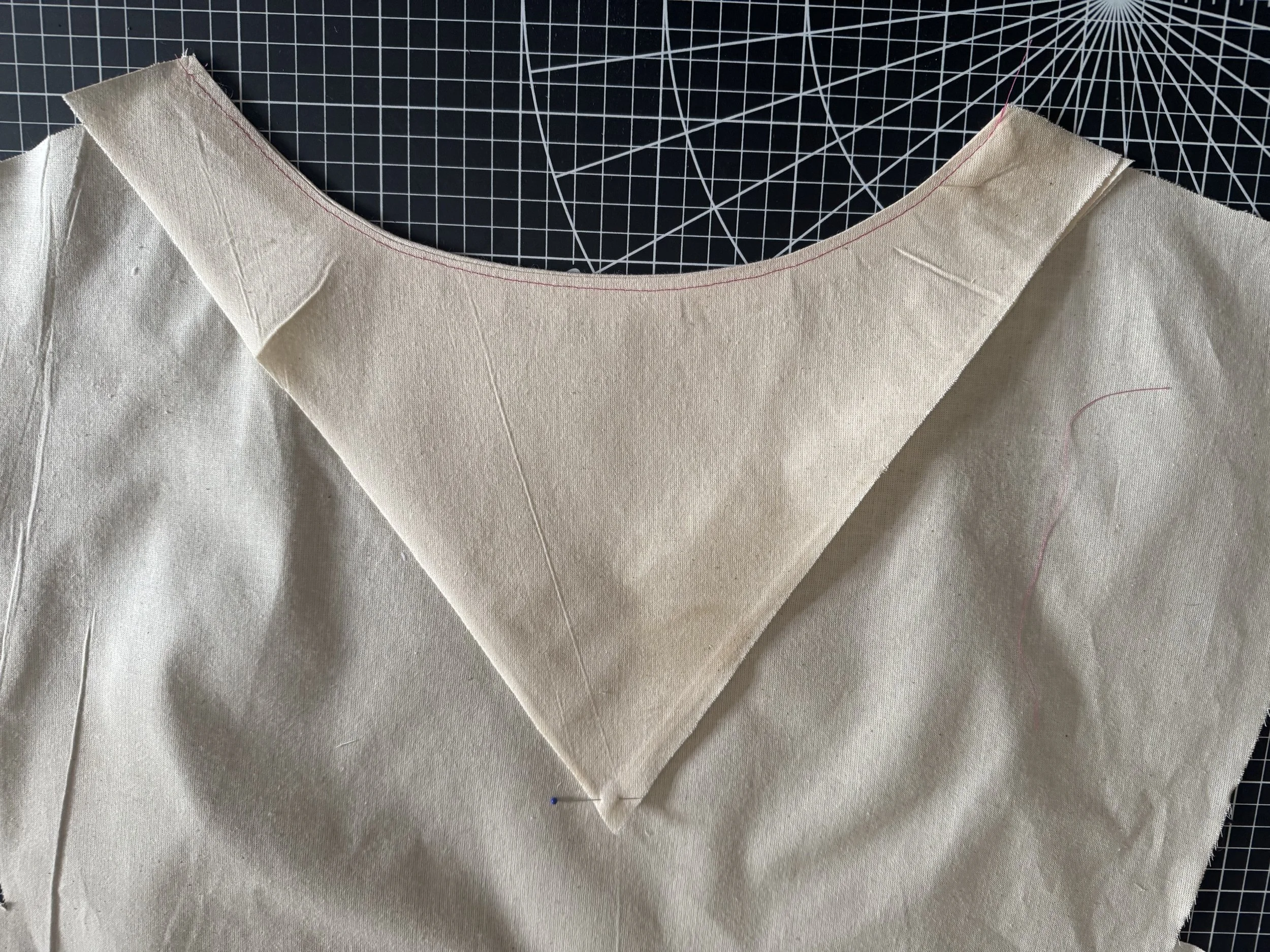
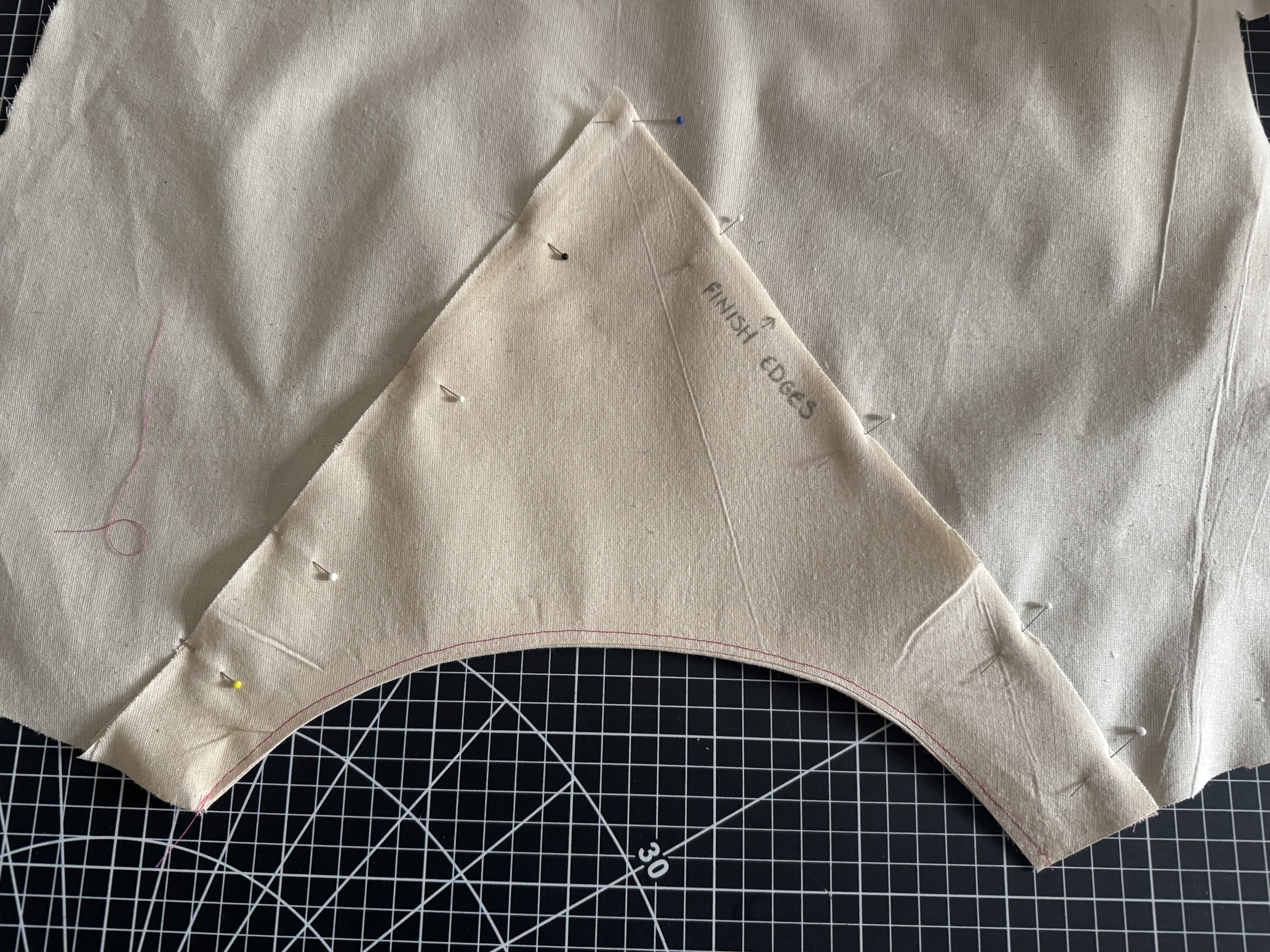
Pin your yoke over the front seams covering the stitching.
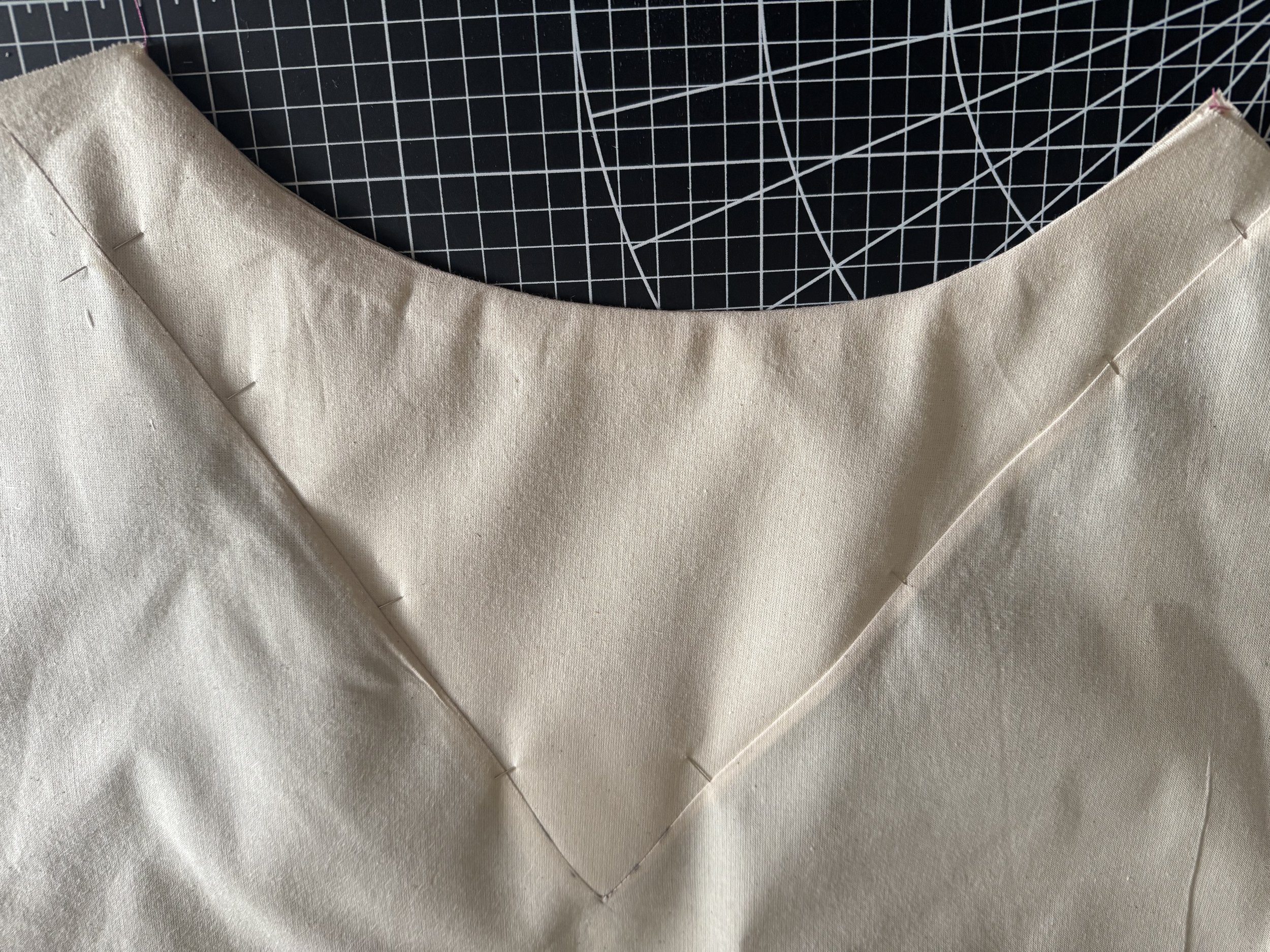
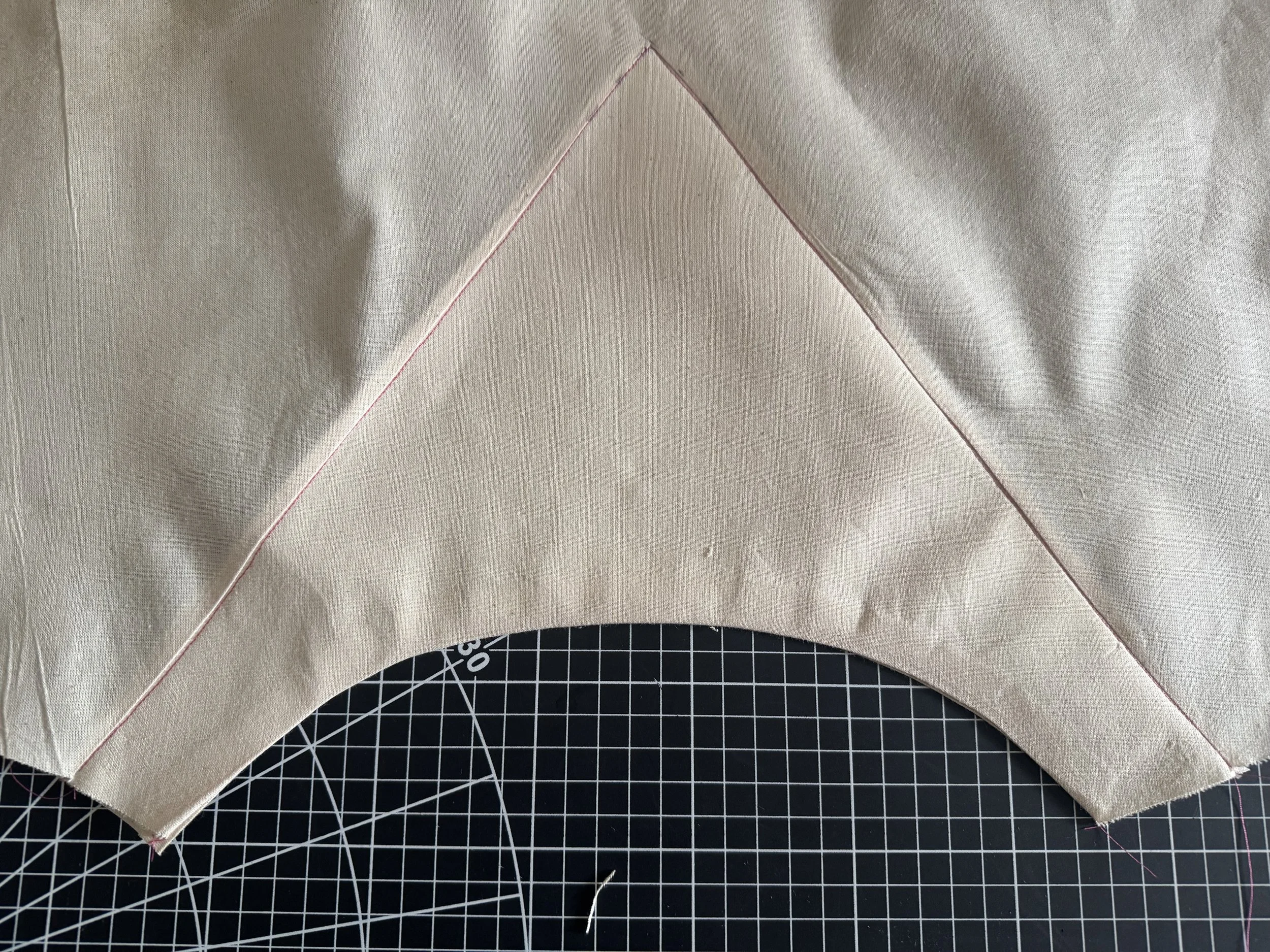
Stitch in the ditch on the right side, keeping your stitch at 2.4
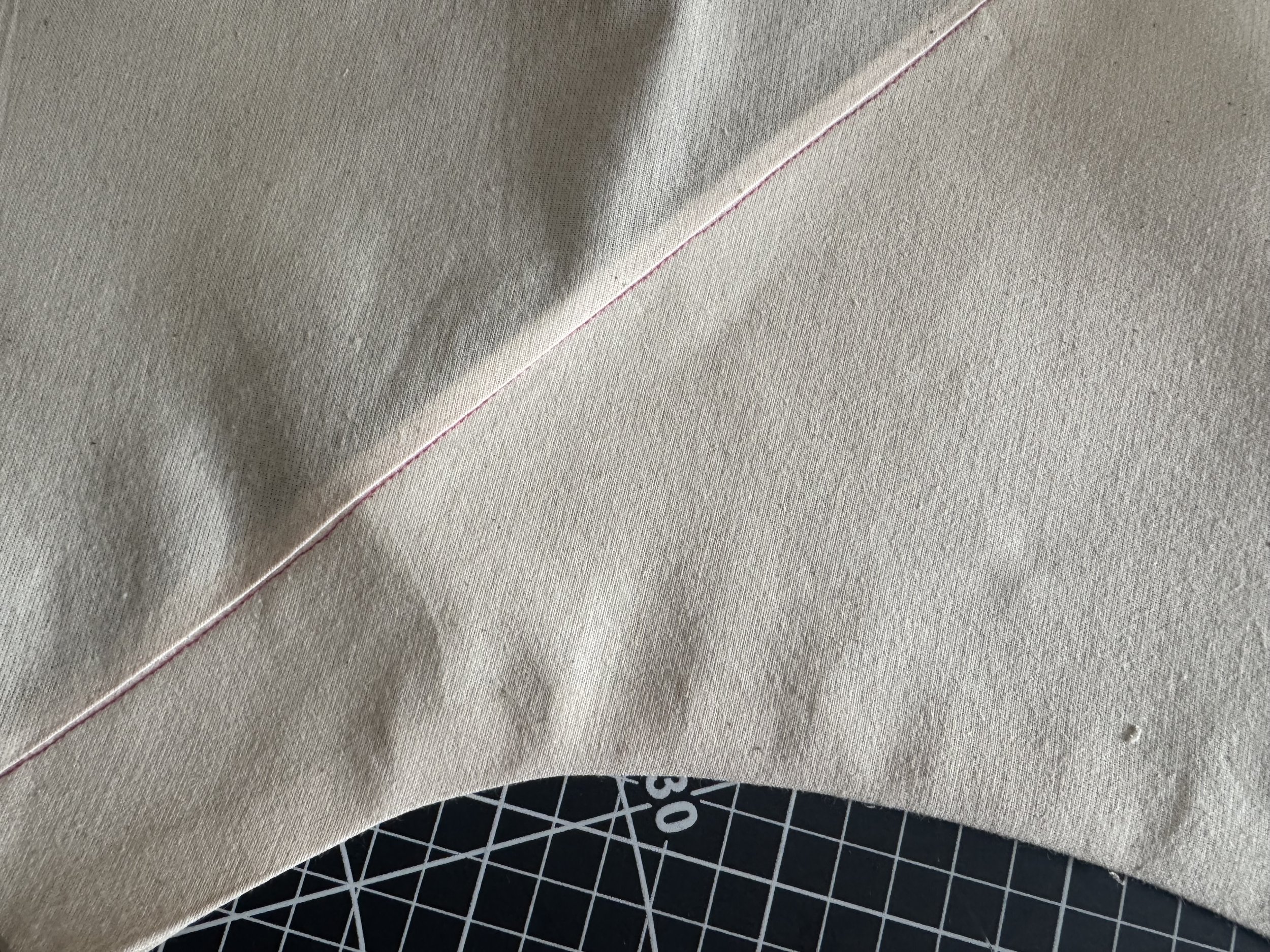
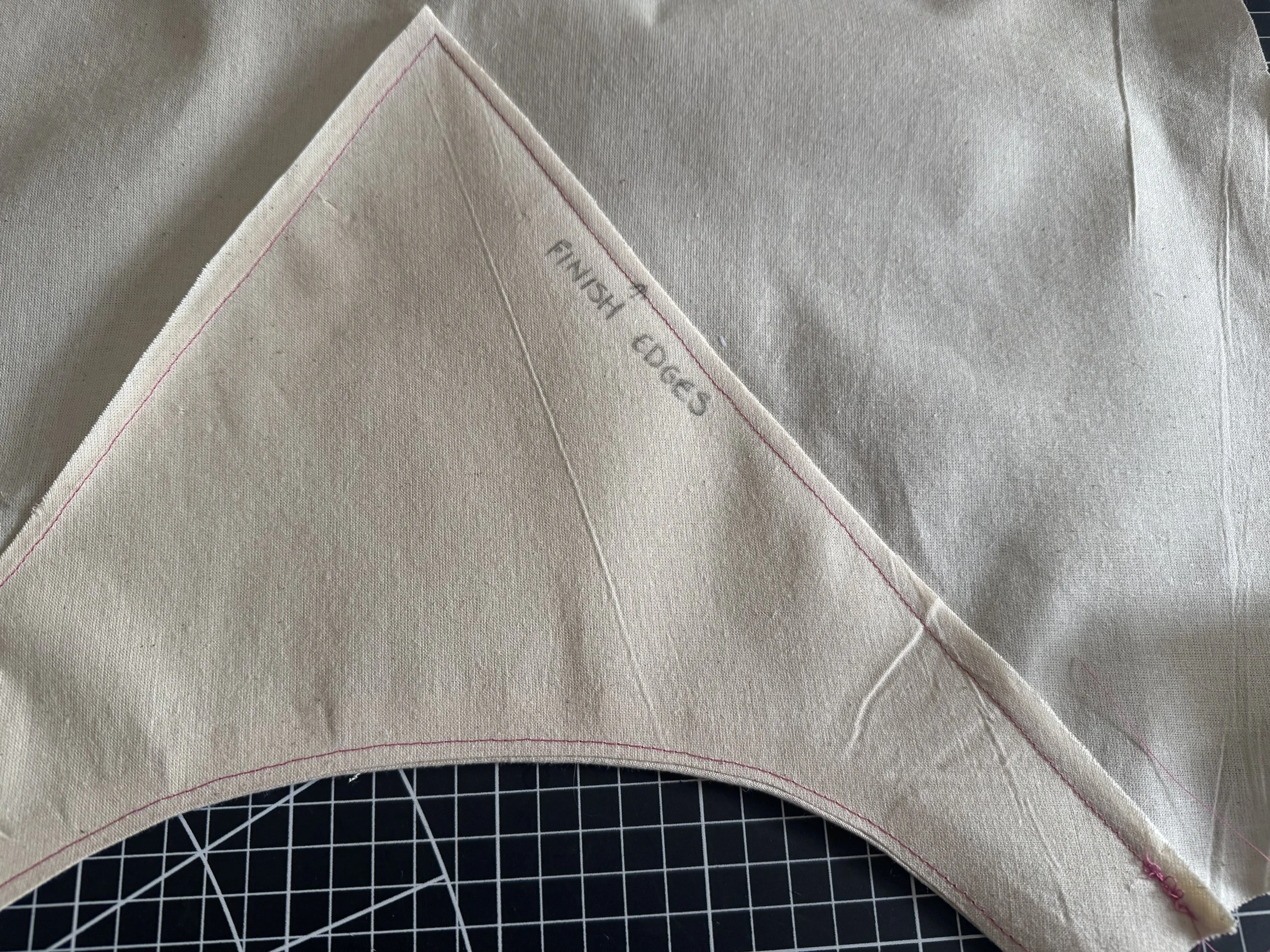
Trim if necessary.
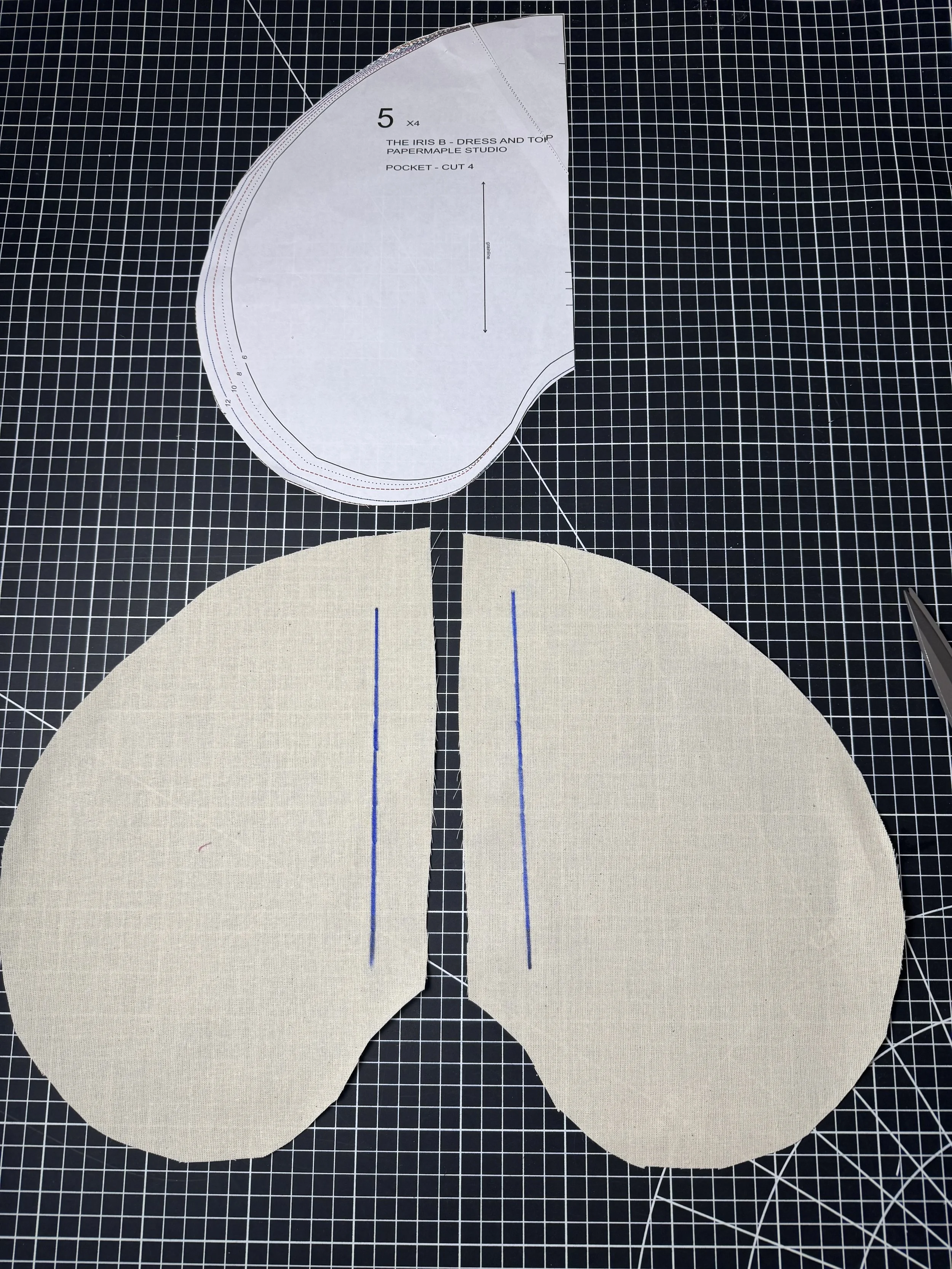
Next up:
Pockets
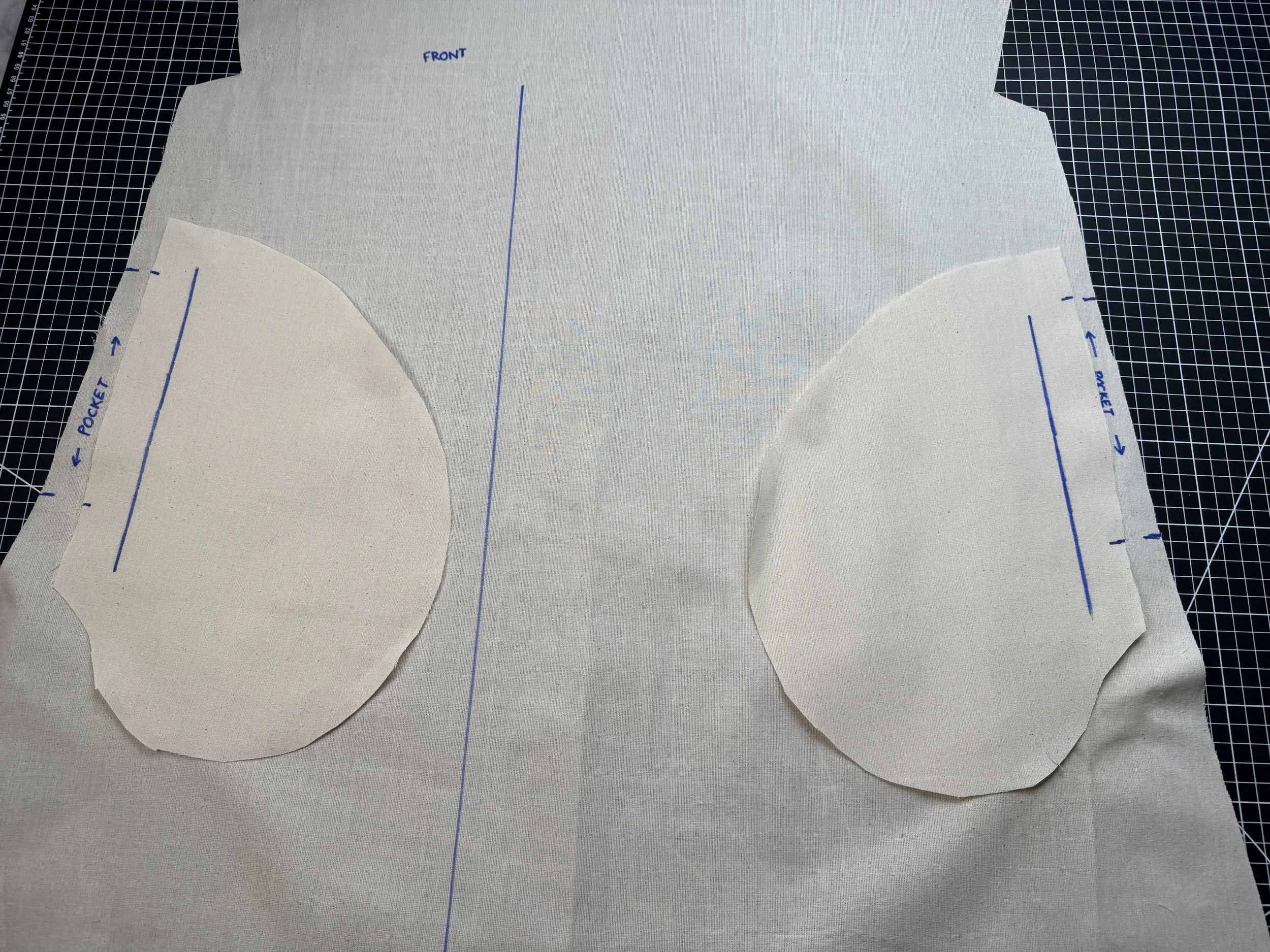
Match your notch marks, right side to right side.
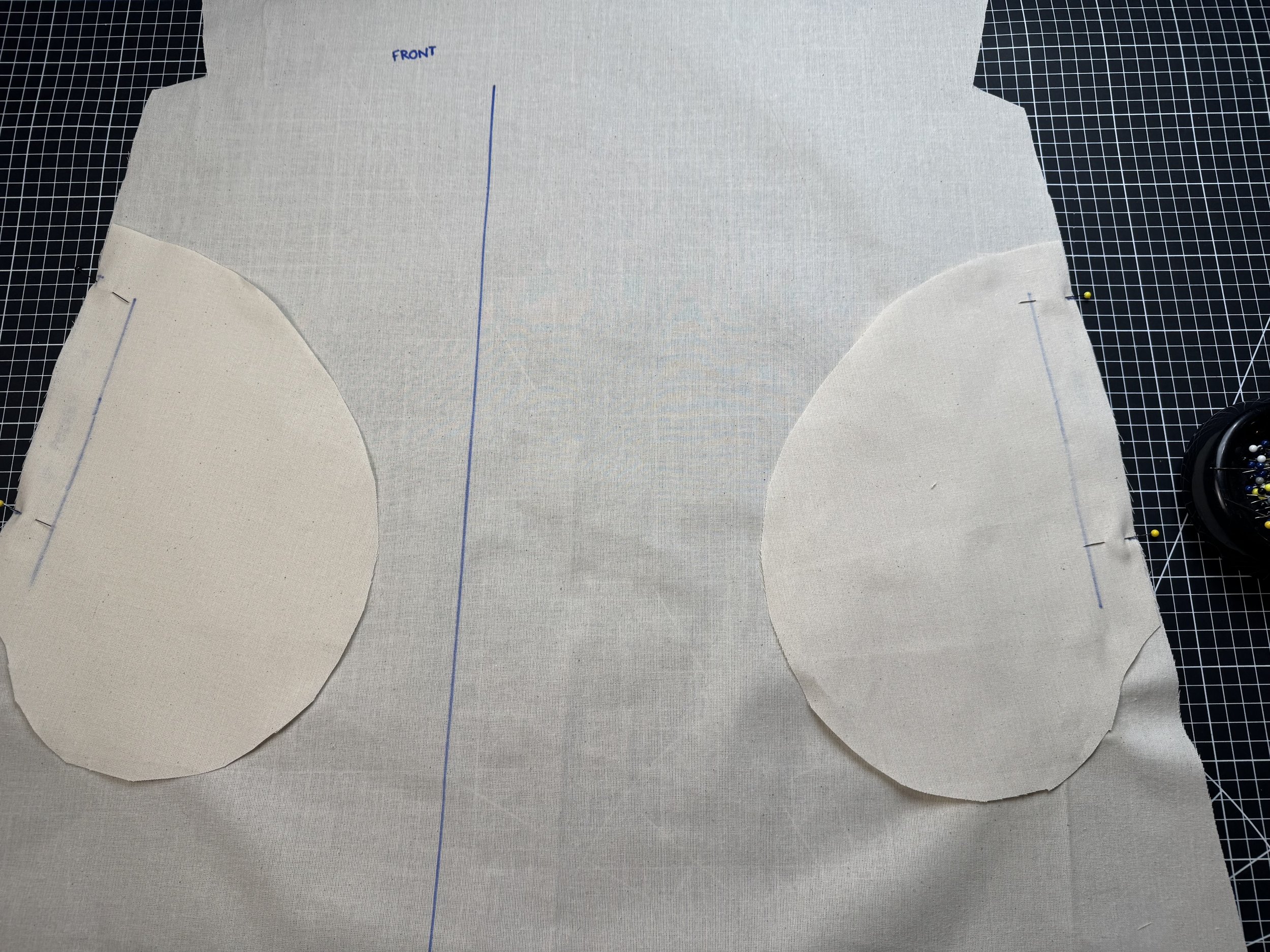
Pin and stitch at a 5/8” seam allowance
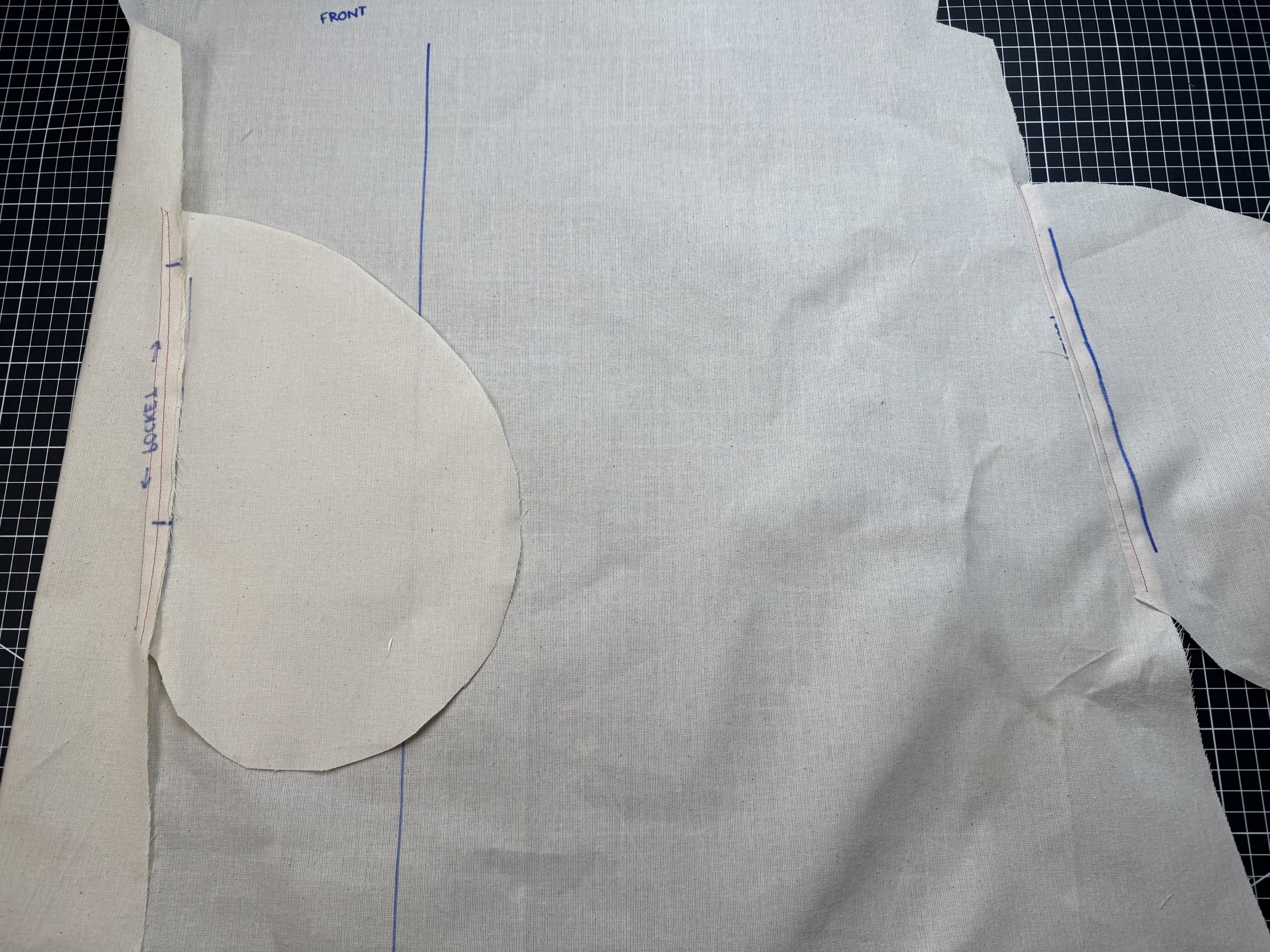
Flip your seam allowances to the pocket side, and understitch as shown.
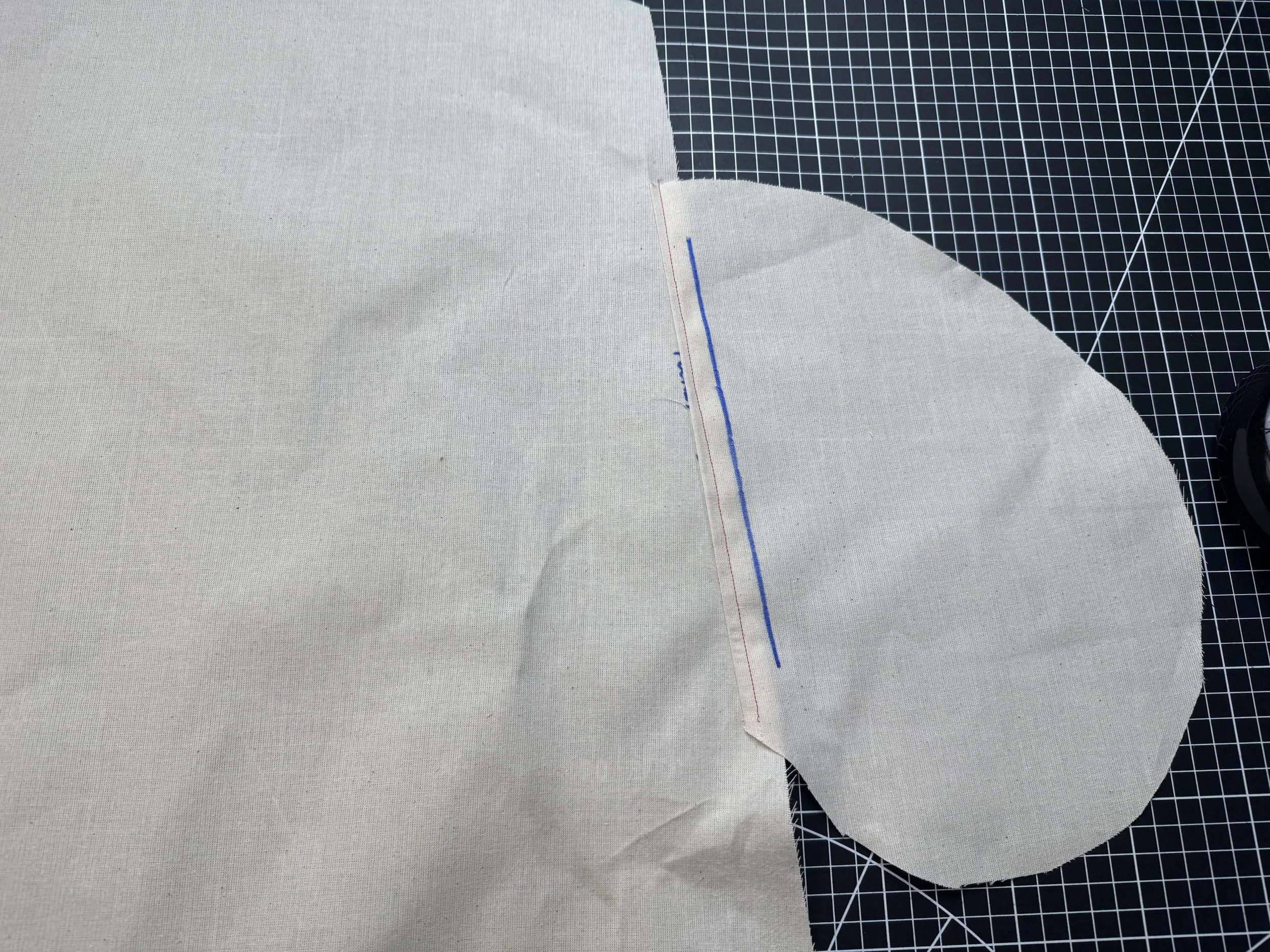
The understitch shown on the right side.
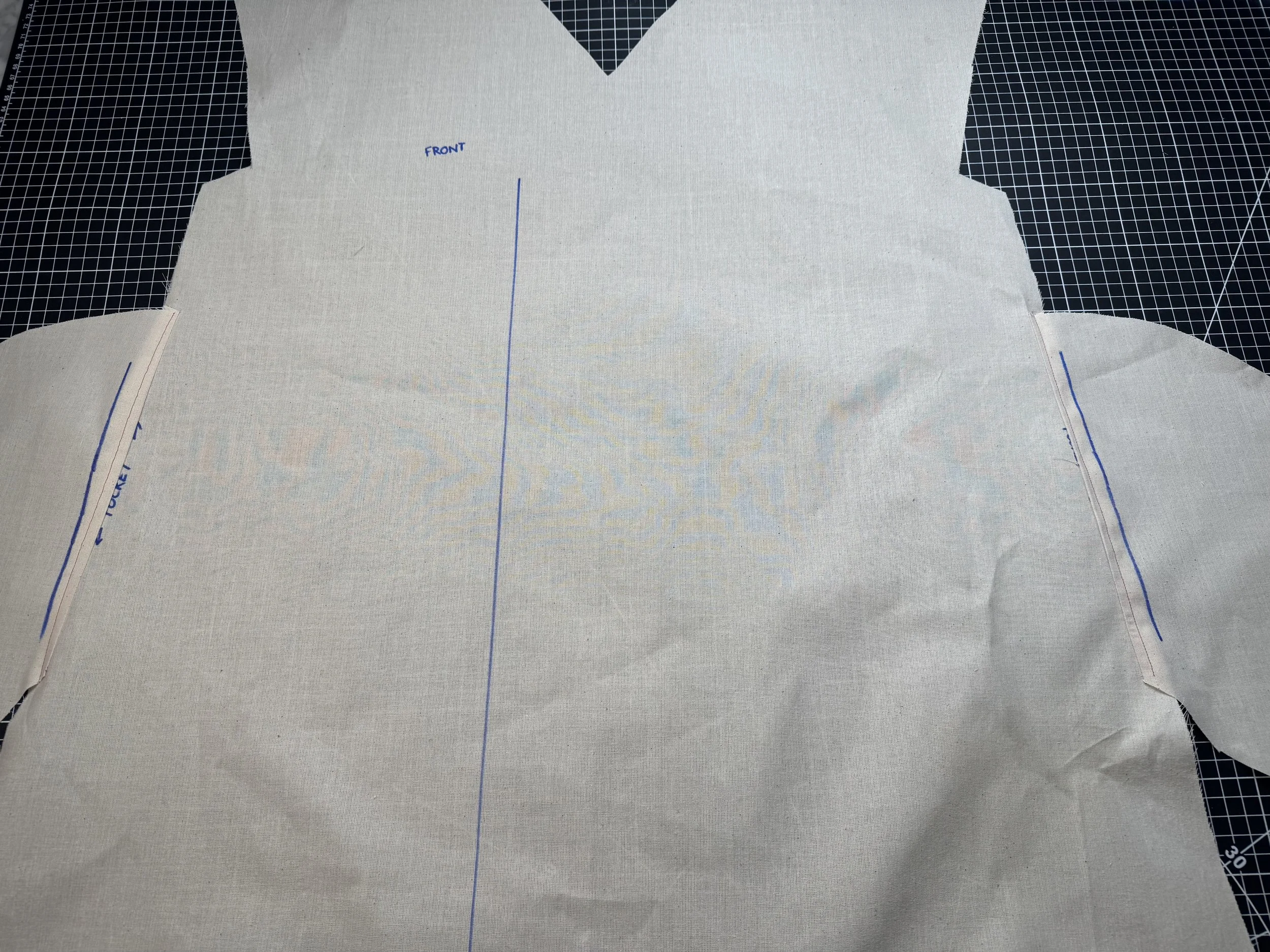
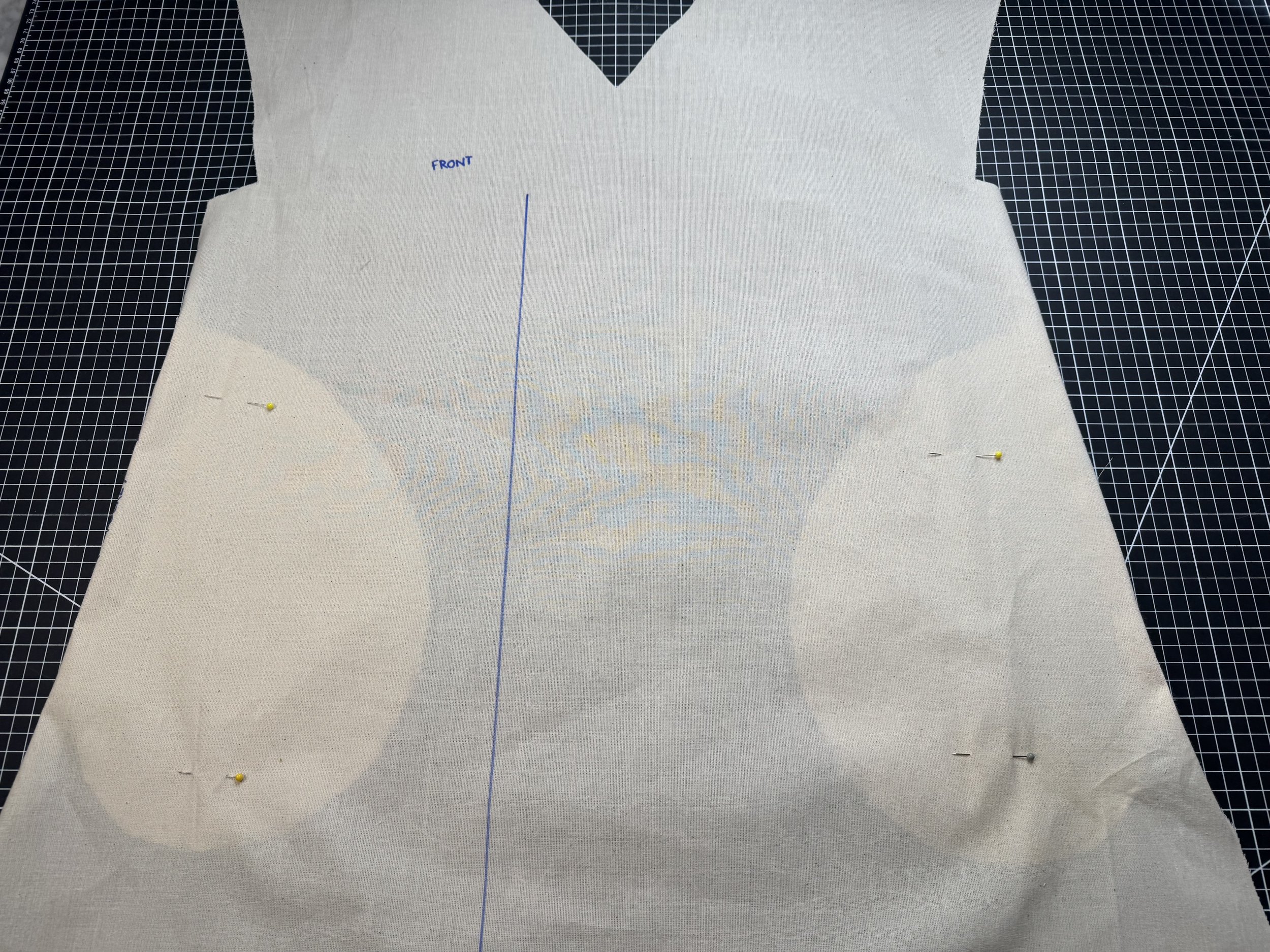
Flip your pockets to the wrong side and pin to hold.
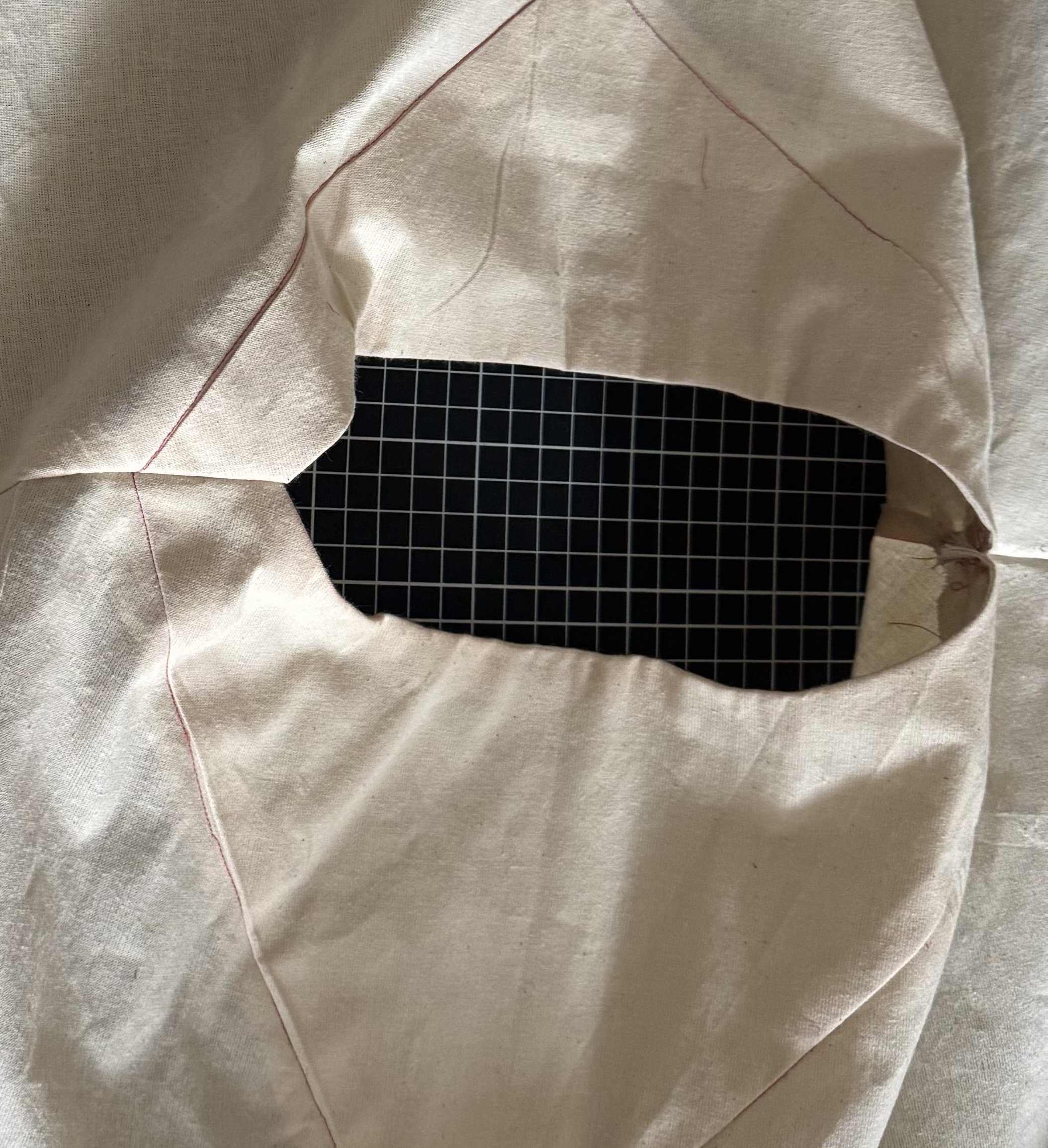
Next up:
Back Yoke.
*As you see above, the back yoke will join the front yoke at the shoulder seam. Before sewing the back yoke, measure the front yoke at the shoulder seam, and ensure you start your stitch in the same place on the back so they line up when you join the two together.
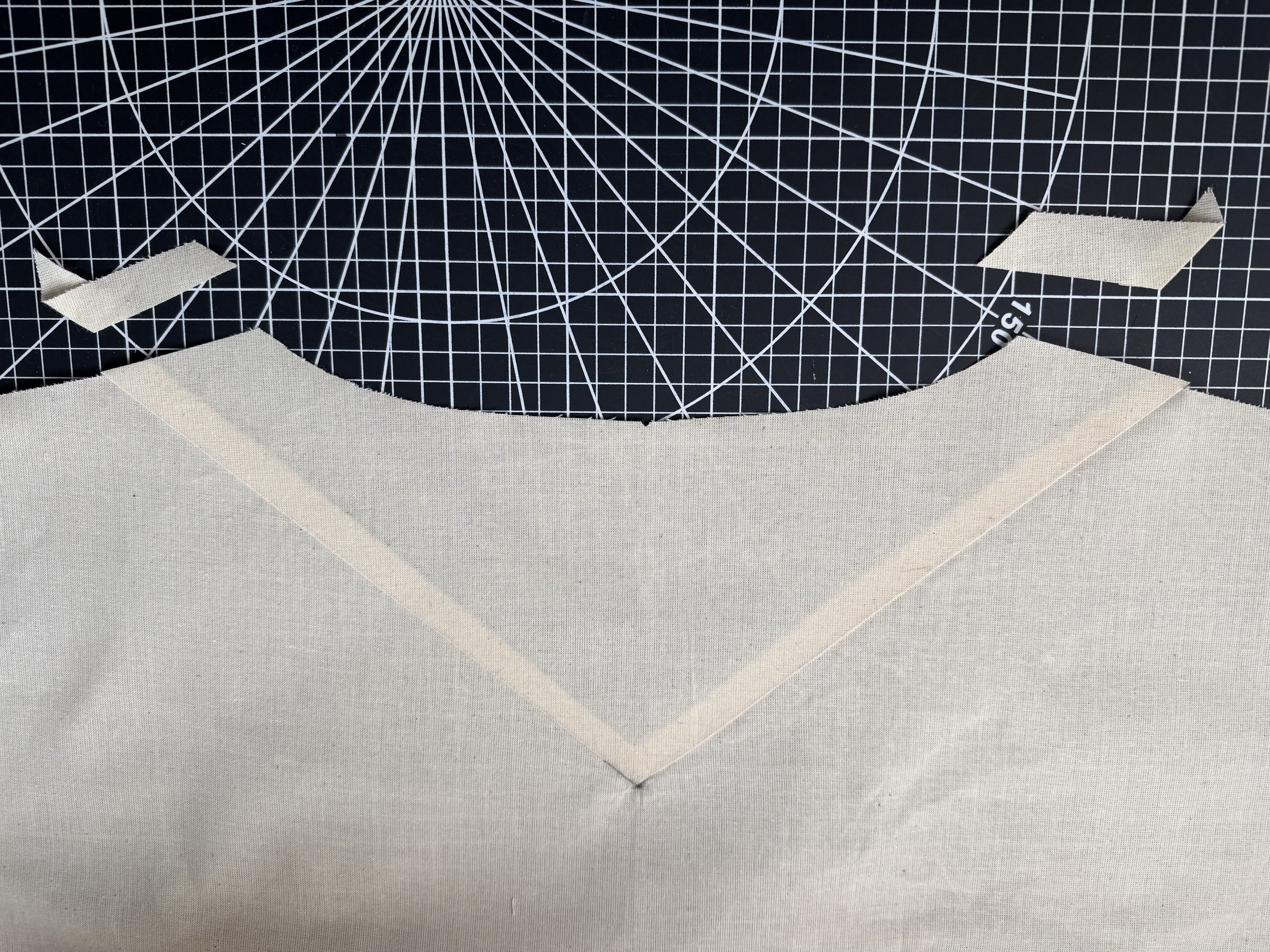
Sew your back yoke with the same method as the front.
Trim the shoulders again.
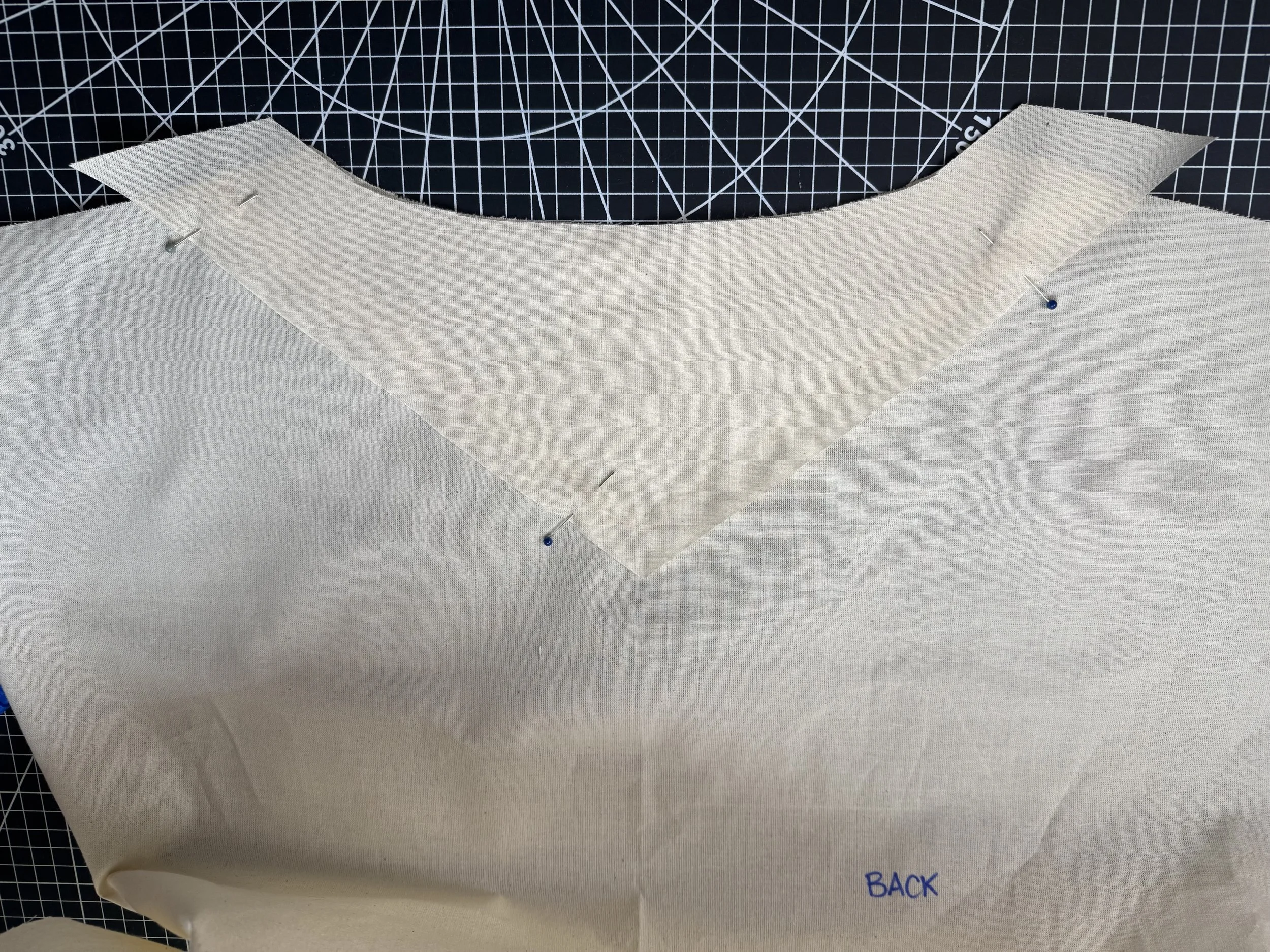
Pin the back yoke to the back bodice, right side to right side.
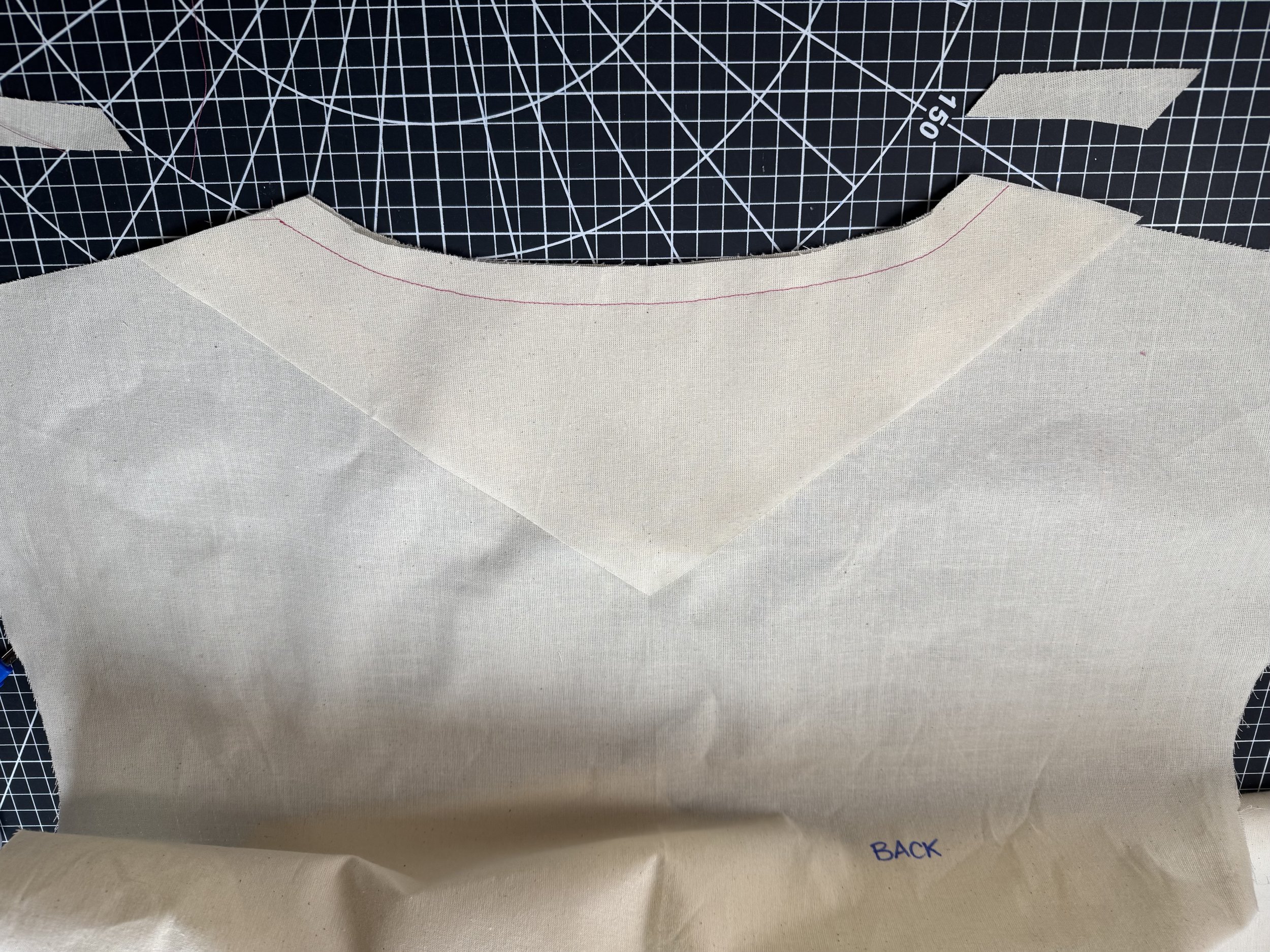
Sew your neckline at a seam allowance of 5/8”
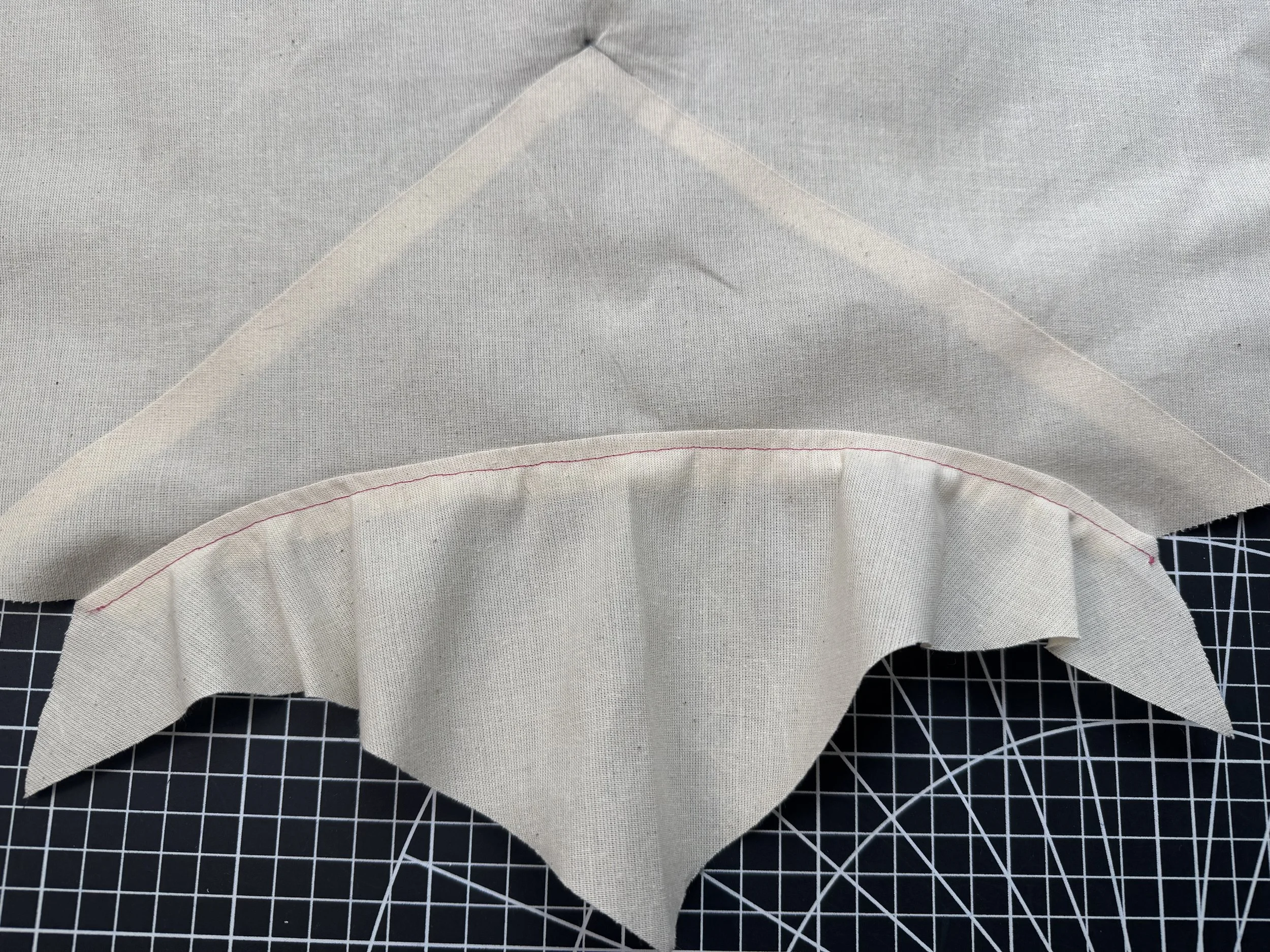
Flip your seams to the facing again, and understitch.
The neckline has a minimal curve, and snipping should not be necessary.
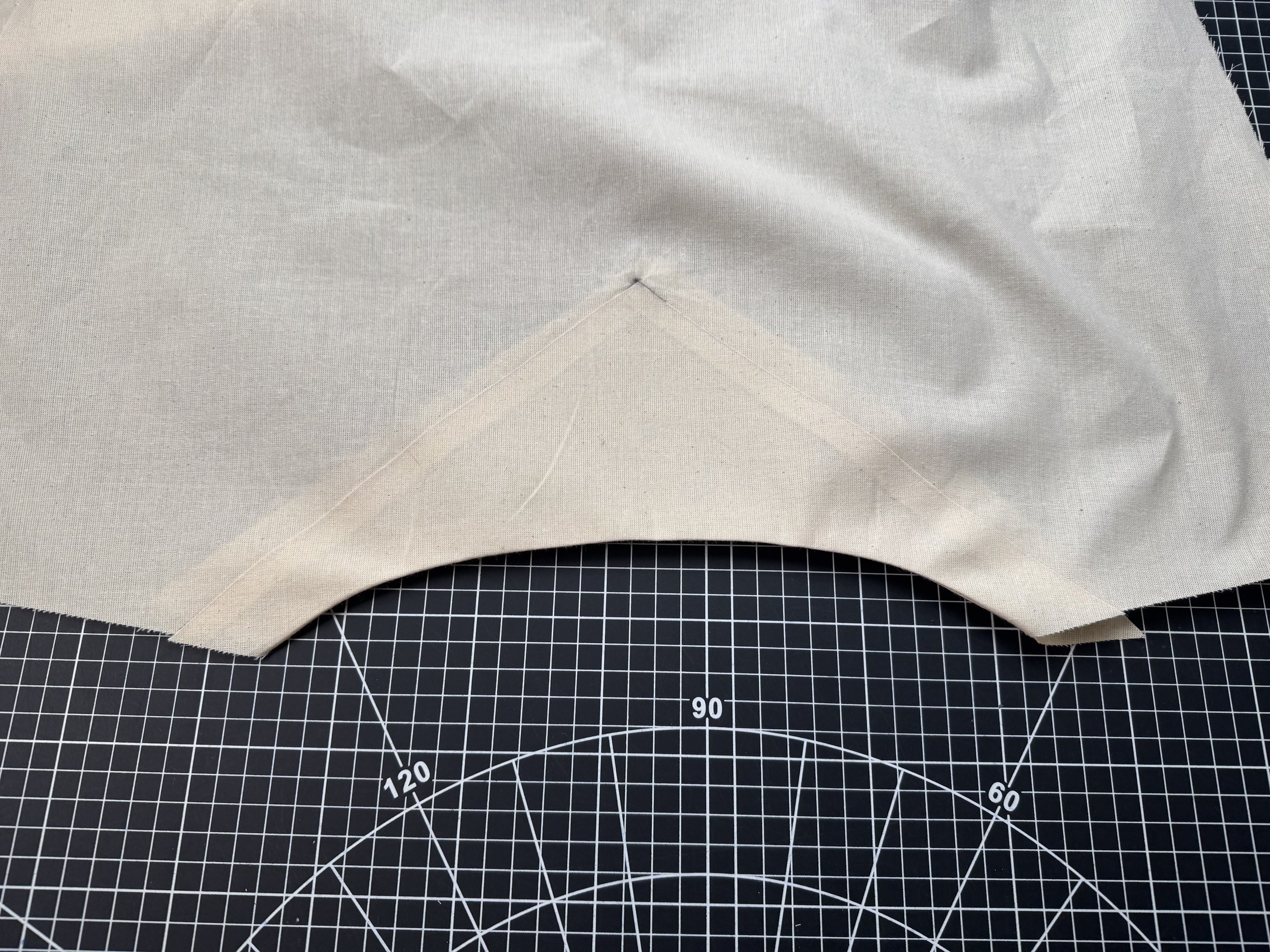
Press the facing to the wrong side.
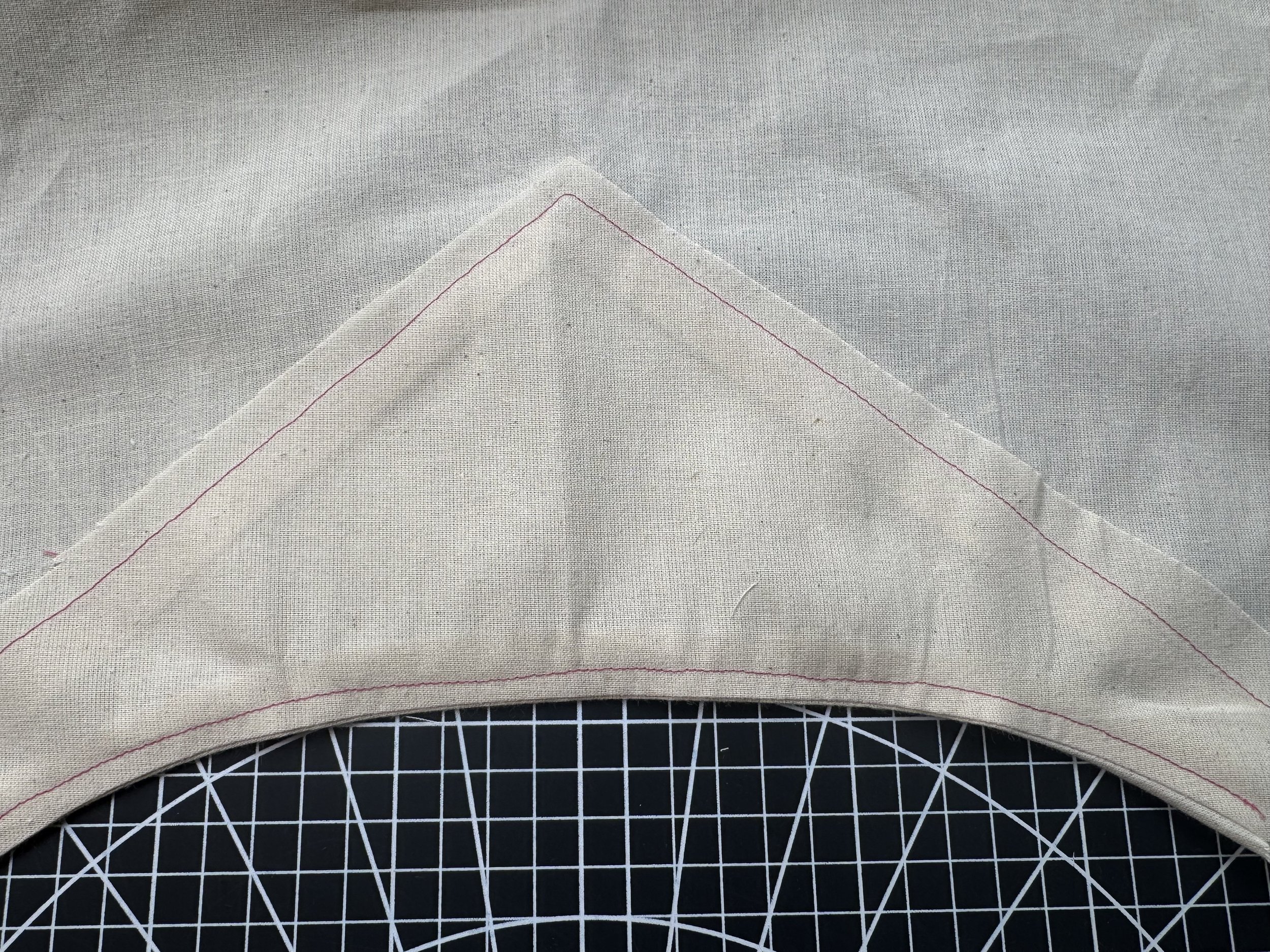
Stitch in the ditch from the right side.
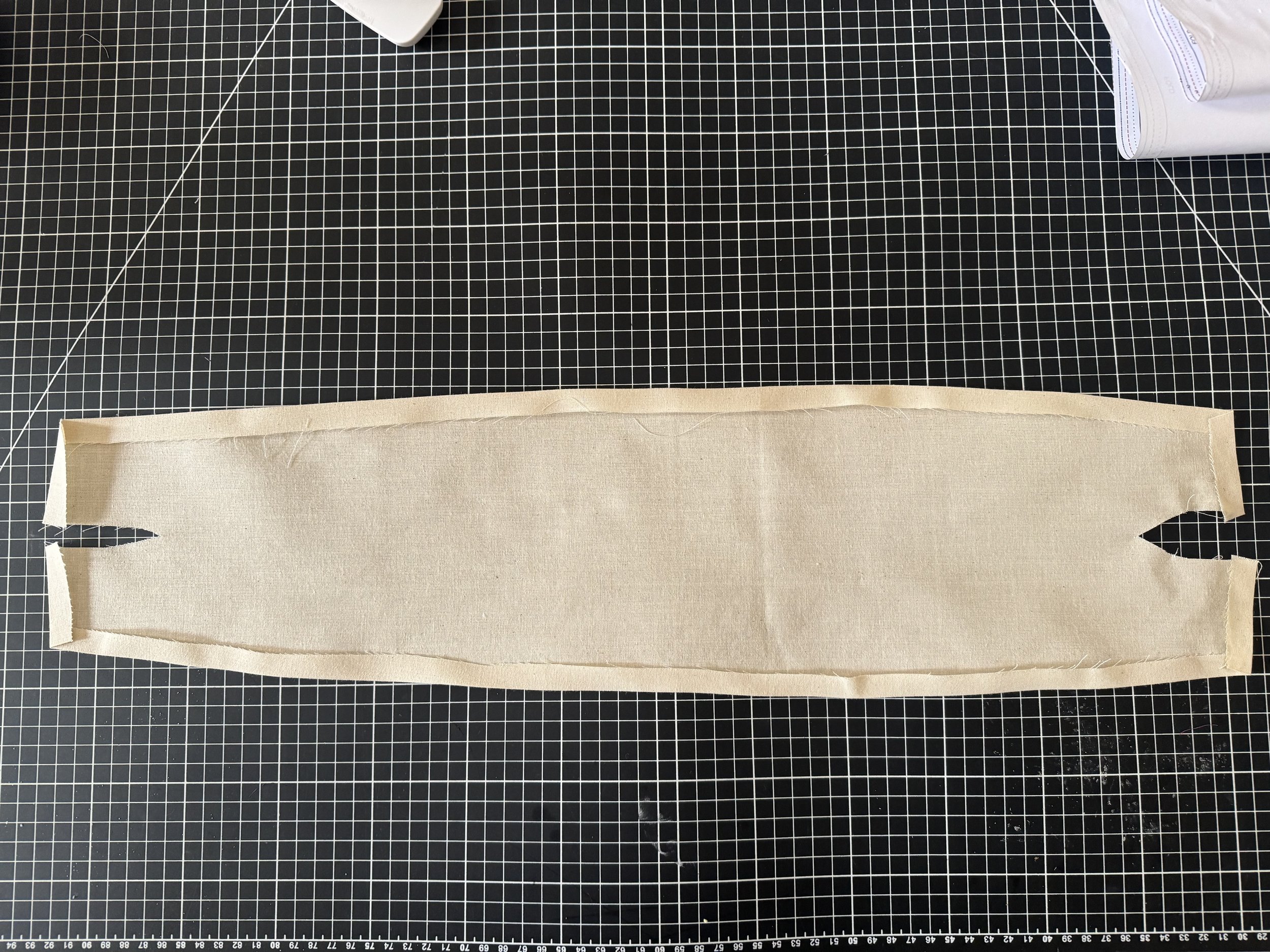
Sleeves next!
These are a little different and so much easier than a standard sleeve……
Press the seam allowances in on all edges, at 1/2”
The larger curve is the front of the sleeve.
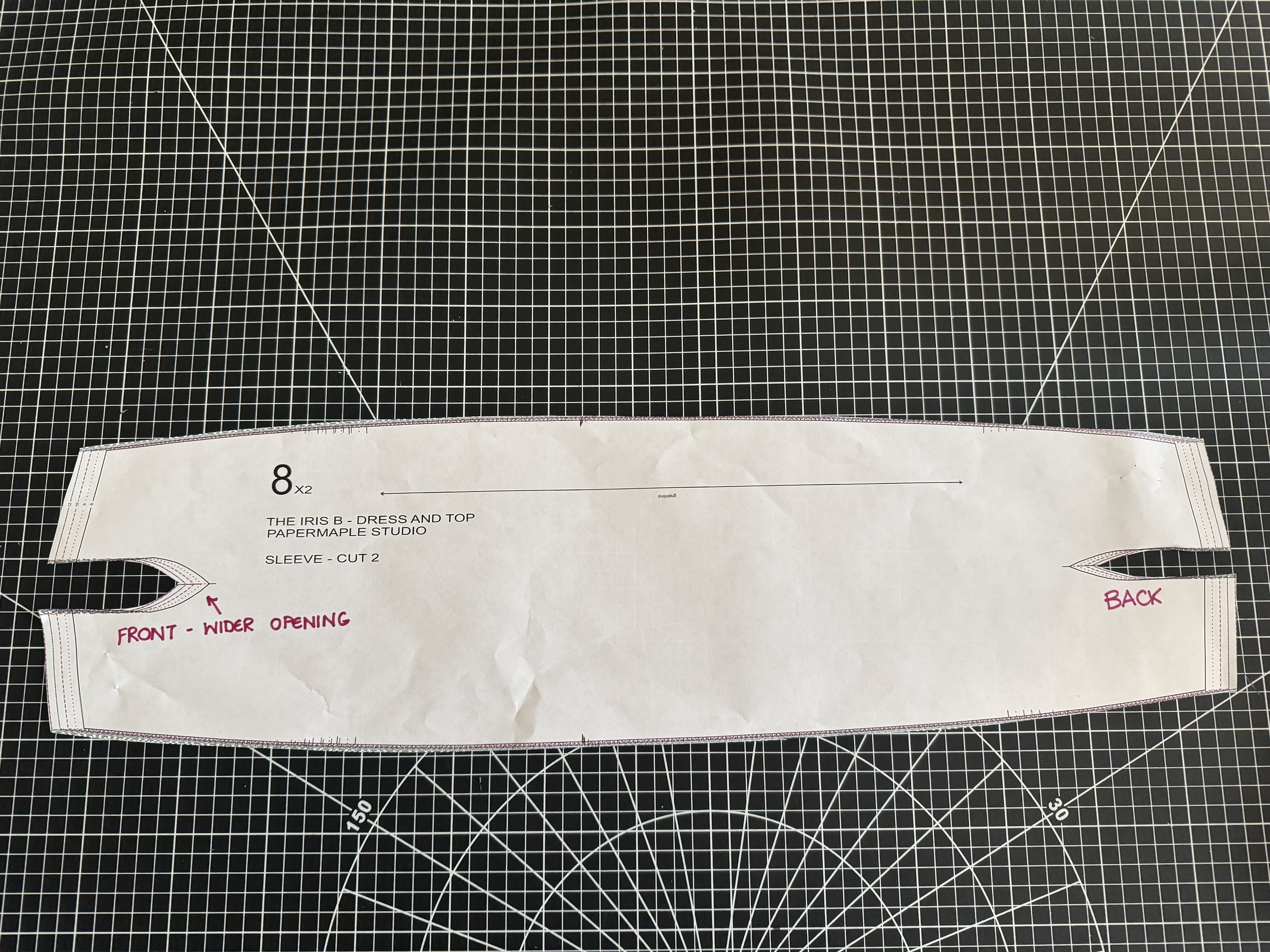
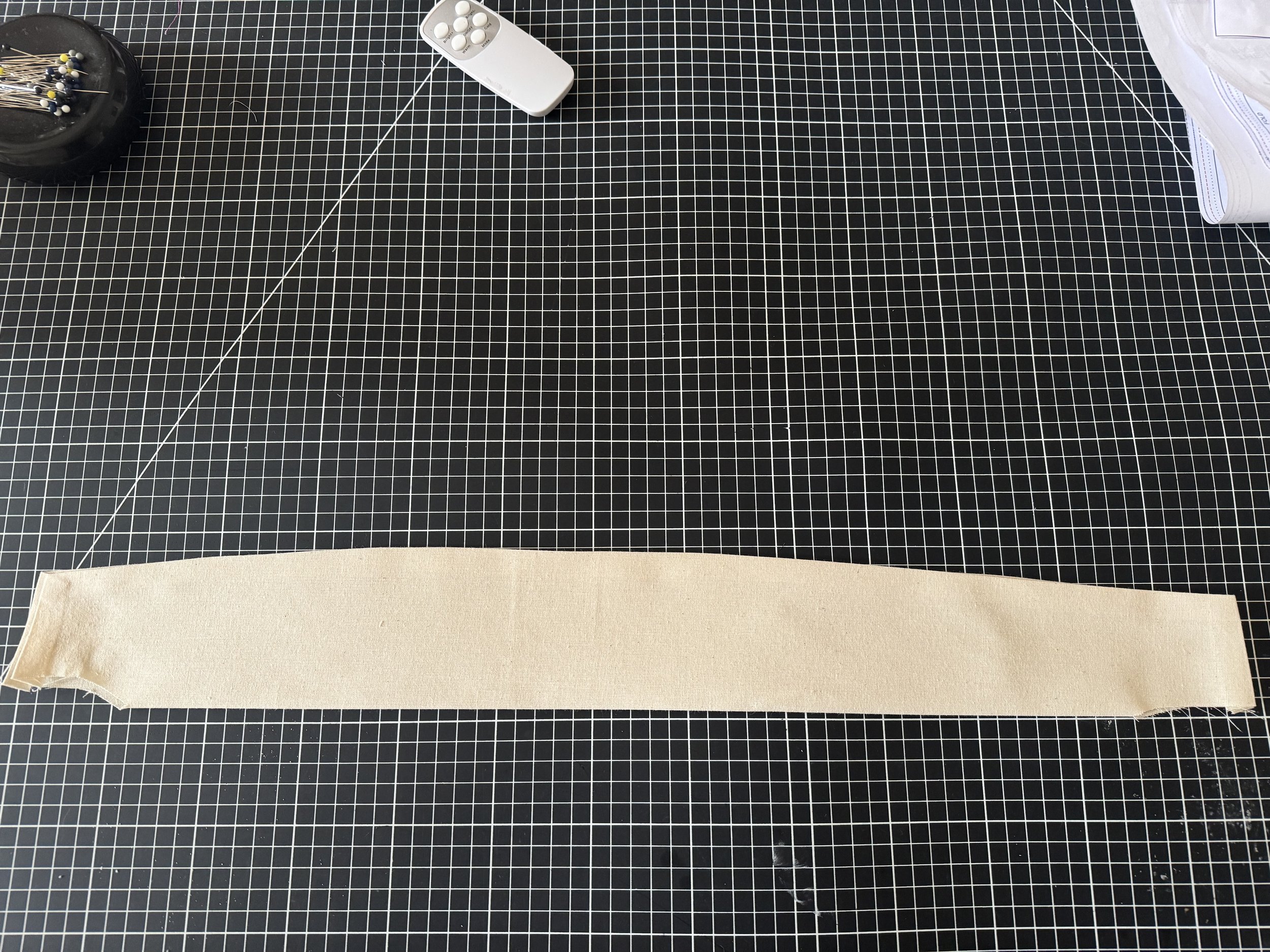
Fold the sleeve in half and press well.
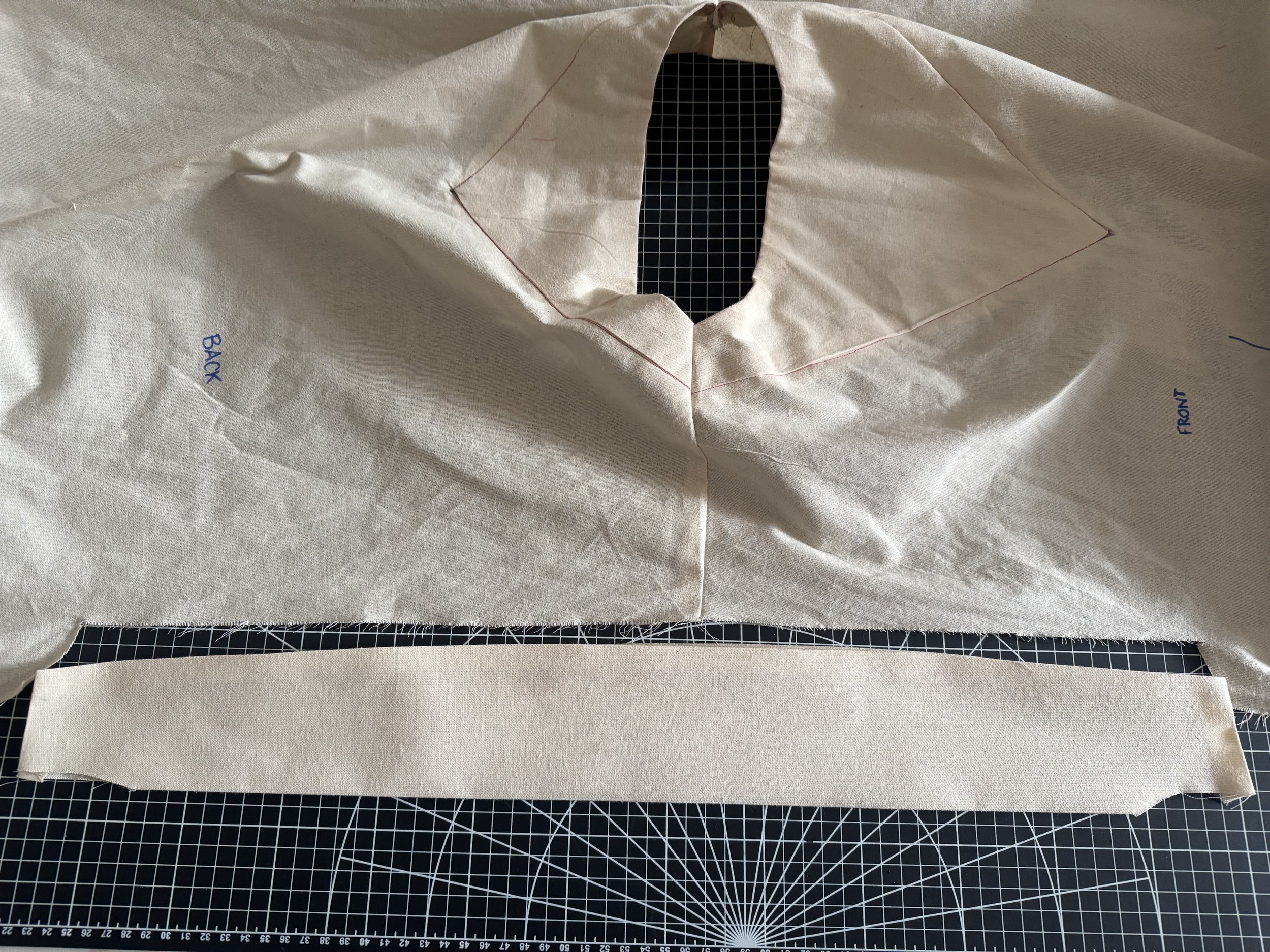
Line your sleeve to the bodice. Slide the sleeve onto the bodice, encasing the bodice seam.
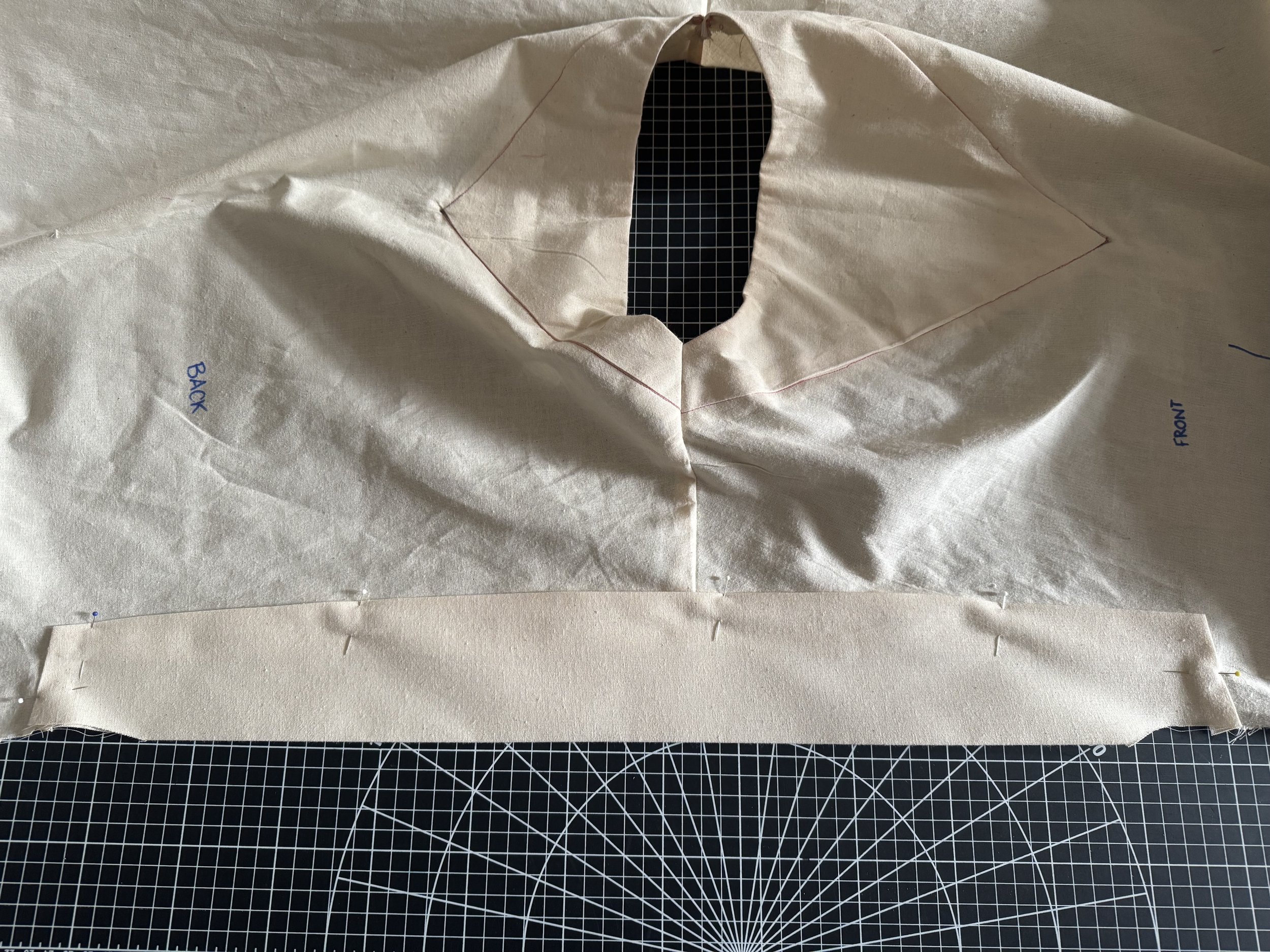
Pin.
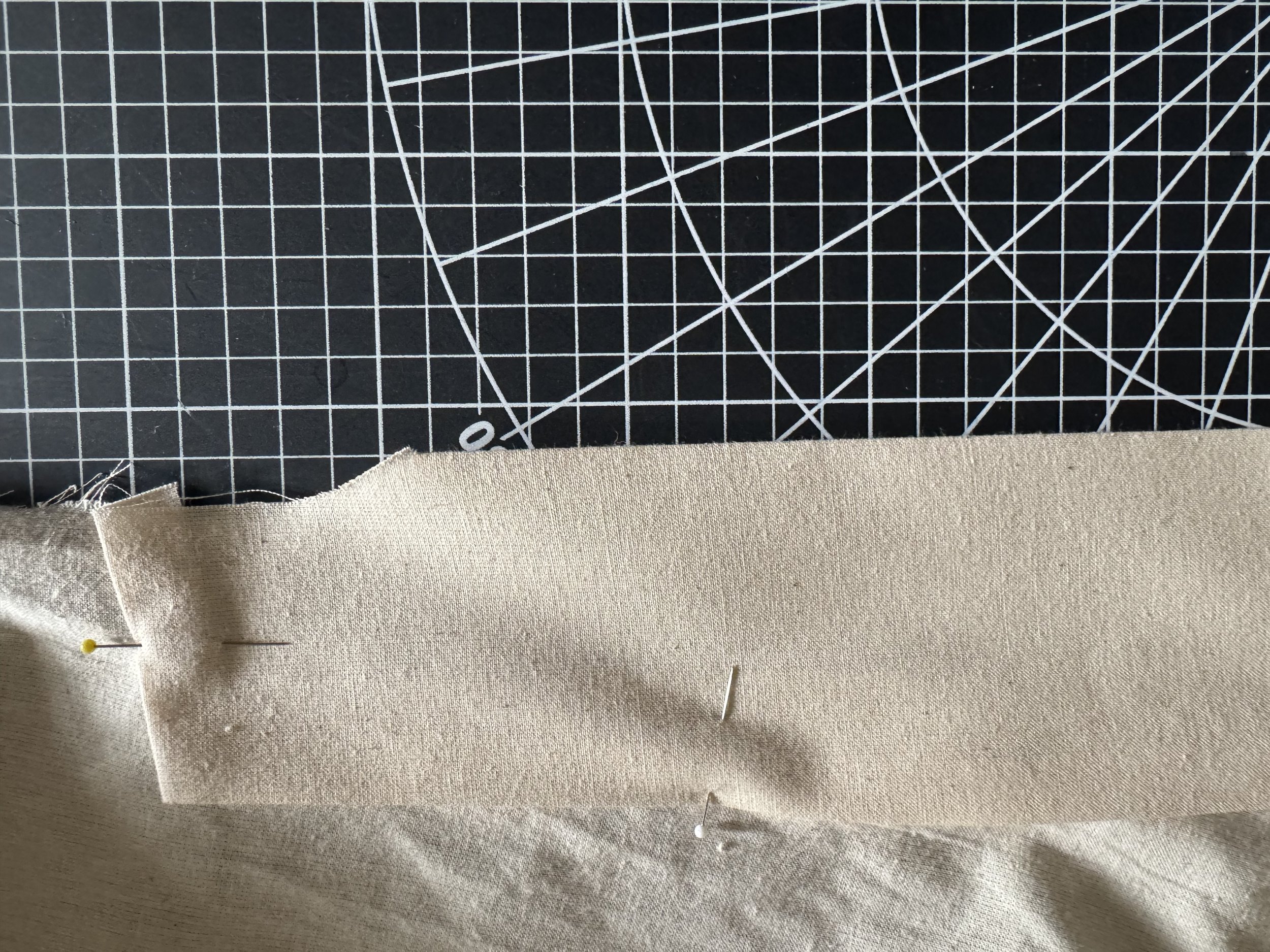
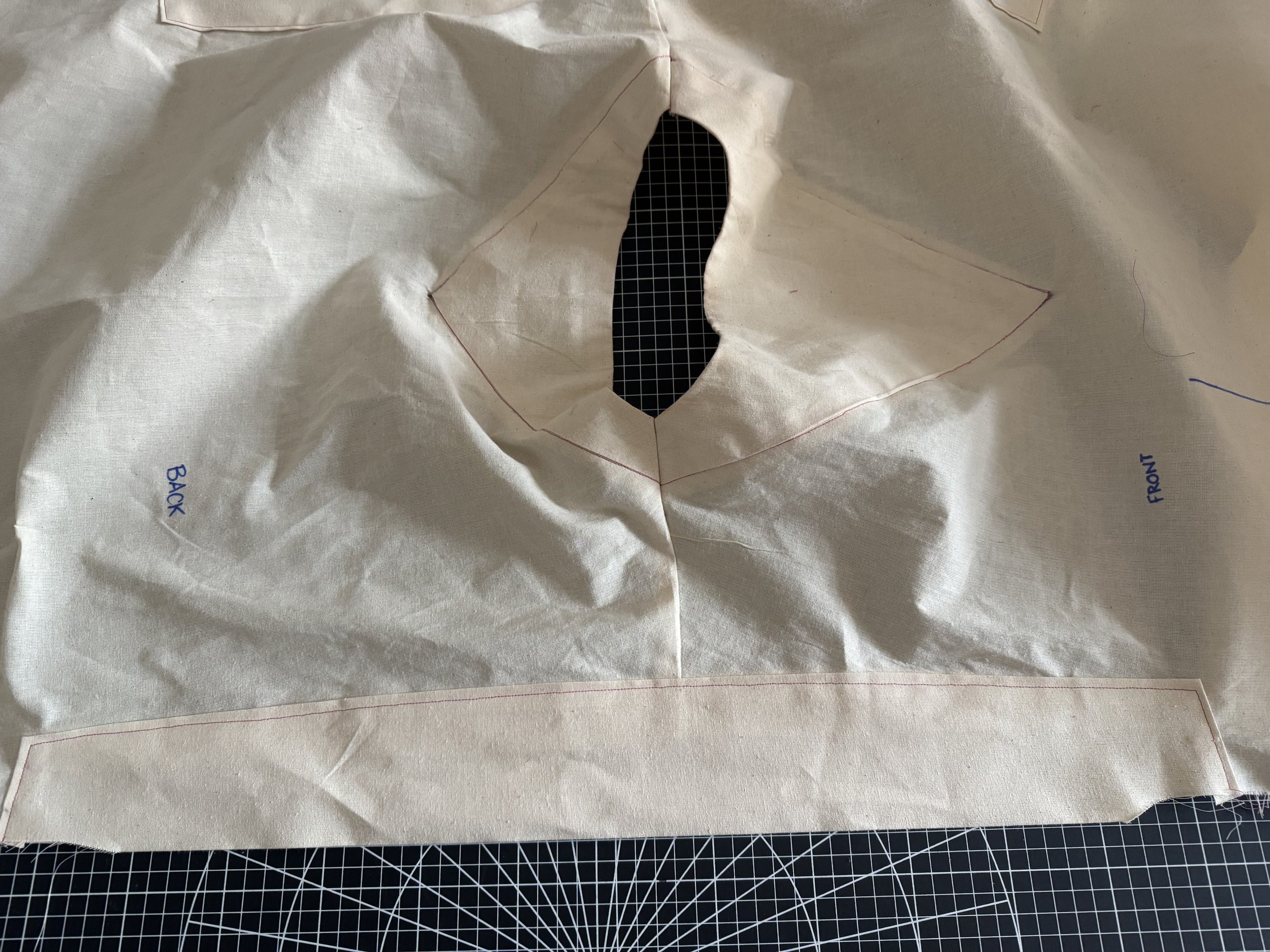
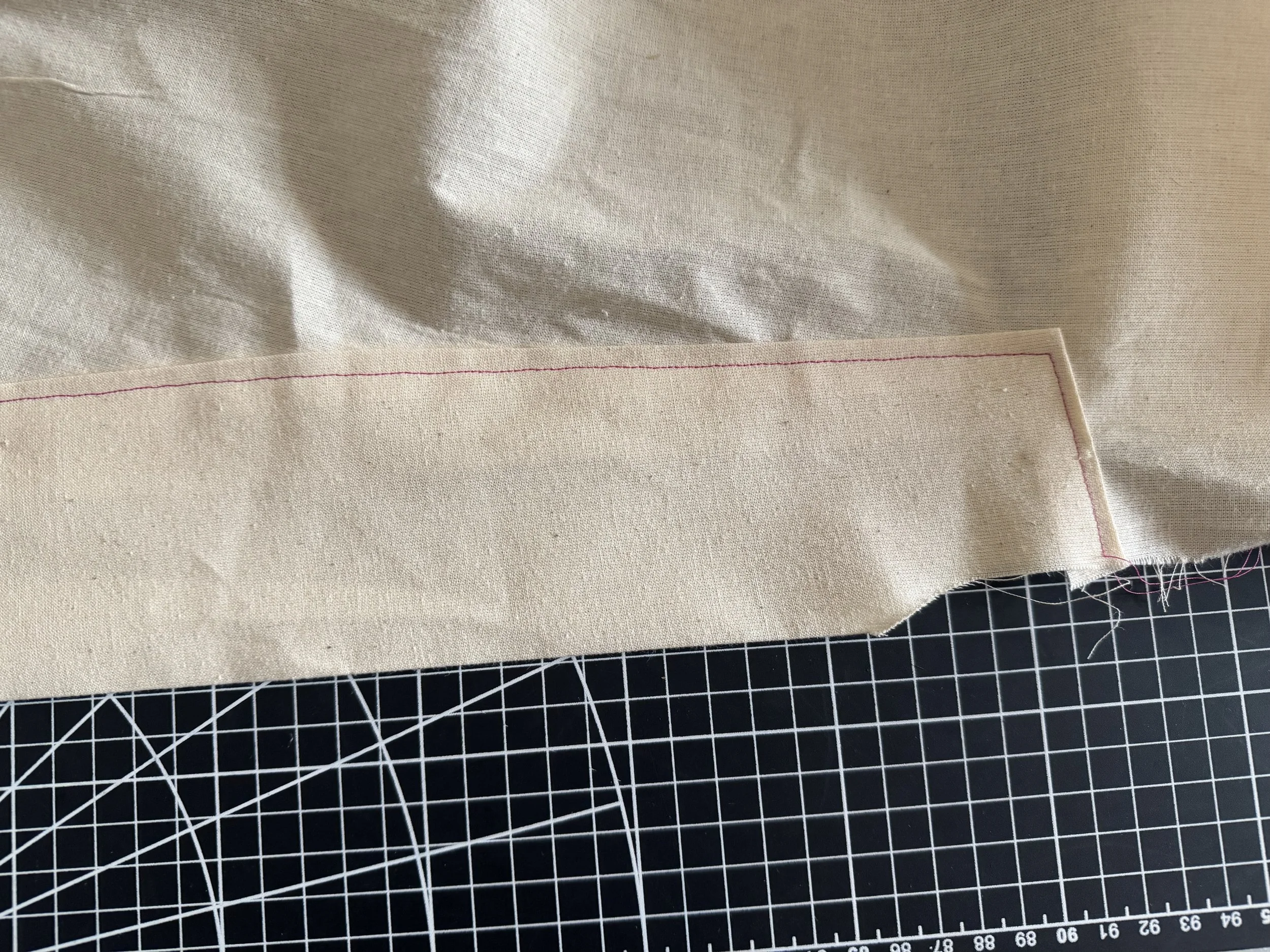
Sew the sleeve, keeping the stitch close to the edge.
Press.
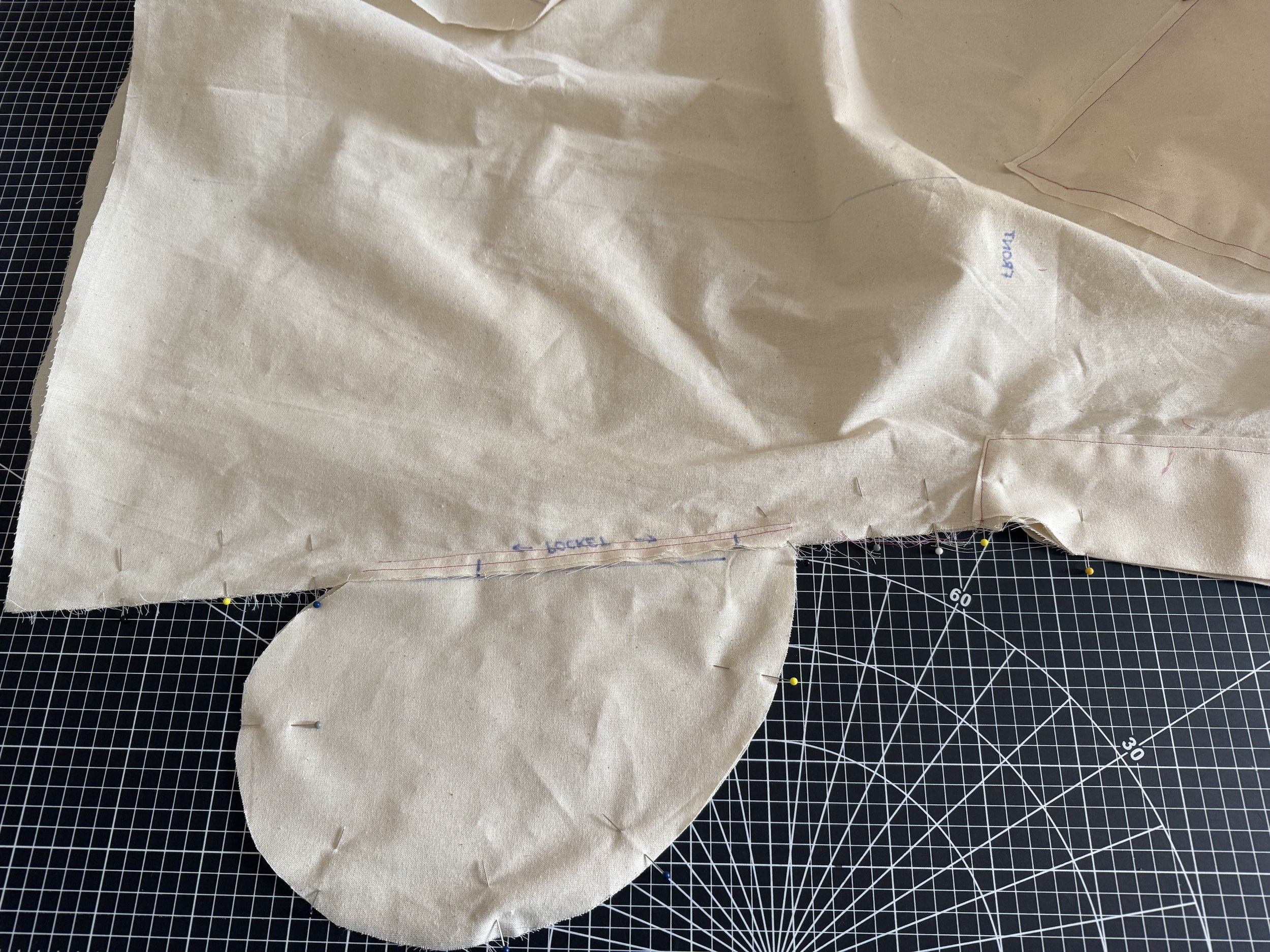
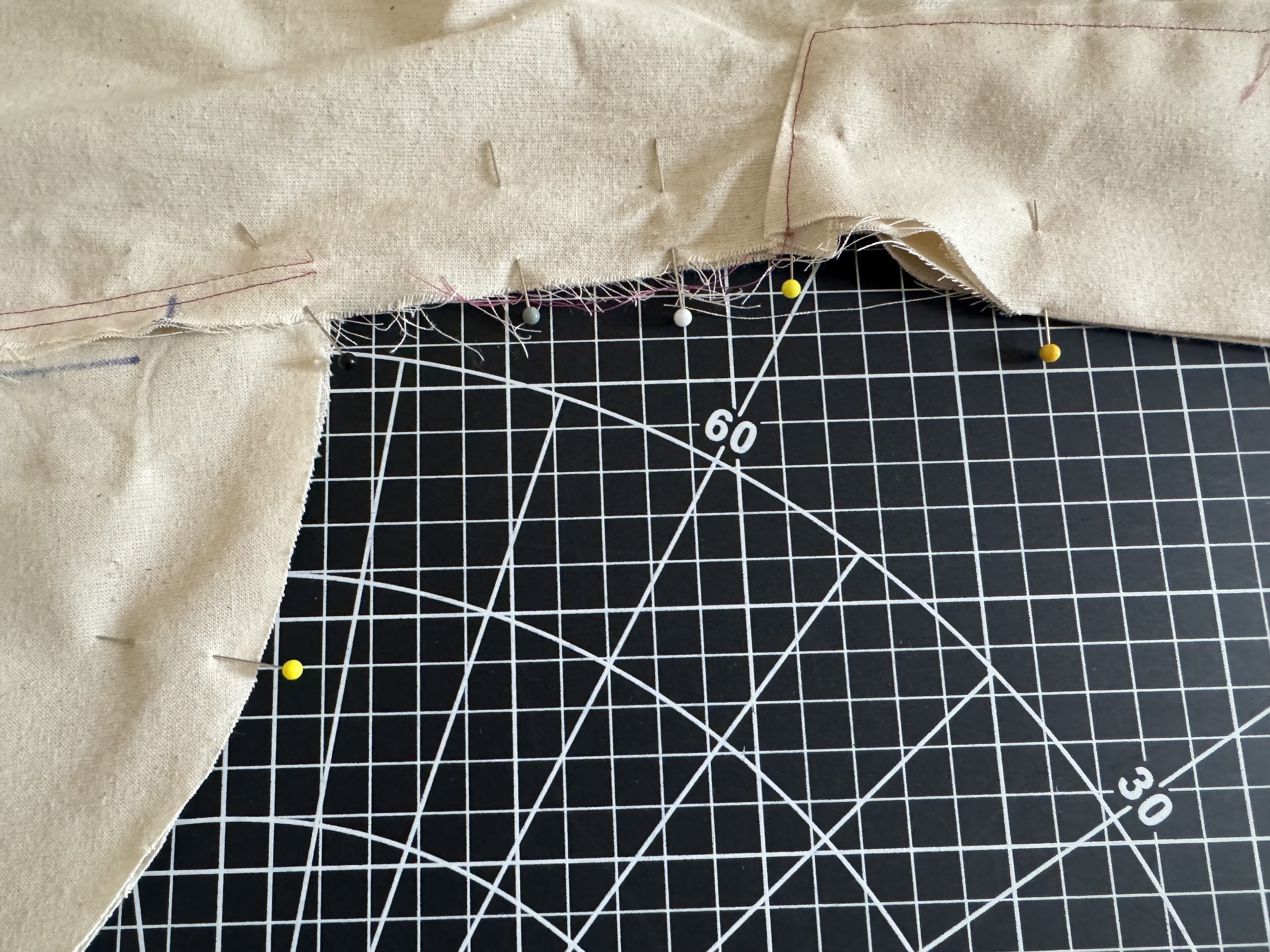
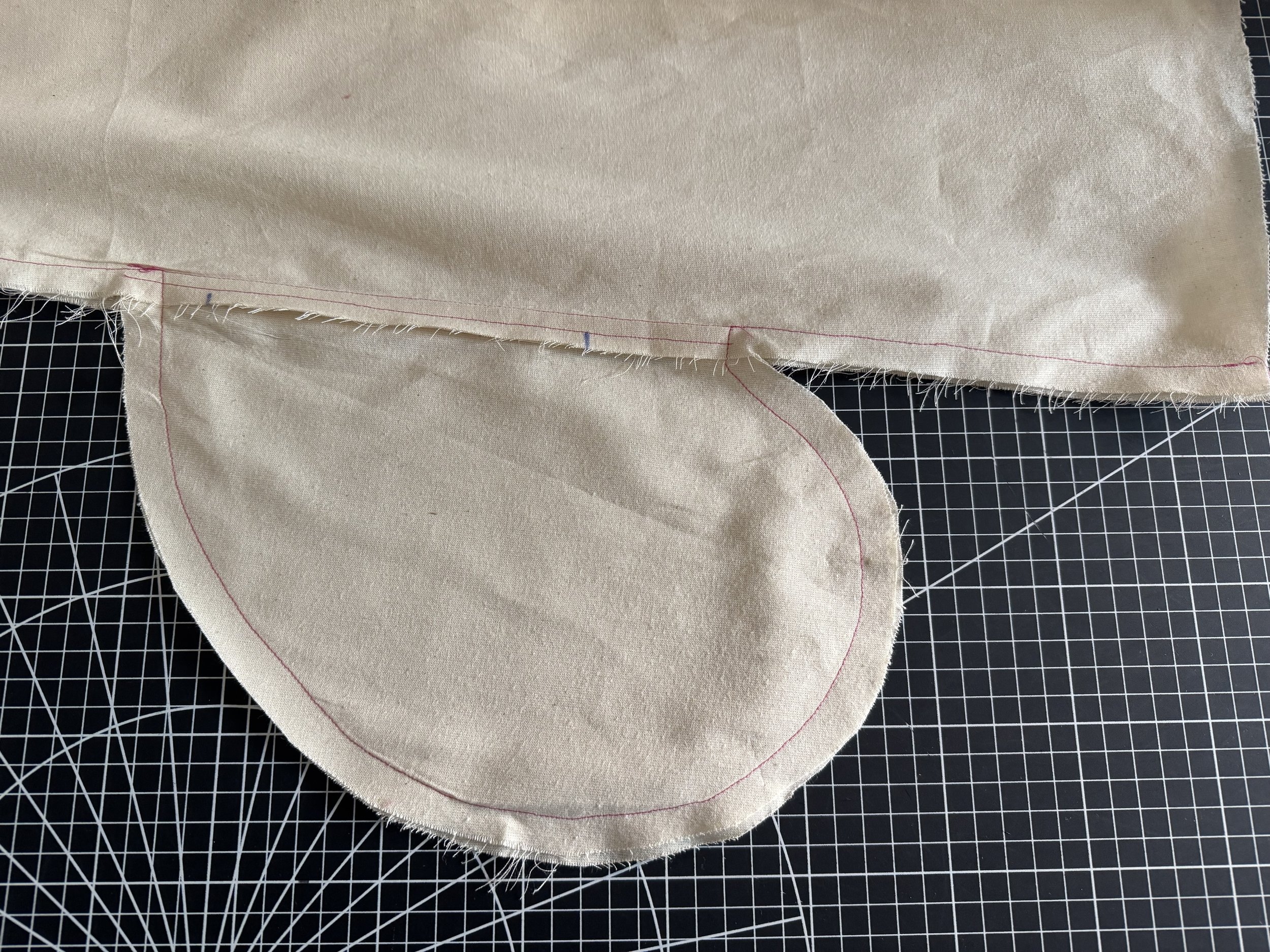
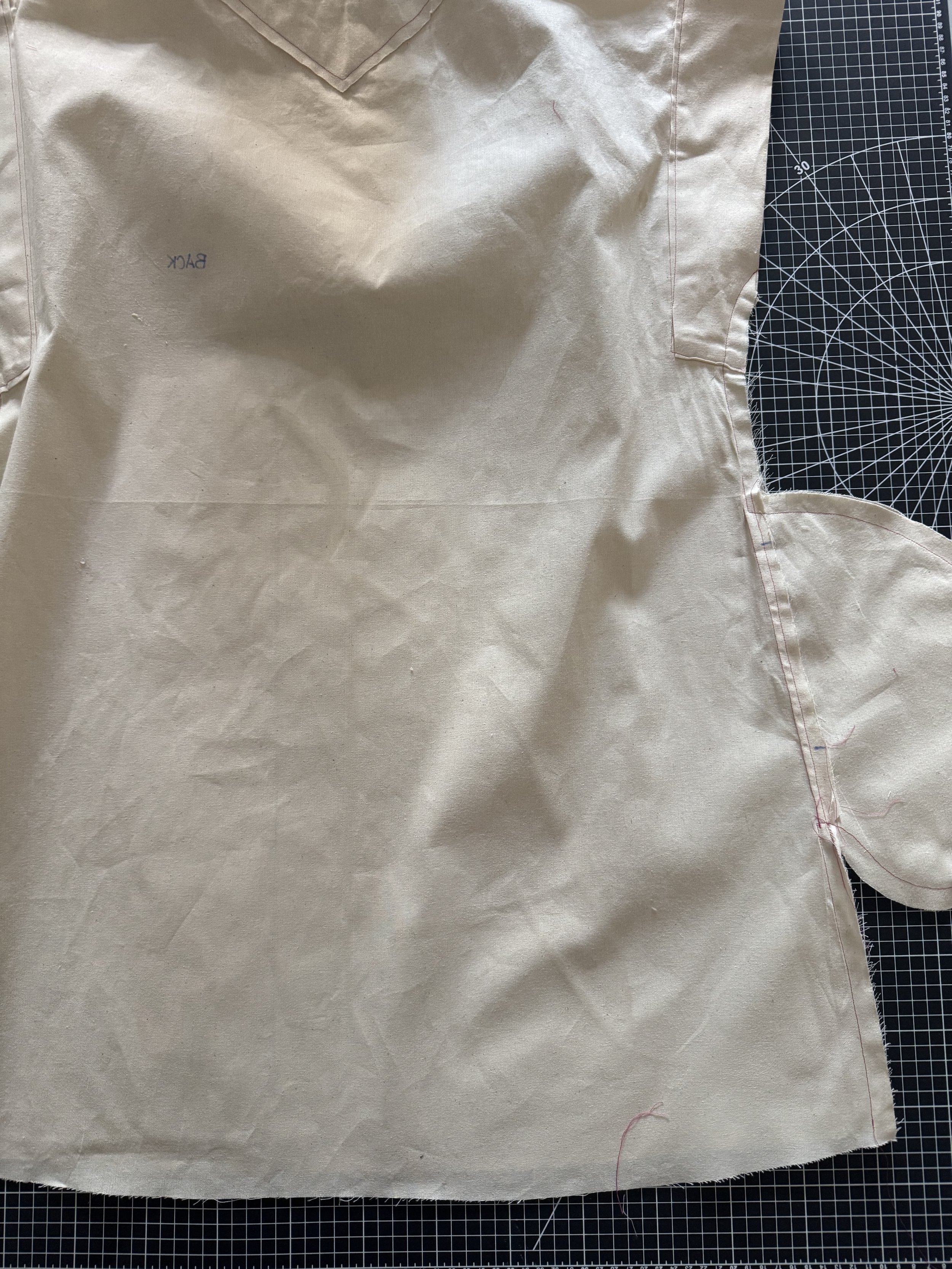
Lay the front right side of your bodice, to the right side of the back, lining up your sleeves, and pockets.
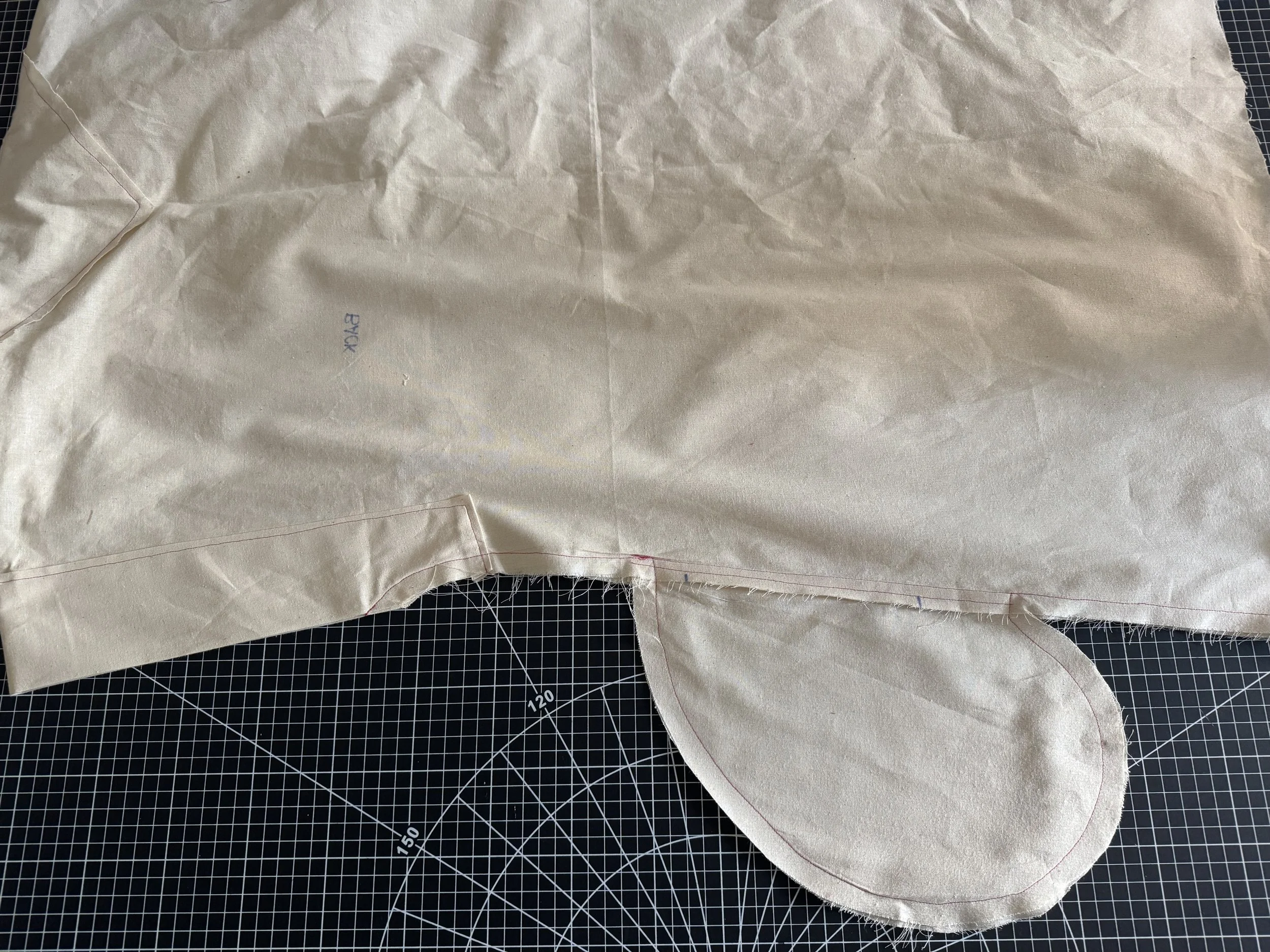
Sew your side seams at 5/8”
*START SEWING FROM THE HEM TO THE SLEEVE ON BOTH SIDES
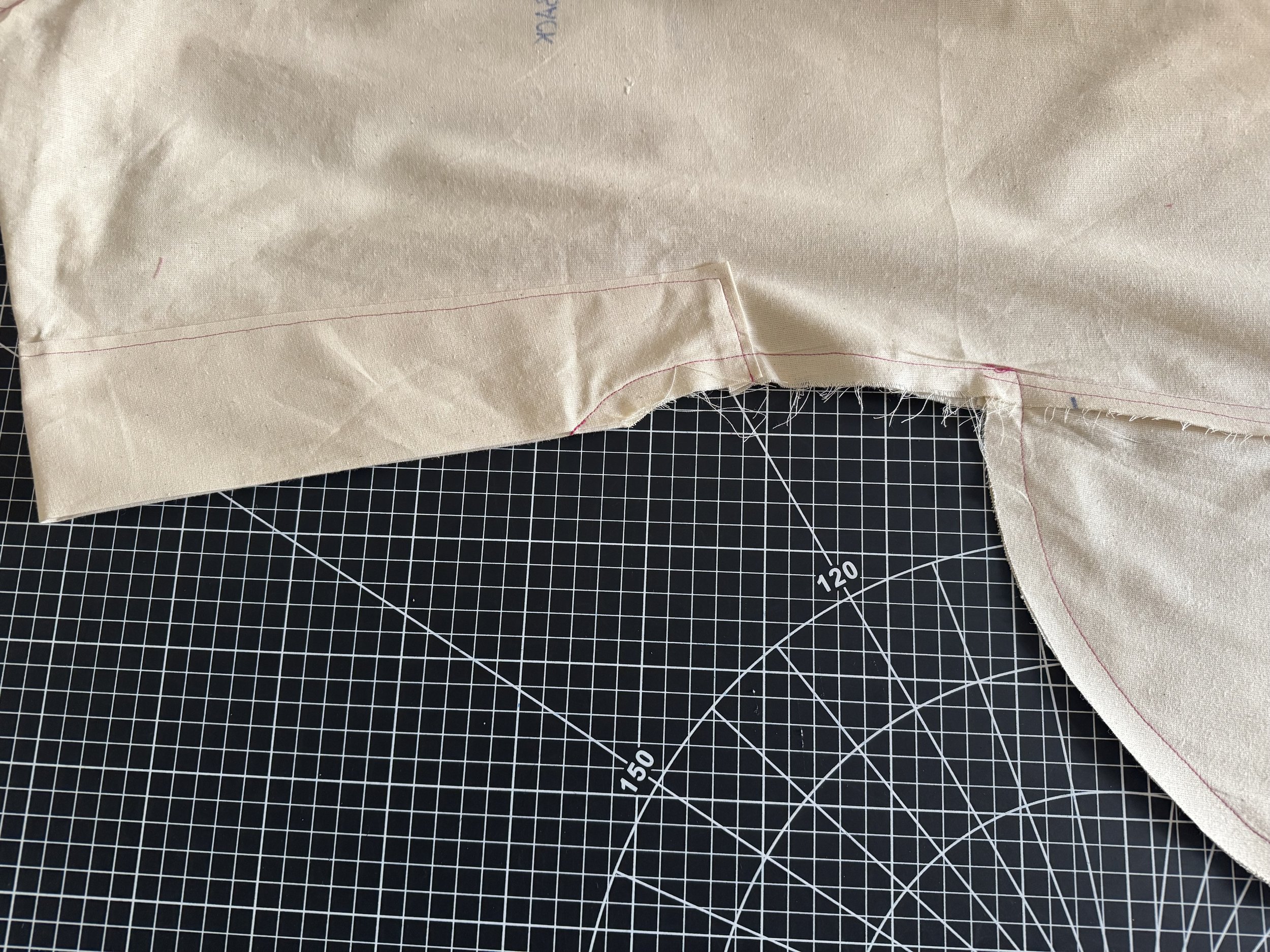
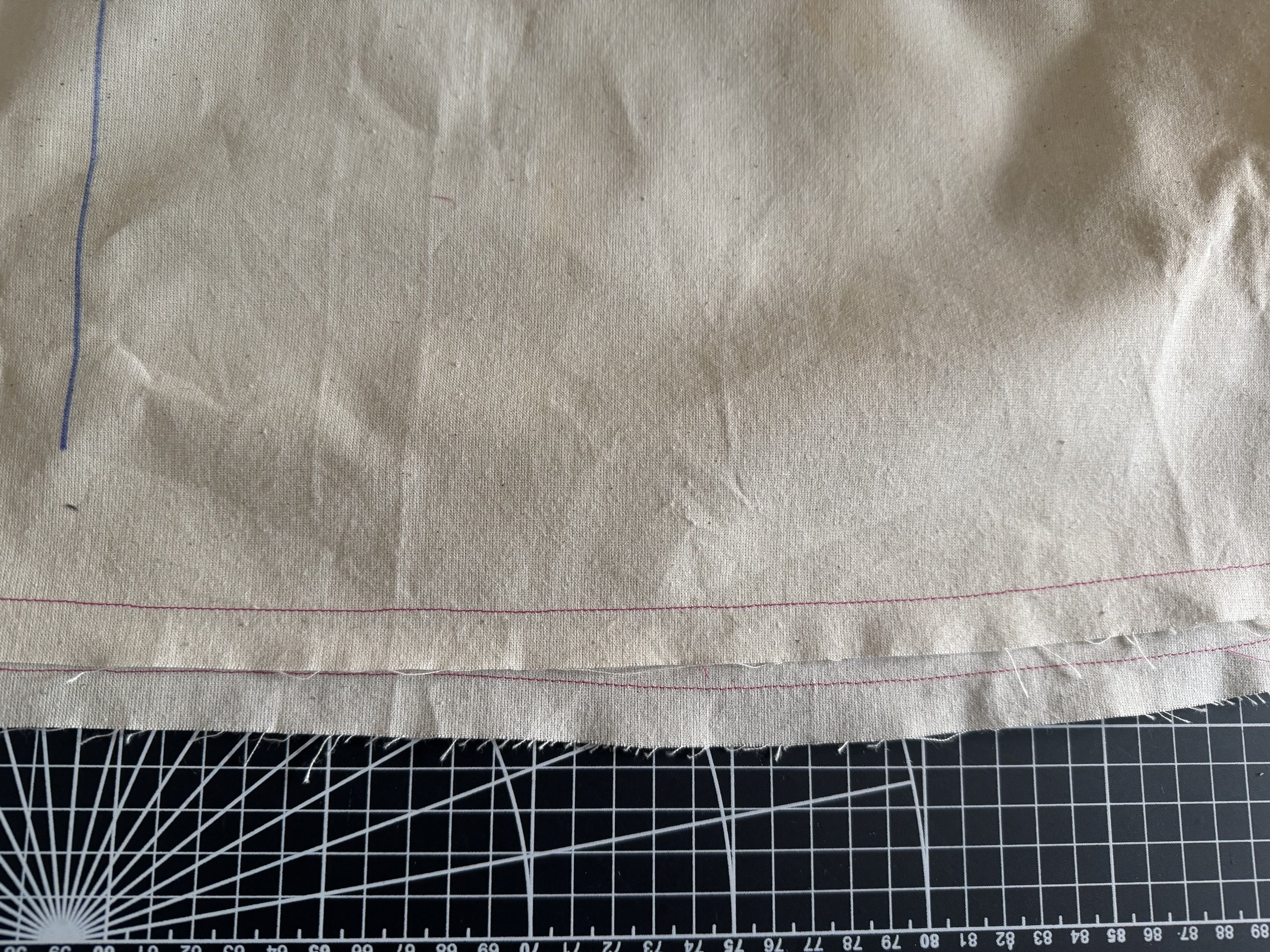
To finish your hem, sew a stitch around the hemline at 5/8”
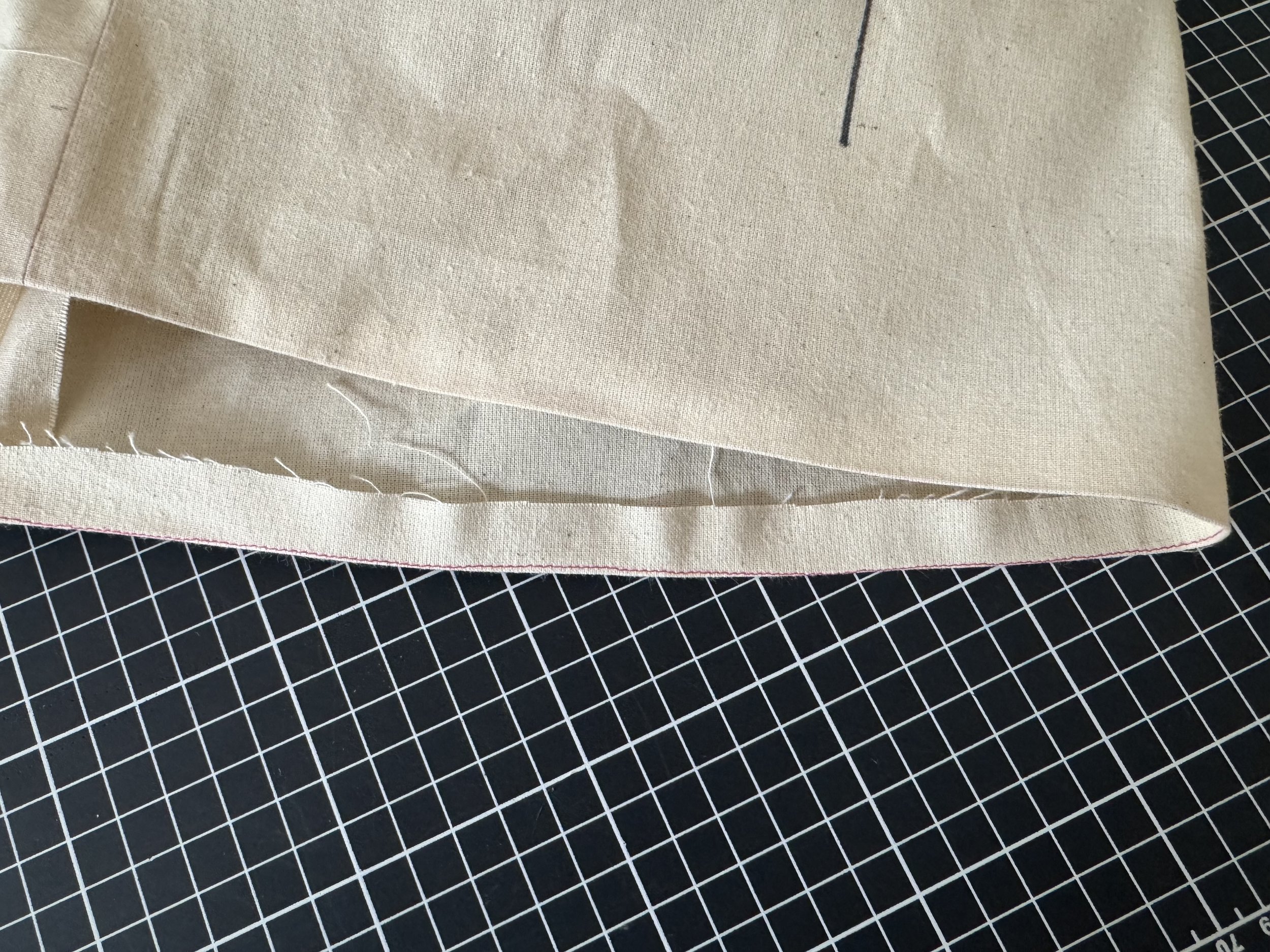
Fold and press the stitch line to the inside.
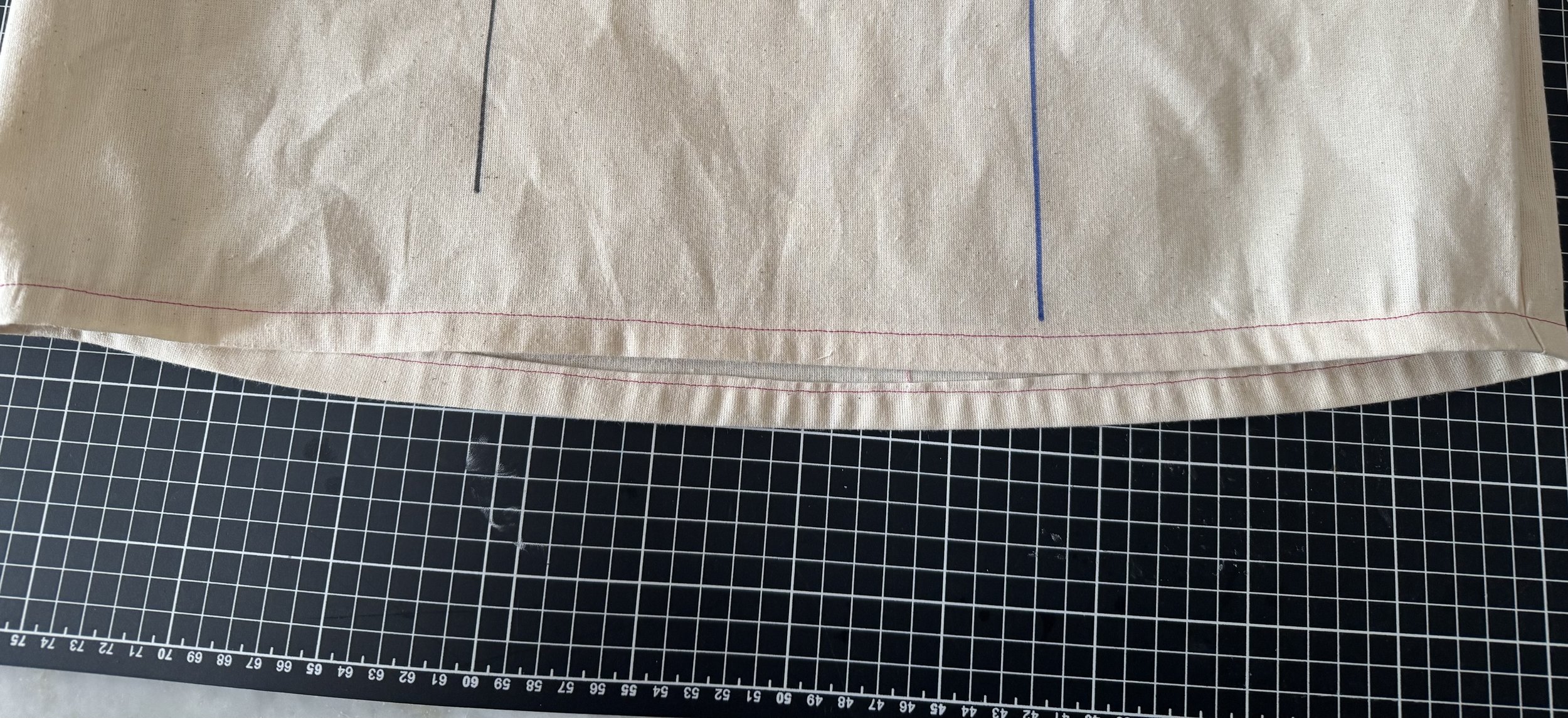
Fold again to encase the raw edge and stitch close to the edge.
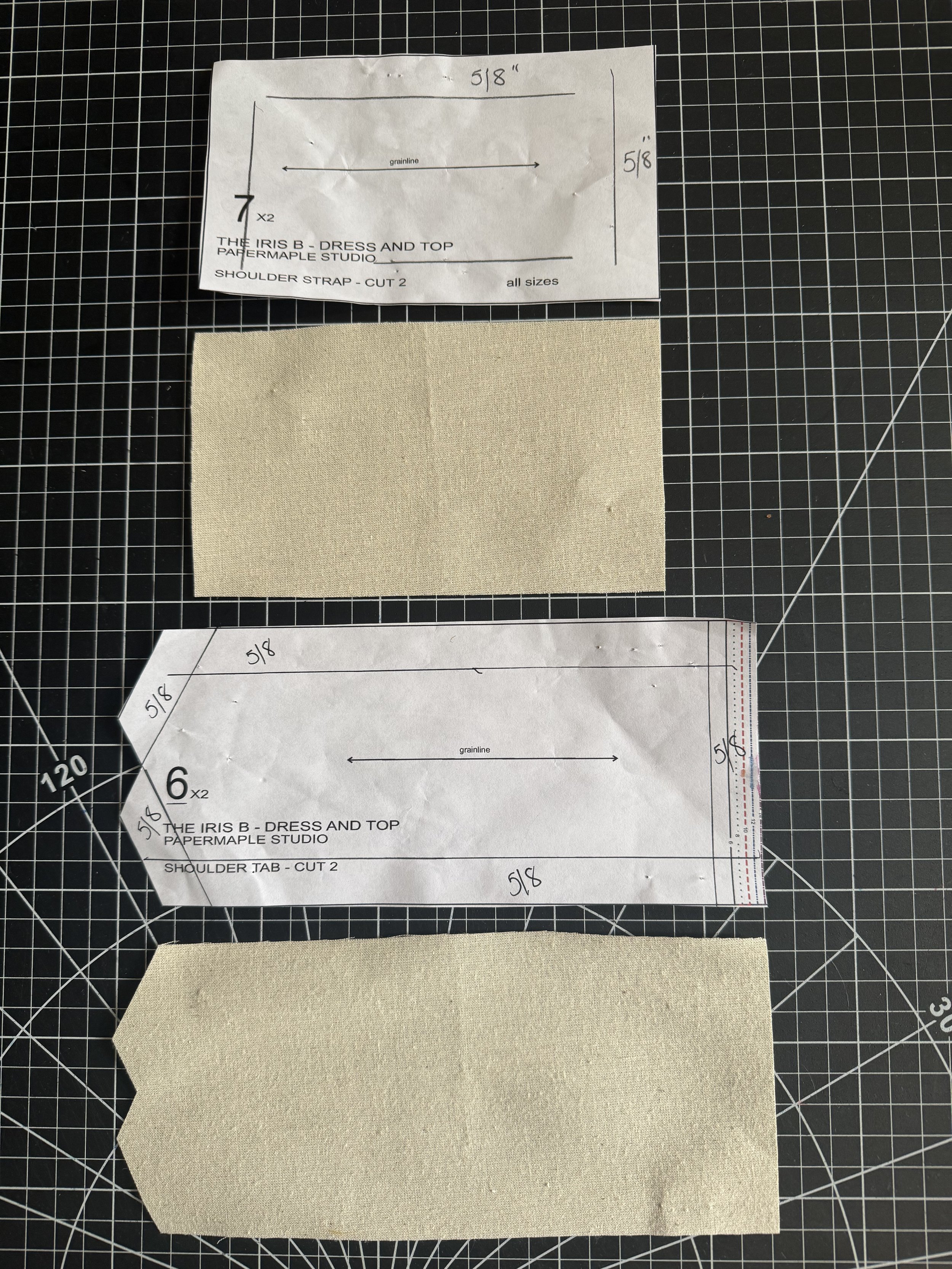
The pattern comes with an optional strap and tab set for the shoulders, this is designed to gather the shoulder and sleeve to create a new look.
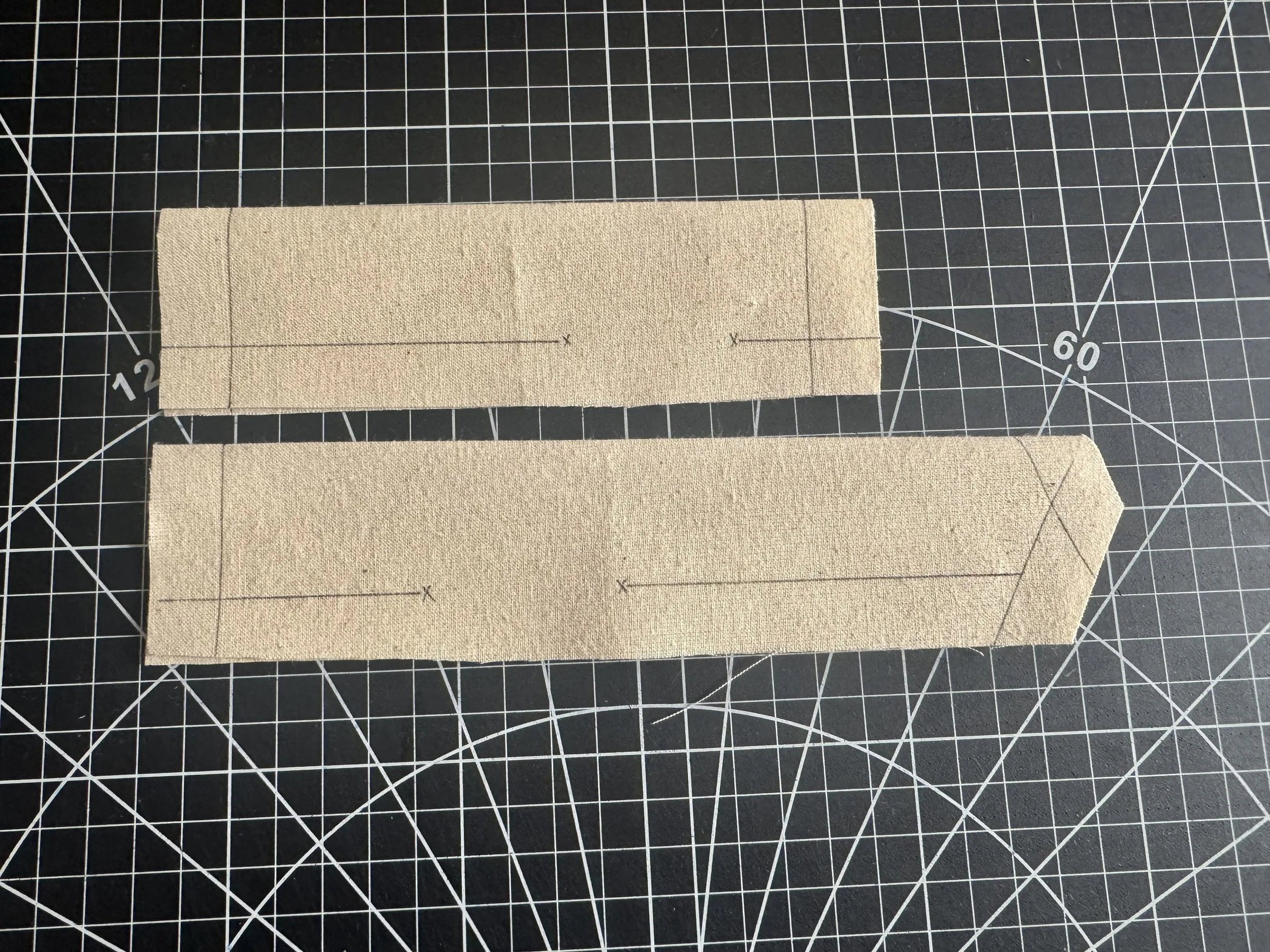
Press each piece in half, and mark a 5/8” seam allowance along each edge. Leave an opening as shown.
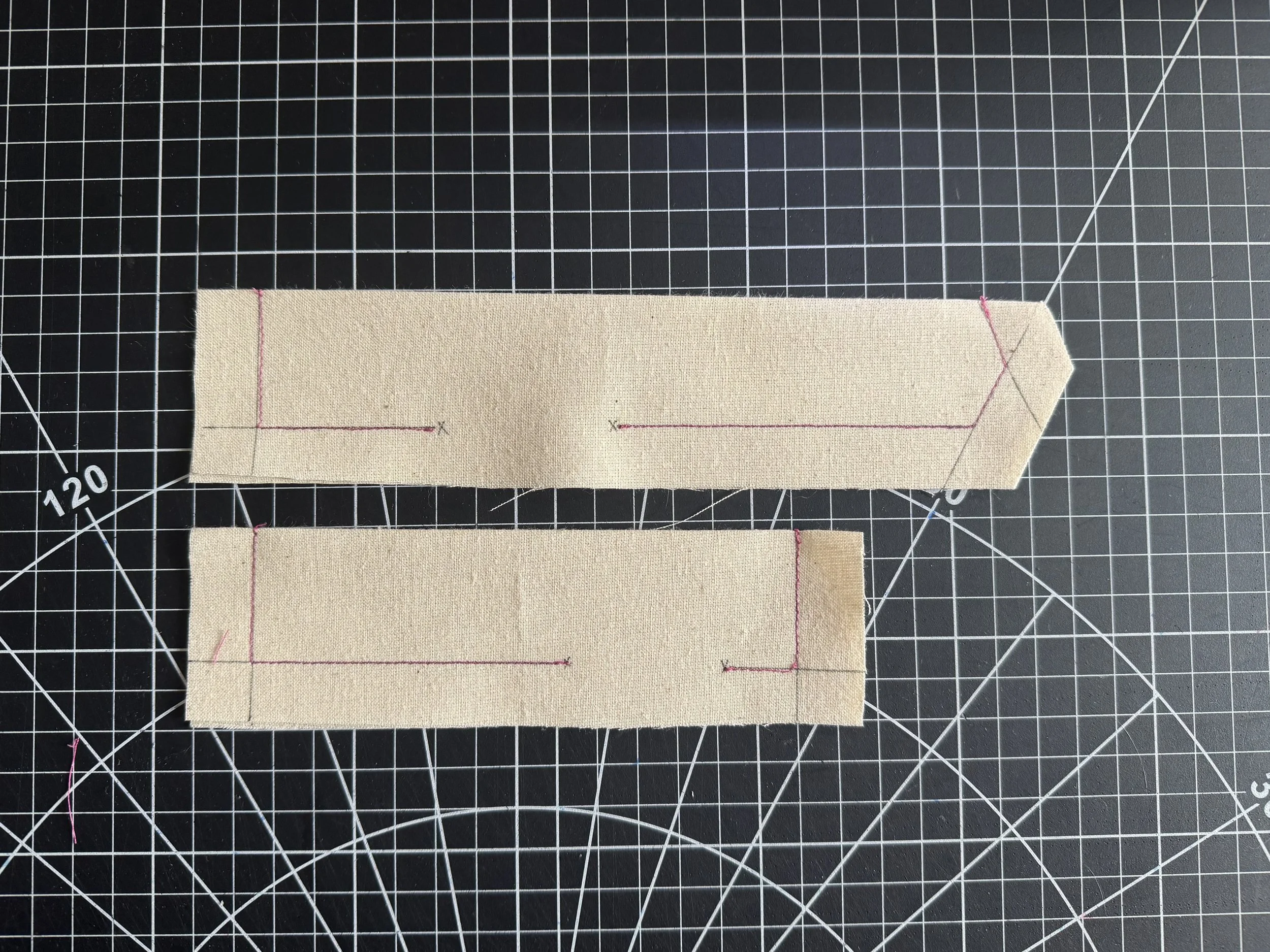
Sew using a 2.4 stitch length. Back tack at the beginning, the opening and at the end.
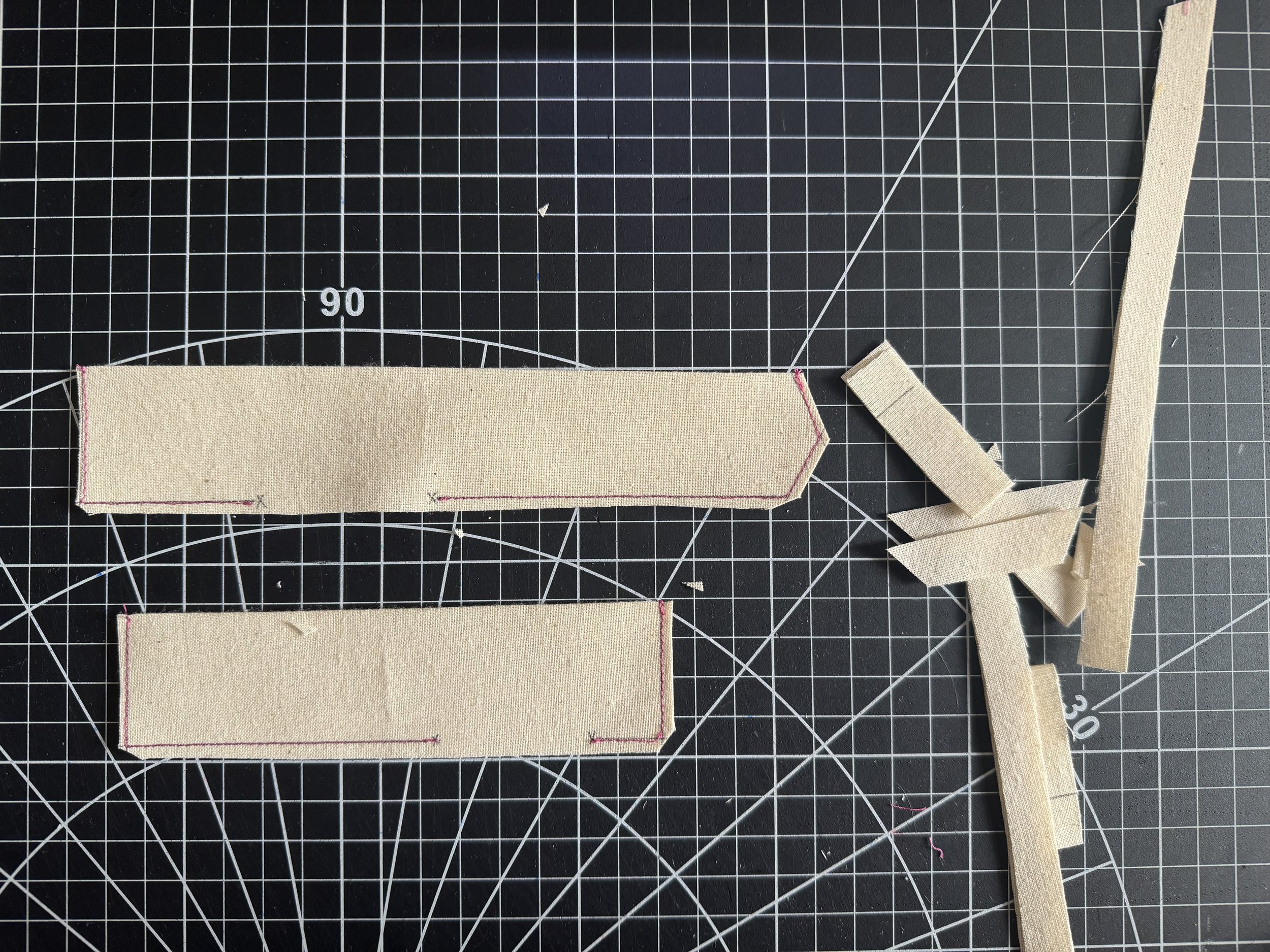
Trim the seams, and snip the corners.
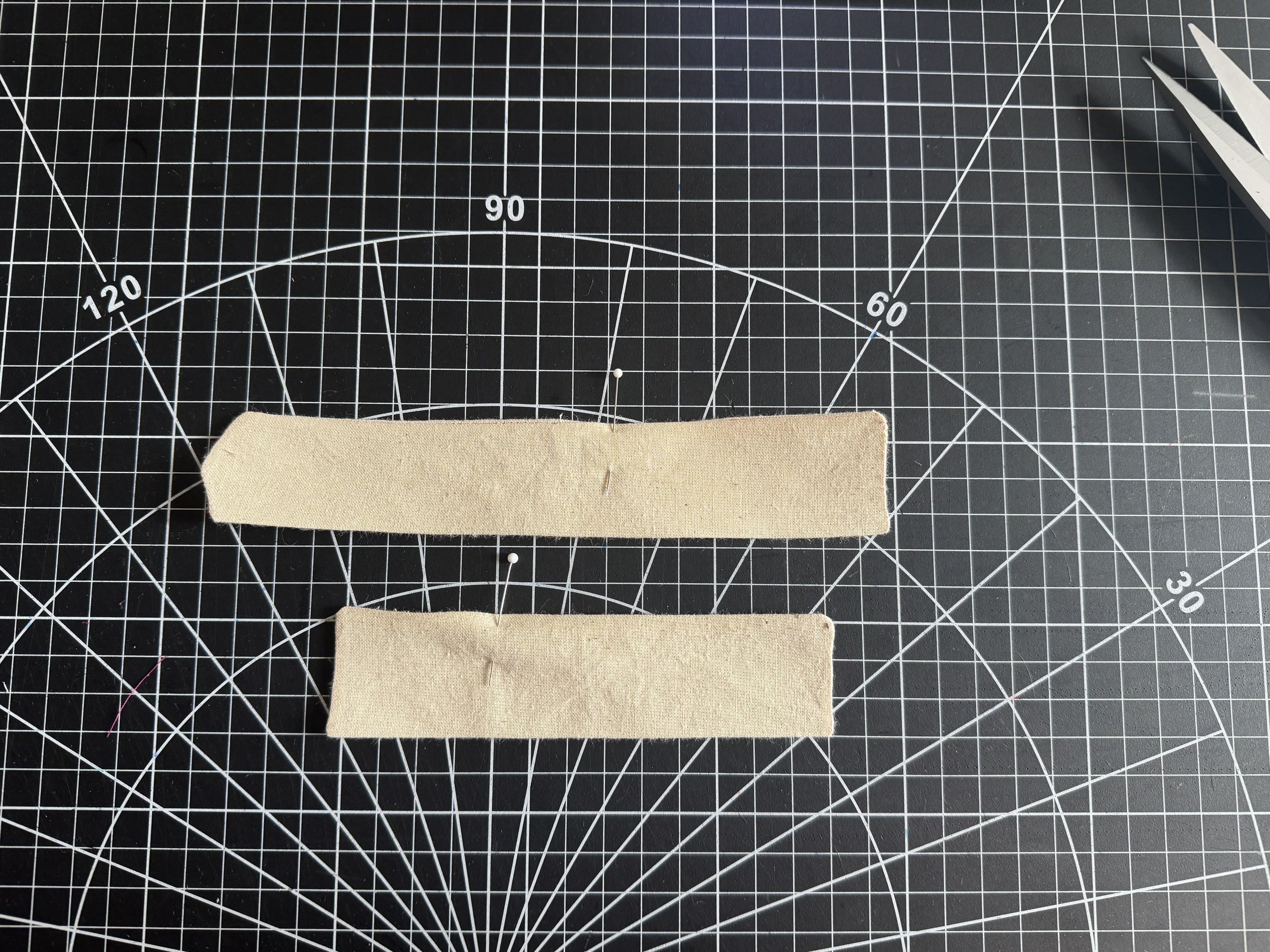
Turn your pieces, fold your opening seam allowances in and pin to hold.
Press well, and top stitch.
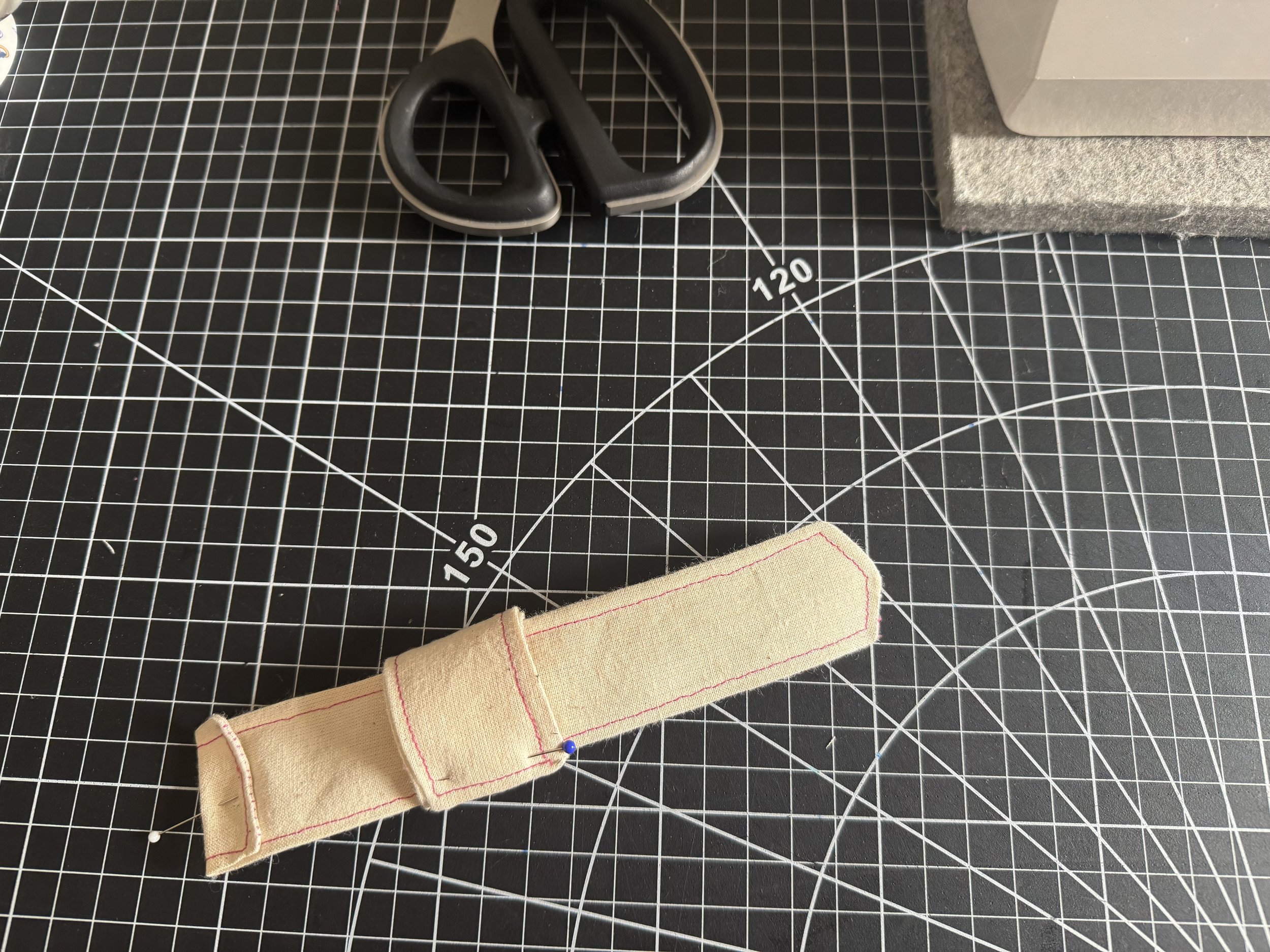
Fold your tab over your strap until it’s the same width, pin.
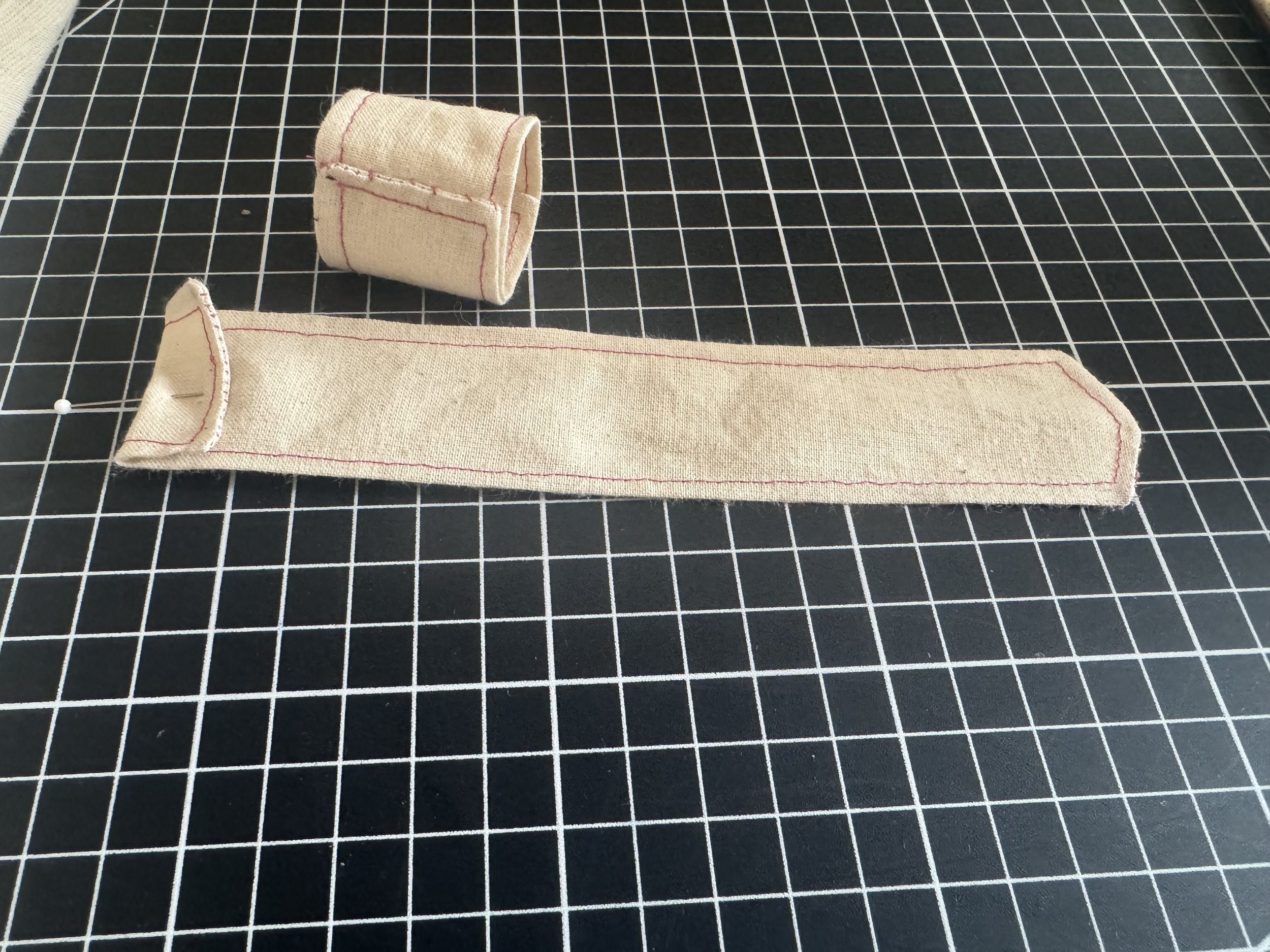
Hand stitch the loop closed.
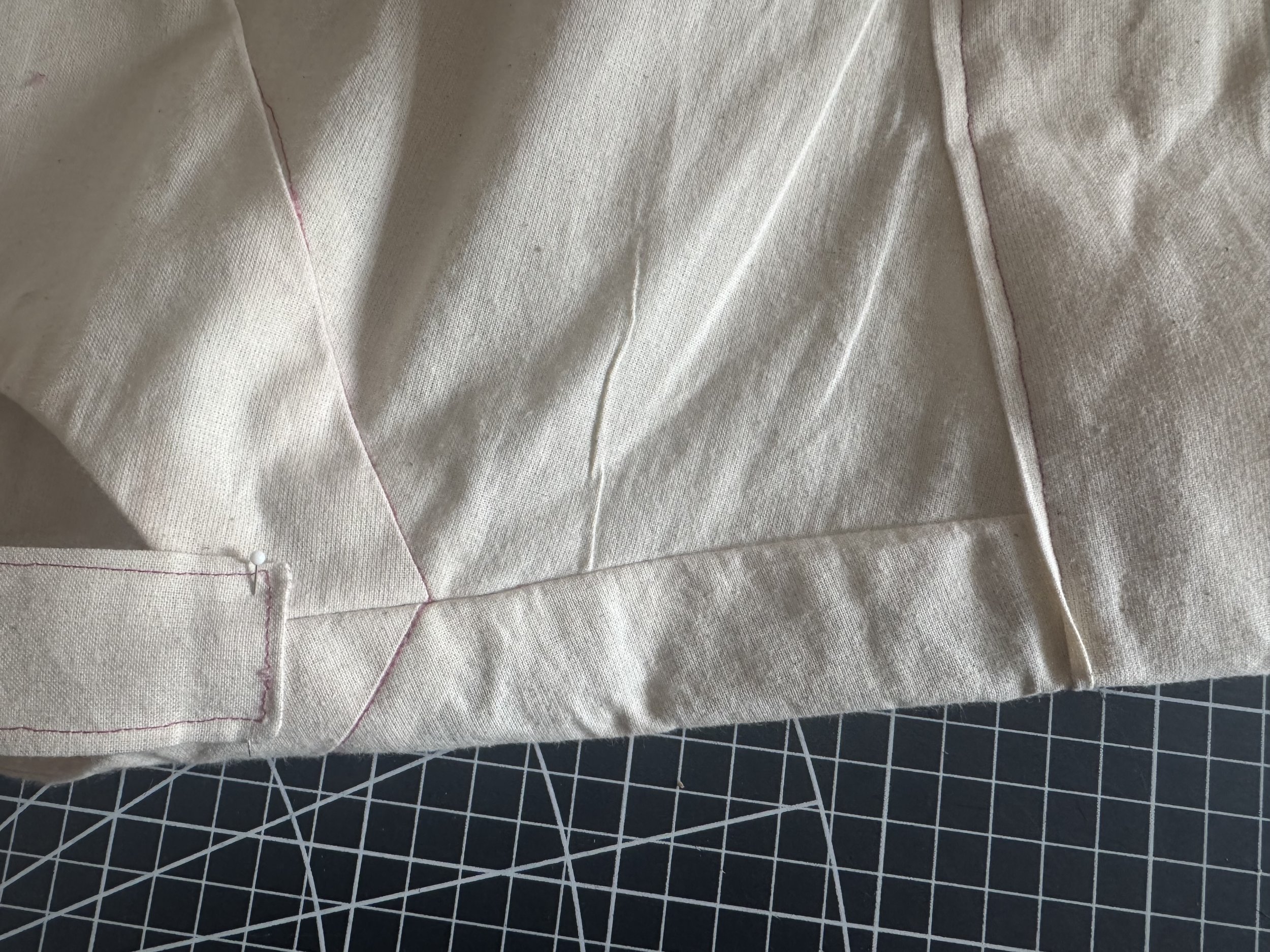
Pin the edge of the strap close to the neckline.
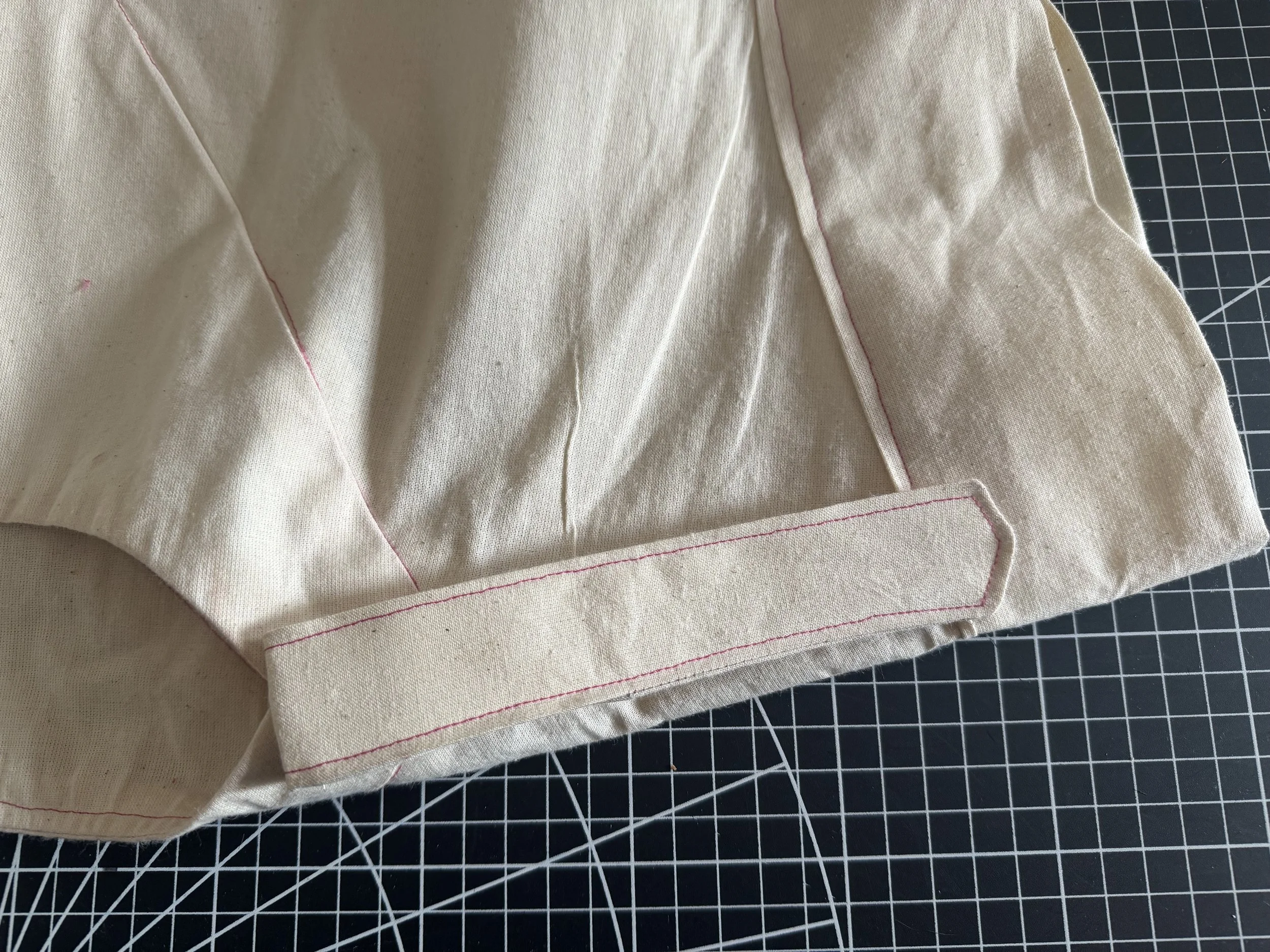
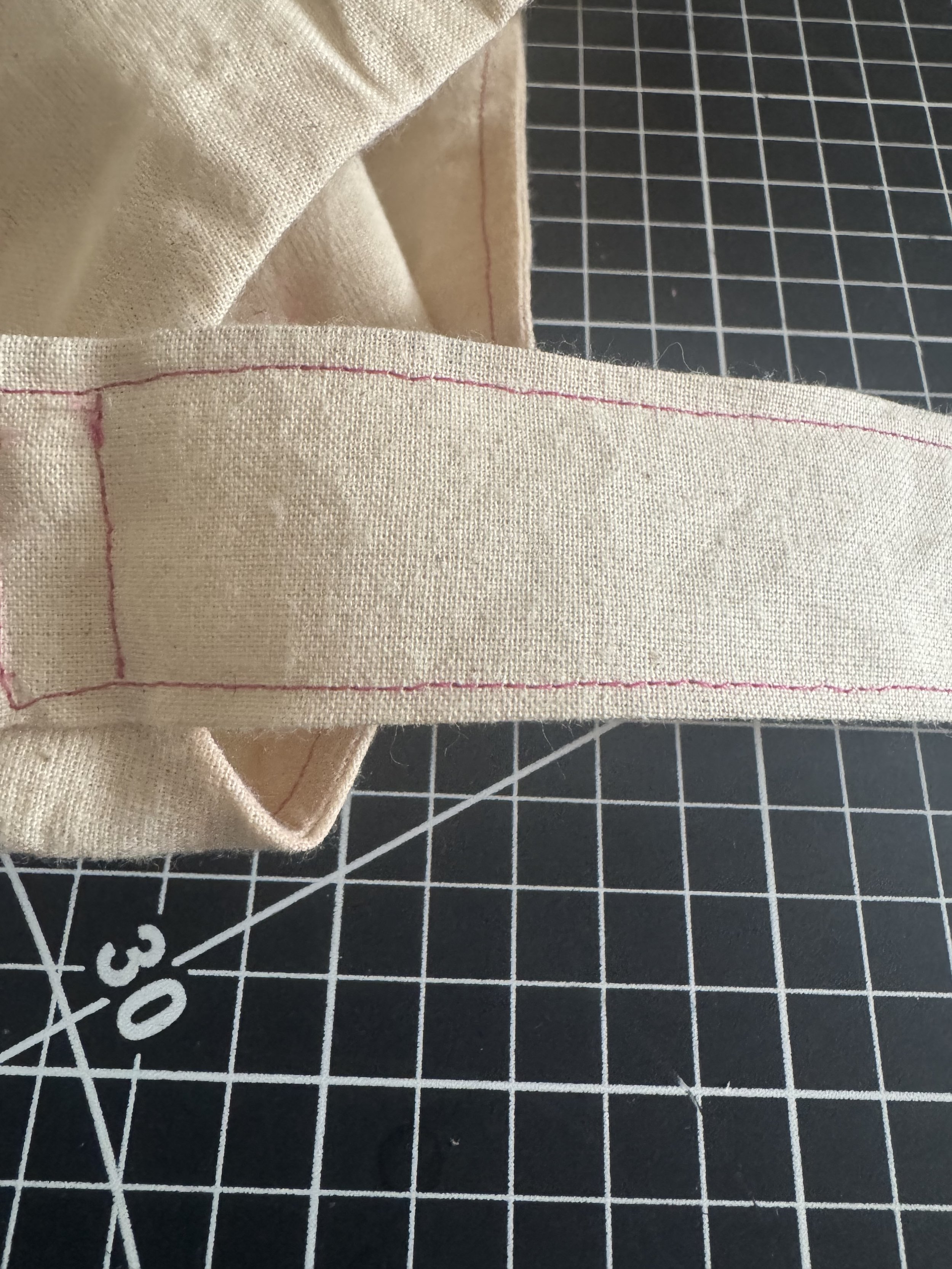
Stitch close to the edge, and flip the strap towards the sleeve.
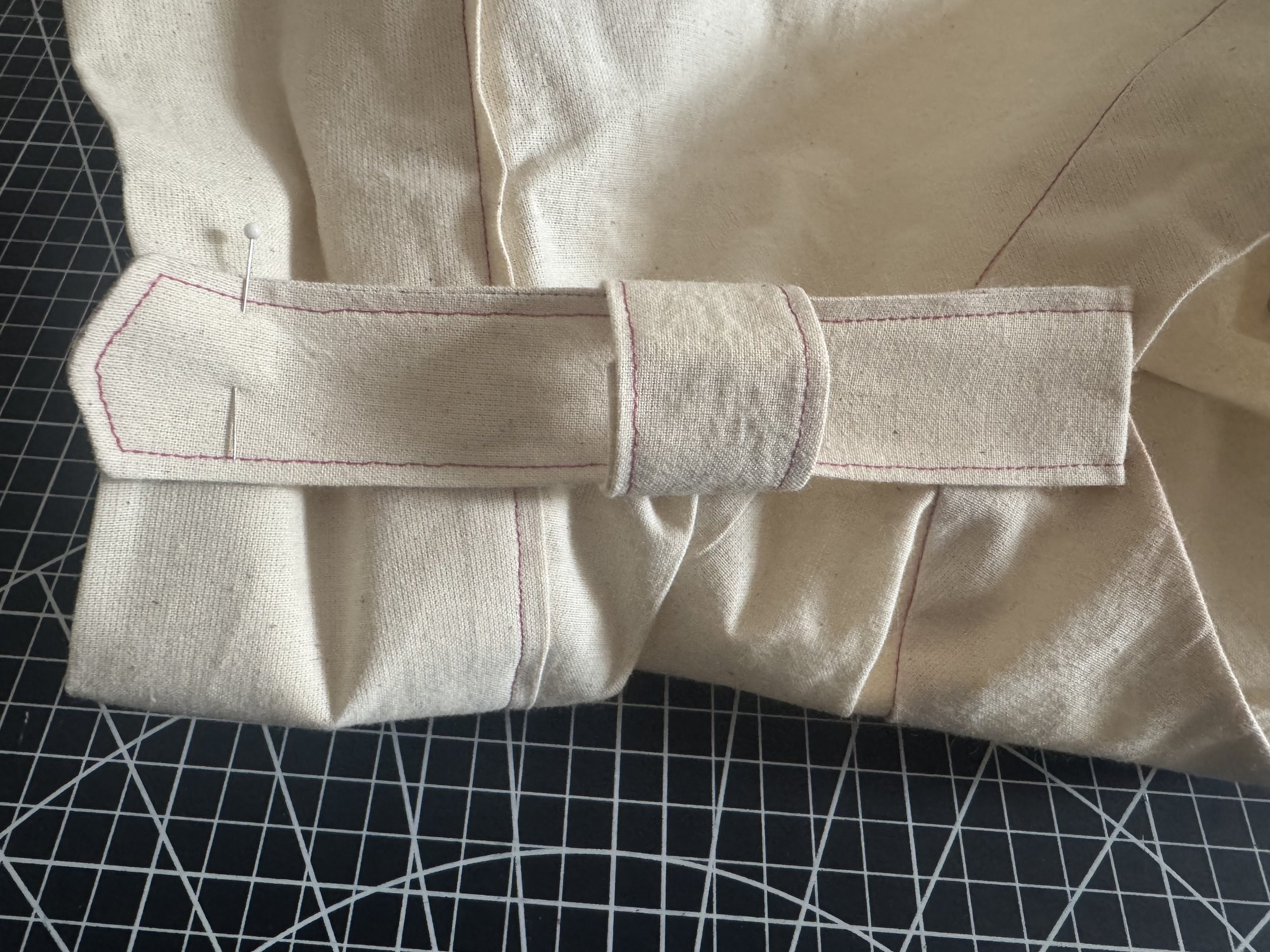
Slide the loop on and pin the strap point close to the sleeve edge.
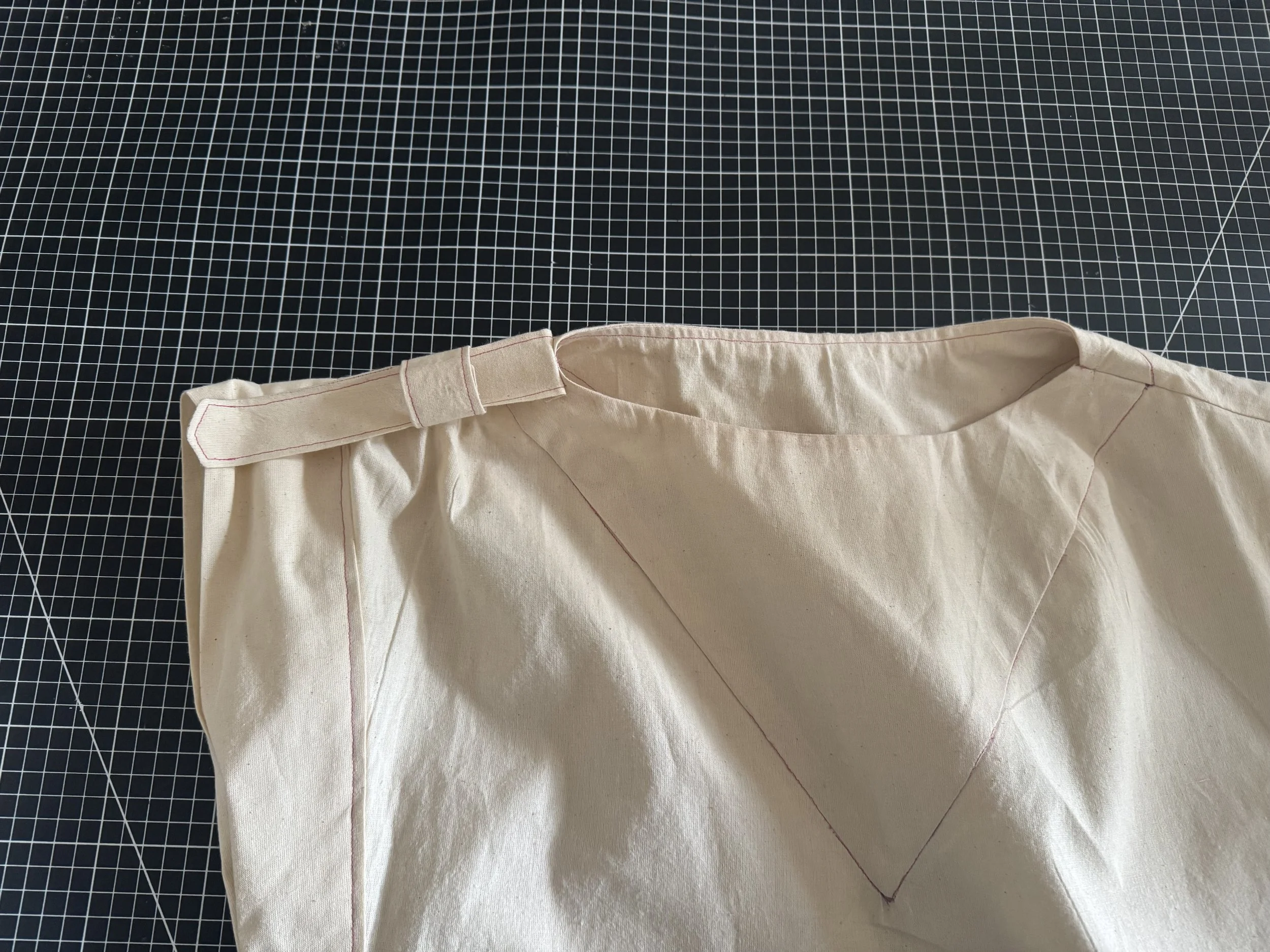
To hold the end, I sewed a small section over the top stitch as seen to the left.
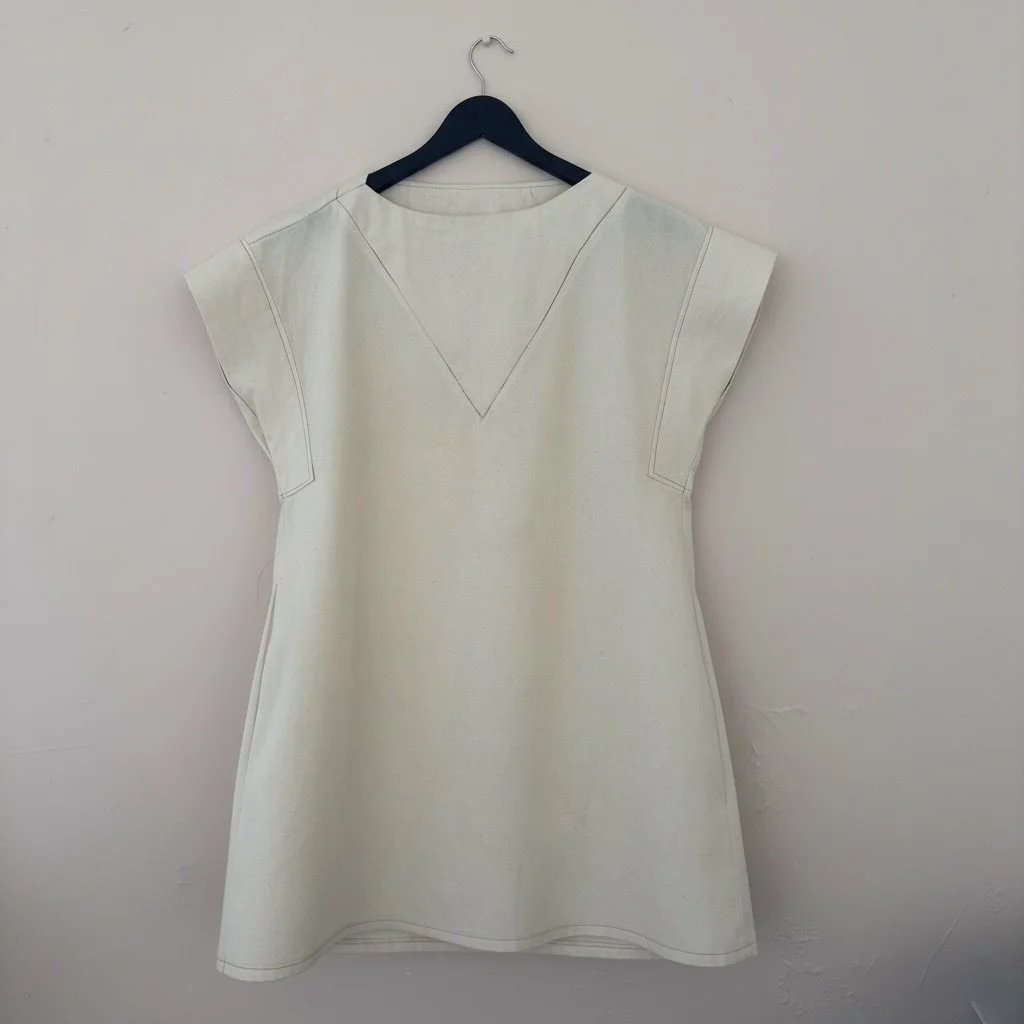
Congratulations!